Opening of the Beijing-Guangzhou High-Speed Railway
2012 · Beijing, China
China opened the world's longest high-speed rail route, the Beijing-Guangzhou high-speed railway, stretching over 2,298 kilometers (1,428 miles).
August 1, 2008
The Beijing–Tianjin Intercity Railway, the first high-speed rail service in China, began operations, marking a significant advancement in China's transportation infrastructure.
Beijing, China | China Railway
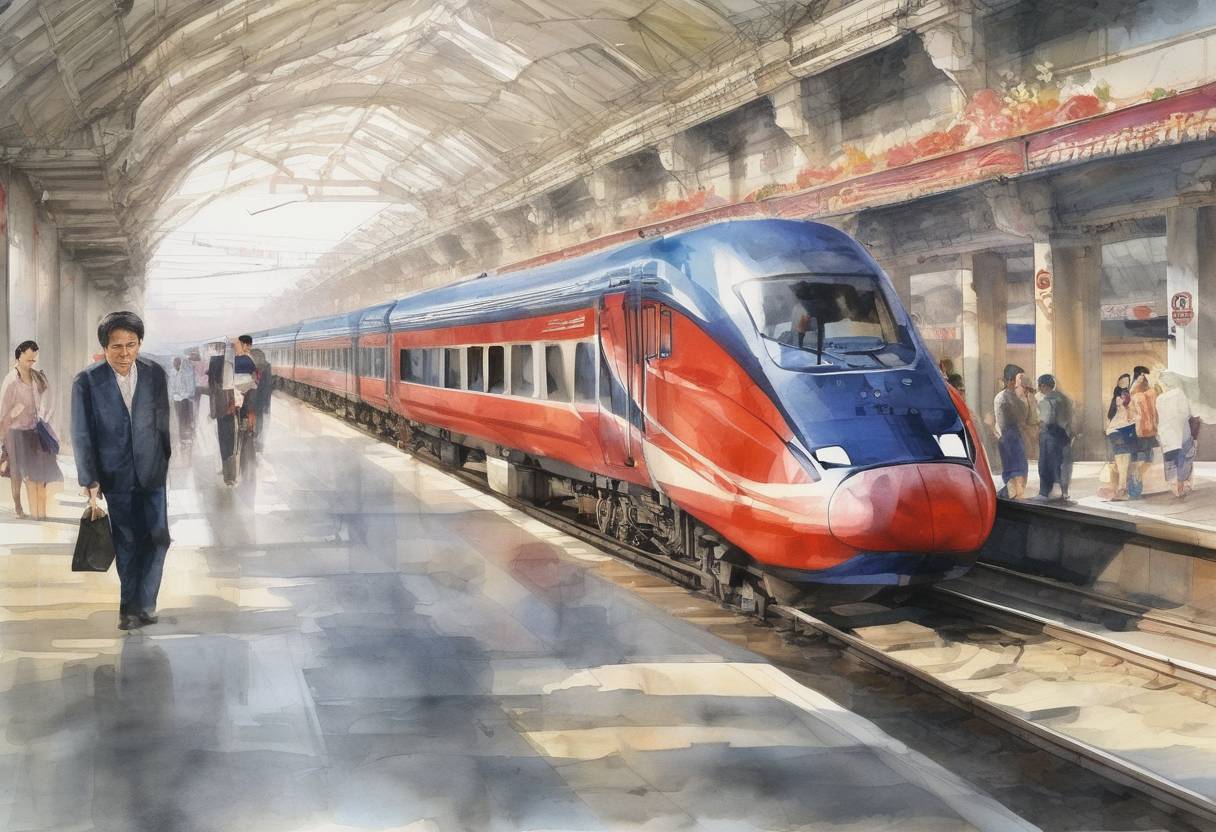
On August 1, 2008, China inaugurated its first high-speed rail service, the Beijing–Tianjin Intercity Railway, marking a significant advancement in the nation’s transportation infrastructure. This event was a pivotal moment in China’s rapid development of high-speed rail technology and infrastructure, setting the stage for the country’s extensive high-speed rail network.
Economic Growth and Urbanization: In the early 2000s, China experienced rapid economic growth and urbanization, leading to increased demand for efficient transportation solutions. The government recognized the need for a modern rail system to connect major urban centers and alleviate congestion on existing rail lines.
Strategic Planning: The Beijing–Tianjin corridor was chosen for the first high-speed rail line due to its strategic importance. Both cities are major economic hubs, with Beijing serving as the capital and Tianjin as a key port city. The corridor’s development was part of a broader strategy to enhance regional integration and economic development.
Speed and Technology: The railway was designed for speeds up to 350 km/h (217 mph), significantly reducing travel time between Beijing and Tianjin from over an hour to approximately 30 minutes. This was achieved through advanced rail technology and engineering, including the use of CRH (China Railway High-speed) trains.
Infrastructure: The line spans approximately 117 kilometers (73 miles) and includes several state-of-the-art features, such as elevated tracks and modern stations. The construction involved significant investment and collaboration with international partners to ensure the adoption of cutting-edge rail technology.
Economic and Social Benefits: The high-speed rail service facilitated greater economic integration between Beijing and Tianjin, boosting trade, tourism, and commuting efficiency. It also set a precedent for future high-speed rail projects across China.
Expansion of High-Speed Rail Network: The success of the Beijing–Tianjin Intercity Railway paved the way for the rapid expansion of China’s high-speed rail network. By 2023, China had developed the world’s largest high-speed rail system, with thousands of kilometers of track connecting major cities across the country.
Global Influence: China’s high-speed rail development has become a model for other countries seeking to modernize their rail systems. The technology and expertise gained from projects like the Beijing–Tianjin Intercity Railway have positioned China as a leader in high-speed rail technology on the global stage.
The inauguration of the Beijing–Tianjin Intercity Railway on August 1, 2008, was a landmark event in China’s transportation history. It not only transformed travel between two major cities but also laid the groundwork for the country’s ambitious high-speed rail ambitions, contributing significantly to China’s economic growth and technological advancement.
Source: en.wikipedia.org