Capture of Guam: June 21, 1898
1898 · Hagåtña, Guam
The United States captured Guam from Spain during the Spanish-American War, marking the beginning of American control over the island.
February 6, 1899
The Spanish-American War officially ended with the signing of the Treaty of Paris, in which Spain ceded Puerto Rico, Guam, and the Philippines to the United States.
Paris, France | United States, Spain
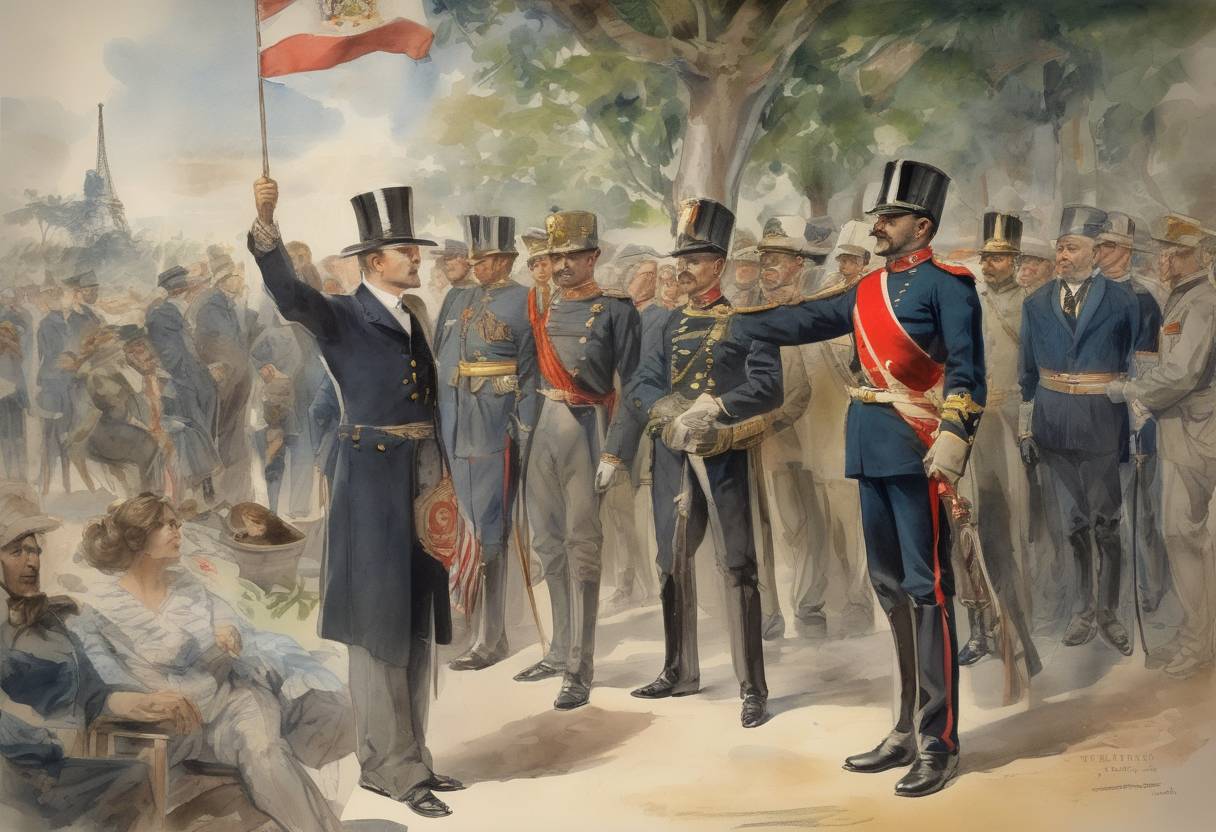
The Spanish-American War, a conflict between Spain and the United States in 1898, officially concluded with the signing of the Treaty of Paris on December 10, 1898. However, the U.S. Senate ratified the treaty on February 6, 1899, marking its official acceptance and implementation.
The Spanish-American War was primarily ignited by the explosion of the USS Maine in Havana Harbor on February 15, 1898, and the United States’ support for Cuban independence from Spanish rule. The war was characterized by a series of swift and decisive victories for the United States, both in the Caribbean and the Pacific.
The Treaty of Paris had significant implications for both Spain and the United States:
Cession of Territories: Spain ceded Puerto Rico, Guam, and the Philippines to the United States. This marked a significant expansion of U.S. influence and territory beyond the continental borders.
Cuban Independence: Although Cuba gained independence from Spain, the United States maintained a significant degree of control over the island through the Platt Amendment, which allowed for U.S. intervention in Cuban affairs.
Financial Compensation: The United States agreed to pay Spain $20 million for the Philippines, a gesture that was part of the treaty’s terms.
Imperial Expansion: The acquisition of these territories marked a turning point in U.S. foreign policy, signaling its emergence as a global power with overseas colonies.
Philippine-American War: The cession of the Philippines led to the Philippine-American War (1899-1902), as Filipino revolutionaries who had fought against Spanish rule now resisted American control.
Impact on Spain: The loss of its colonies marked the end of Spain’s status as a major colonial power, leading to a period of introspection and reform within the country.
Puerto Rico and Guam: These territories became unincorporated territories of the United States, with Puerto Rico eventually gaining commonwealth status and Guam remaining a strategic military base.
The Treaty of Paris and the events surrounding it significantly shaped the geopolitical landscape of the late 19th and early 20th centuries, influencing U.S. foreign policy and colonial practices for decades to come.
Source: www.britannica.com