Bob Dylan's Self-Titled Debut Album Release: March 19, 1962
1962 · New York City, United States
Bob Dylan released his self-titled debut album, which would eventually influence the music industry significantly.
June 21, 1948
Columbia Records introduced the long-playing (LP) record in a public demonstration at the Waldorf-Astoria Hotel in New York City, revolutionizing the music industry by allowing longer recordings on a single disc.
New York City, United States | Columbia Records
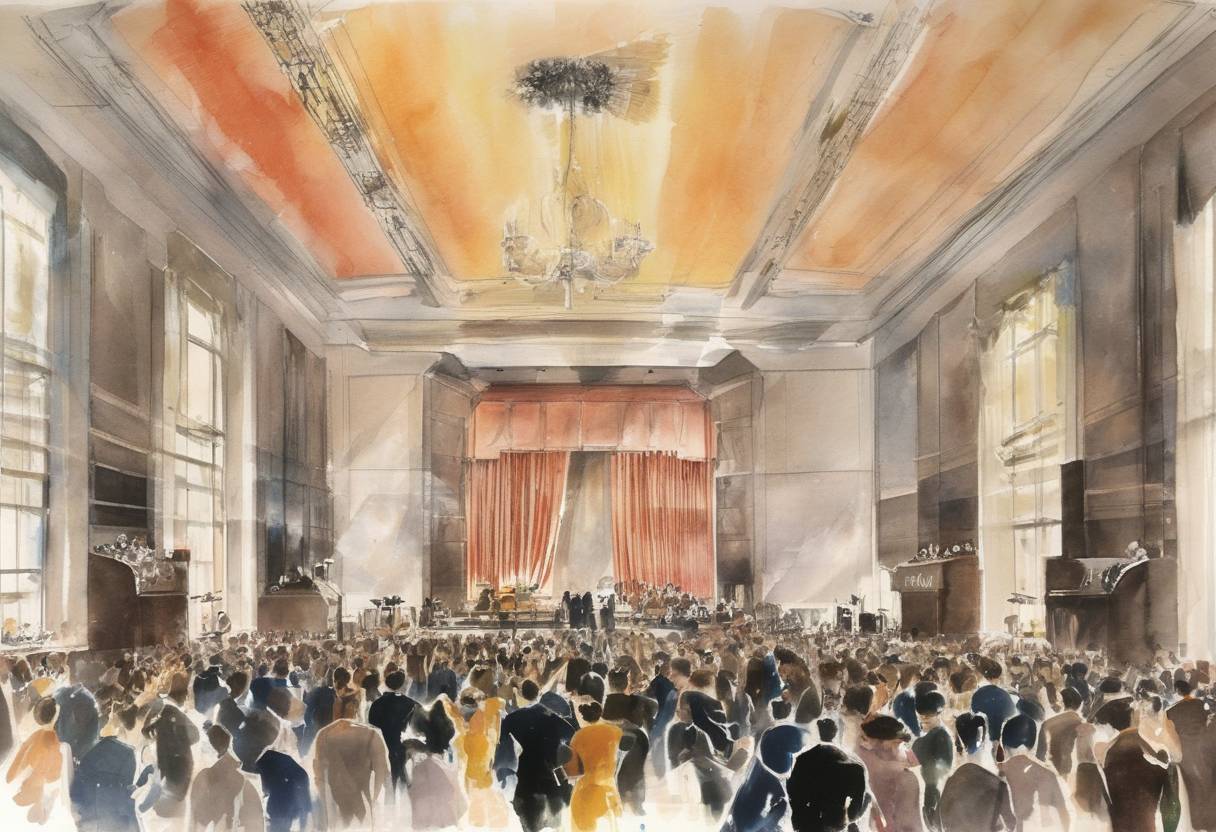
On June 21, 1948, Columbia Records held a groundbreaking public demonstration at the Waldorf-Astoria Hotel in New York City, unveiling the long-playing (LP) record. This innovation marked a significant turning point in the music industry, fundamentally altering how music was recorded, distributed, and consumed.
Before the introduction of the LP, the music industry primarily relied on 78 RPM records, which had significant limitations. These records could only hold about three to five minutes of music per side, necessitating frequent disc changes for longer pieces, such as symphonies or operas. This constraint was a significant challenge for both artists and listeners, limiting the scope of recorded music.
The LP record, developed by Columbia Records, was designed to play at 33 1⁄3 RPM and was made of vinyl, a more durable and flexible material compared to the shellac used in 78s. This new format allowed for much longer playing times, with up to 22 minutes of music per side. The LP’s introduction was a result of years of research and development led by Dr. Peter Goldmark and his team at Columbia.
The public demonstration at the Waldorf-Astoria Hotel was a carefully orchestrated event aimed at showcasing the LP’s capabilities. Attendees, including industry insiders and members of the press, were treated to a series of musical performances that highlighted the LP’s superior sound quality and extended playtime. The event was a resounding success, generating significant excitement and interest in the new format.
The introduction of the LP record had profound implications for the music industry:
The LP record quickly became the standard format for albums, dominating the market for several decades. It paved the way for further innovations in music technology, including the development of stereo sound and the eventual transition to digital formats. The LP’s influence is still felt today, as vinyl records have experienced a resurgence in popularity among collectors and audiophiles.
In summary, the introduction of the LP record by Columbia Records on June 21, 1948, was a pivotal moment in music history, revolutionizing the way music was experienced and enjoyed by audiences worldwide.
Source: en.wikipedia.org