The Adoption of the United States Declaration of Independence
1776 · Philadelphia, United States
The United States Declaration of Independence is adopted by the Continental Congress, marking the birth of the United States of America.
June 11, 1776
The Continental Congress appointed a committee to draft the Declaration of Independence, which included Thomas Jefferson, John Adams, Benjamin Franklin, Roger Sherman, and Robert R. Livingston.
Philadelphia, United States | Continental Congress
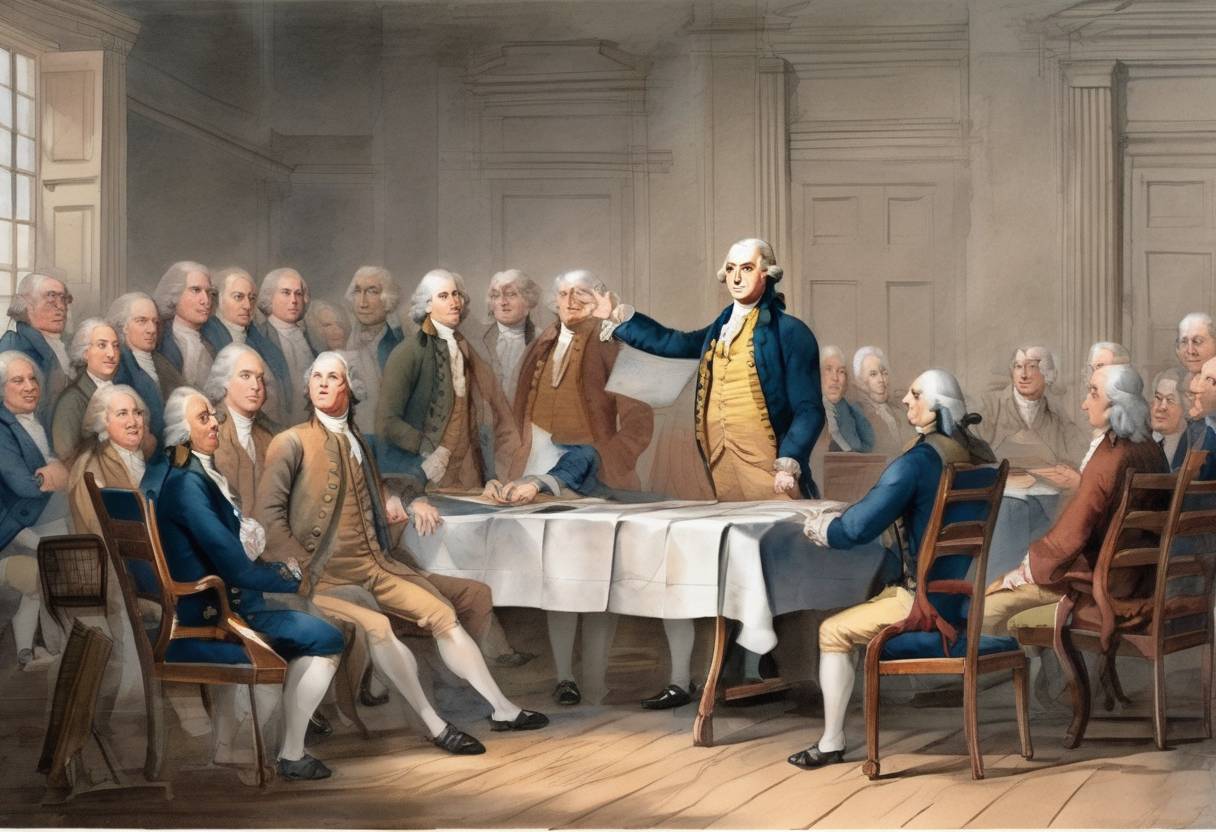
On June 11, 1776, the Continental Congress took a pivotal step towards American independence by appointing a committee to draft a formal declaration. This committee, known as the “Committee of Five,” was tasked with articulating the colonies’ reasons for seeking independence from British rule. The members selected for this important task were:
The decision to draft a declaration was influenced by a series of escalating conflicts and political developments:
Escalating Tensions: The American colonies had been experiencing growing tensions with Great Britain, primarily due to issues such as taxation without representation, the imposition of the Intolerable Acts, and military confrontations like the Battles of Lexington and Concord in 1775.
The Influence of Common Sense: Thomas Paine’s pamphlet, Common Sense, published in January 1776, played a significant role in swaying public opinion towards the idea of independence. It argued for the colonies’ right to self-governance and criticized the monarchy.
The Virginia Resolution: On May 15, 1776, the Virginia Convention passed a resolution calling for independence, which was presented to the Continental Congress by Richard Henry Lee on June 7, 1776. This resolution prompted the Congress to consider drafting a formal declaration.
The Committee of Five was responsible for drafting a document that would clearly state the colonies’ intentions and justify their break from British rule. Each member brought unique strengths to the committee:
Thomas Jefferson began drafting the Declaration of Independence in mid-June 1776. He worked diligently, drawing on Enlightenment ideas and previous colonial documents to craft a compelling argument for independence. The draft underwent several revisions by the committee before being presented to Congress.
The Declaration of Independence was formally adopted by the Continental Congress on July 4, 1776. This document not only marked the birth of the United States as an independent nation but also laid the foundation for its core values of liberty, equality, and democracy. It has since become a symbol of freedom and a cornerstone of American identity.
The appointment of the Committee of Five and the subsequent drafting of the Declaration of Independence were crucial steps in the American Revolution, setting the stage for the colonies’ fight for independence and the eventual establishment of the United States.
Source: en.wikipedia.org