Franklin D. Roosevelt's Fourth Inauguration: January 20, 1945
1945 · Washington, D.C., United States
Franklin D. Roosevelt was inaugurated for an unprecedented fourth term as President of the United States.
April 12, 1945
U.S. President Franklin D. Roosevelt died of a cerebral hemorrhage in Warm Springs, Georgia, and Vice President Harry S. Truman was sworn in as the 33rd President of the United States.
Warm Springs, United States | United States Government
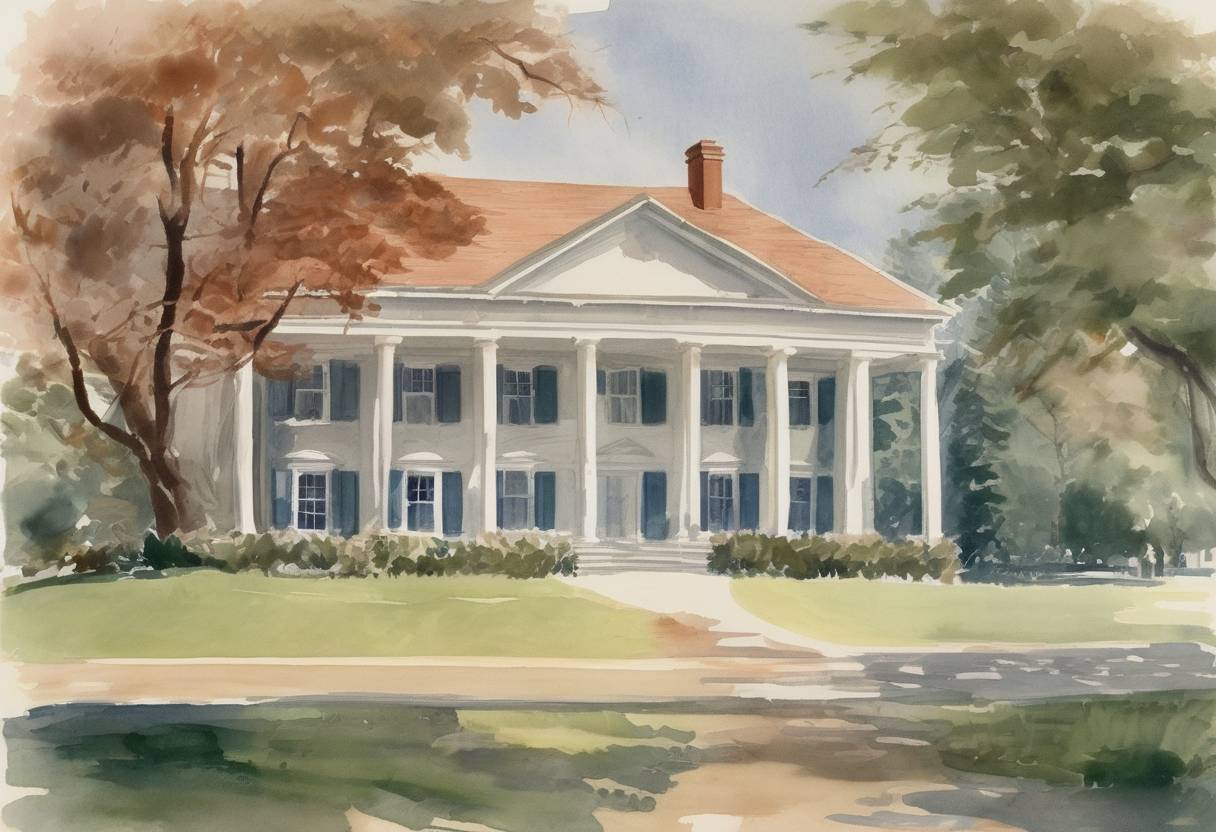
On April 12, 1945, a pivotal moment in U.S. history unfolded with the death of President Franklin D. Roosevelt and the subsequent swearing-in of Vice President Harry S. Truman as the 33rd President of the United States.
Franklin D. Roosevelt, the 32nd President of the United States, passed away at the age of 63 from a cerebral hemorrhage. He died at his retreat in Warm Springs, Georgia, a place he often visited for its therapeutic waters, which he believed helped alleviate the symptoms of his polio.
Fourth Term Presidency: Roosevelt was in his unprecedented fourth term as President, having been elected in 1932, 1936, 1940, and 1944. His leadership during the Great Depression and World War II had made him a central figure in American and global politics.
World War II: At the time of his death, World War II was nearing its conclusion in Europe, with Allied forces making significant advances against Nazi Germany. Roosevelt’s leadership had been instrumental in the formation of the Allied strategy.
Health Concerns: Roosevelt’s health had been a subject of concern for some time, with visible signs of fatigue and illness during his later years in office. Despite this, his death came as a shock to the nation and the world.
Following Roosevelt’s death, Vice President Harry S. Truman was swiftly sworn in as President. The ceremony took place in the Cabinet Room of the White House, marking the beginning of Truman’s presidency.
Immediate Challenges: Truman faced the daunting task of leading the nation through the final stages of World War II. Within weeks of taking office, he would make the critical decision to use atomic weapons against Japan, leading to the end of the war in the Pacific.
Post-War Era: Truman’s presidency would also be marked by the beginning of the Cold War, the implementation of the Marshall Plan to rebuild Europe, and the establishment of the United Nations.
Domestic Policies: On the home front, Truman worked on transitioning the U.S. economy from wartime to peacetime, addressing labor strikes, and advancing civil rights, including desegregating the armed forces.
The transition from Roosevelt to Truman marked a significant shift in U.S. leadership during a critical period in world history. Roosevelt’s New Deal policies and wartime leadership had reshaped the American political landscape, while Truman’s decisions would lay the groundwork for the post-war order and the emerging Cold War dynamics.
Roosevelt’s death and Truman’s ascension underscored the importance of presidential succession and the continuity of leadership during times of national and global crisis.
Source: en.wikipedia.org