The Columbia's Return to Boston Harbor: August 9, 1790
1790 · Boston, United States
The Columbia returned to Boston Harbor after a three-year voyage, becoming the first American ship to circumnavigate the globe.
June 27, 1898
Joshua Slocum completed the first solo circumnavigation of the globe, arriving in Newport, Rhode Island.
Newport, United States | none
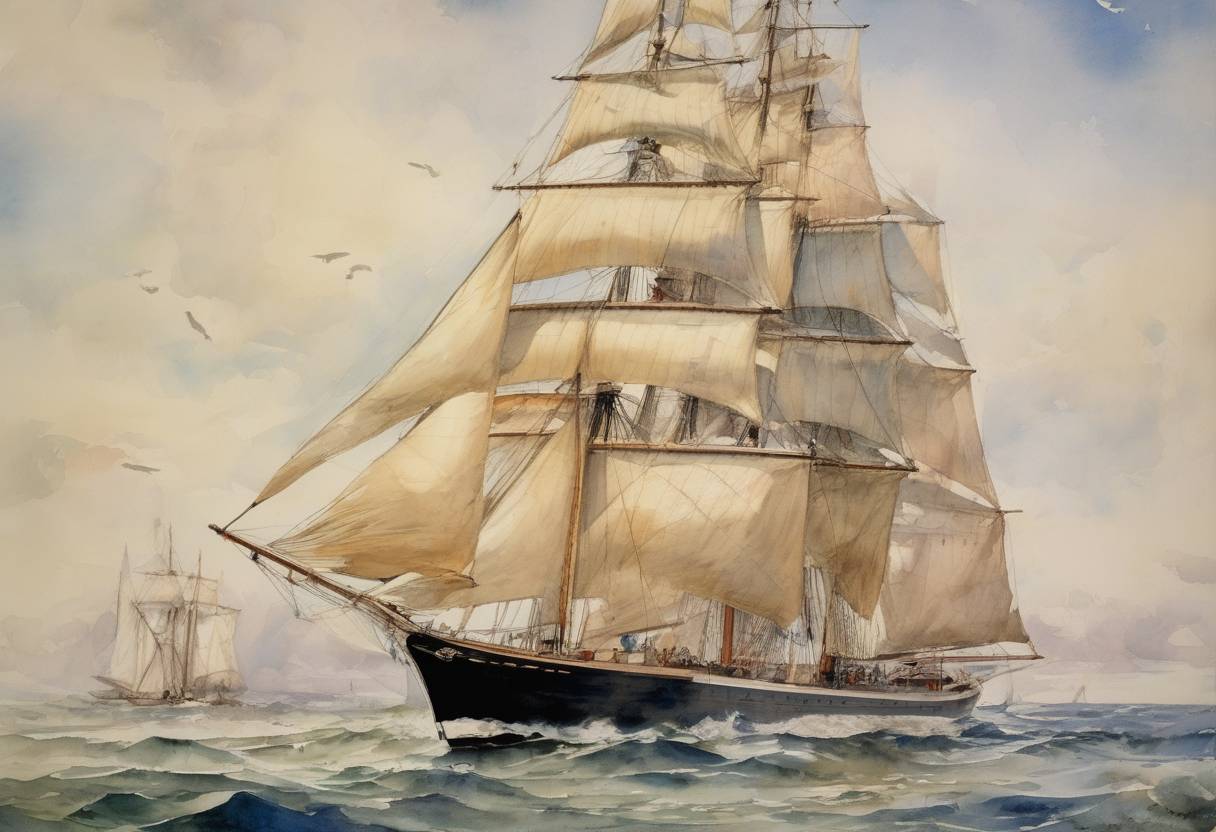
On June 27, 1898, Joshua Slocum, a Canadian-American seaman and adventurer, completed the first solo circumnavigation of the globe, arriving triumphantly in Newport, Rhode Island. This remarkable achievement marked a significant milestone in maritime history and showcased human endurance and navigational skill.
Joshua Slocum was born on February 20, 1844, in Nova Scotia, Canada. He spent much of his early life at sea, eventually becoming a skilled captain. However, after a series of personal and professional setbacks, including the loss of his shipping business, Slocum found himself without a ship or a clear direction.
In 1892, Slocum was given a decrepit sloop named the Spray by a friend. Over the course of 13 months, he meticulously rebuilt and refitted the vessel, transforming it into a seaworthy craft capable of long voyages.
Slocum set sail from Boston, Massachusetts, on April 24, 1895, embarking on what would become a three-year journey around the world. His route took him across the Atlantic Ocean to Gibraltar, through the Strait of Magellan at the southern tip of South America, across the Pacific Ocean, and through the Indian Ocean. He navigated using traditional methods, relying on his expertise with a sextant and chronometer, as well as his deep understanding of the sea.
Upon his arrival in Newport, Rhode Island, Slocum was celebrated for his extraordinary accomplishment. His journey covered approximately 46,000 miles and demonstrated the potential for solo navigation, inspiring future generations of sailors and adventurers.
In 1900, Slocum published an account of his voyage, titled “Sailing Alone Around the World,” which became a classic of maritime literature. The book detailed his adventures and the various cultures he encountered, providing a vivid narrative of his experiences.
Joshua Slocum’s solo circumnavigation was a pioneering feat that expanded the boundaries of what was considered possible in maritime exploration. It highlighted the capabilities of small vessels and the importance of individual skill and determination in overcoming the challenges of the sea. Slocum’s journey remains a testament to human ingenuity and the spirit of adventure.
His legacy continues to inspire sailors and adventurers worldwide, and his story is a cornerstone of nautical history.
Source: en.wikipedia.org