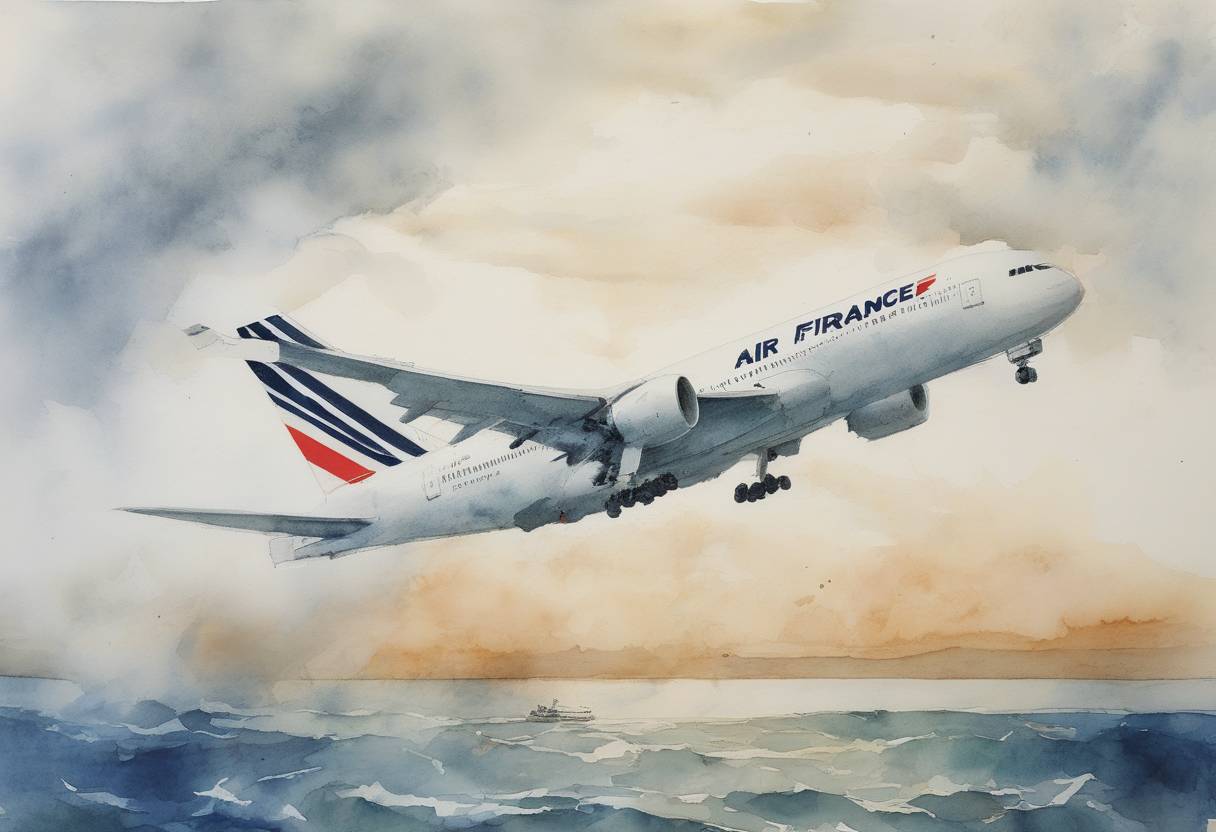
Air France Flight 447 Crash: June 1, 2009
On June 1, 2009, Air France Flight 447 tragically crashed into the Atlantic Ocean while en route from Rio de Janeiro, Brazil, to Paris, France. This catastrophic event resulted in the loss of all 228 passengers and crew on board, marking one of the deadliest aviation disasters in history.
Background
- Flight Details: The aircraft involved was an Airbus A330-203, registered as F-GZCP. It was a regularly scheduled international flight operated by Air France.
- Departure and Route: The flight departed from Rio de Janeiro-Galeão International Airport on May 31, 2009, at 19:29 local time, and was scheduled to arrive at Paris-Charles de Gaulle Airport the following day.
Sequence of Events
- Last Contact: The last radio contact with the aircraft was at 01:35 UTC when the crew reported entering a storm zone with strong turbulence.
- Automated Messages: Between 02:10 and 02:14 UTC, the aircraft’s automated systems transmitted a series of messages indicating multiple system failures, including the disconnection of the autopilot and inconsistencies in airspeed readings.
Investigation and Findings
- Search and Recovery: Initial search efforts were hampered by the remote location and depth of the ocean. The main wreckage and flight recorders were not recovered until May 2011, nearly two years after the crash.
- BEA Report: The French Bureau of Enquiry and Analysis for Civil Aviation Safety (BEA) conducted a thorough investigation. The final report, released in July 2012, identified several key factors:
- Pitot Tubes: Ice crystals obstructed the aircraft’s pitot tubes, leading to unreliable airspeed data.
- Pilot Response: The crew’s response to the loss of airspeed data and subsequent stall warnings was inadequate, resulting in the aircraft entering an aerodynamic stall from which it did not recover.
- Training and Procedures: The report highlighted deficiencies in pilot training and procedures for handling high-altitude stall situations.
Aftermath and Impact
- Safety Improvements: The crash prompted significant changes in aviation safety, including improvements in pilot training for handling unreliable airspeed situations and the redesign of pitot tubes to prevent similar failures.
- Regulatory Changes: The incident led to increased scrutiny of cockpit resource management and communication protocols during emergencies.
Broader Significance
The crash of Air France Flight 447 underscored the complexities of modern aviation and the critical importance of effective pilot training and robust aircraft systems. It served as a catalyst for industry-wide reforms aimed at enhancing the safety and reliability of air travel.
The tragedy remains a poignant reminder of the challenges faced in aviation safety and the ongoing efforts to prevent similar disasters in the future.