Napoleon Bonaparte's Abdication and Exile to Elba - April 11, 1814
1814 · Paris, France
Napoleon Bonaparte abdicated as Emperor of the French and was exiled to the island of Elba, marking the end of his rule in France.
May 18, 1804
Napoleon Bonaparte is proclaimed Emperor of the French by the French Senate, marking the transition from the French Consulate to the First French Empire.
Paris, France | French Senate
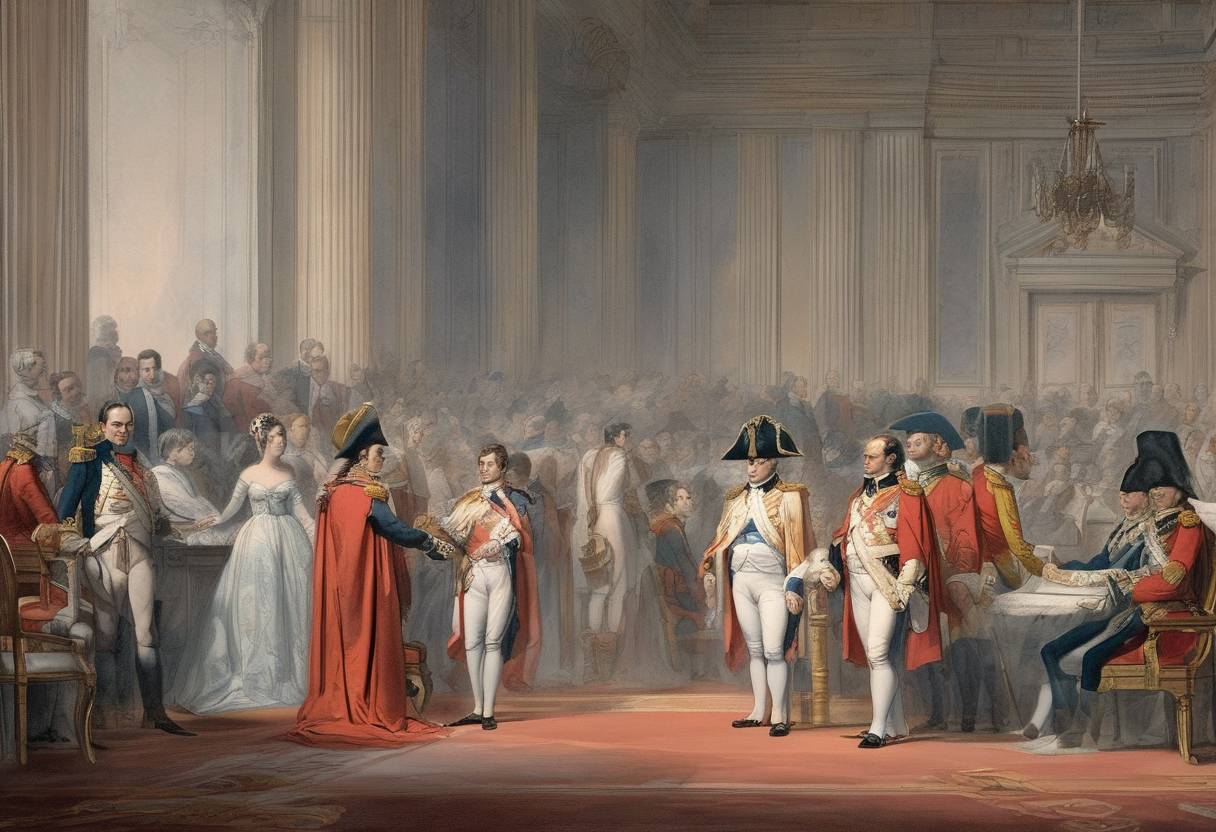
On May 18, 1804, Napoleon Bonaparte was proclaimed Emperor of the French by the French Senate, marking a significant transition from the French Consulate to the First French Empire. This event was a pivotal moment in French history, as it signaled the end of the republican phase of the French Revolution and the establishment of a new imperial regime.
Before becoming Emperor, Napoleon served as the First Consul of France, a position he assumed following the Coup of 18 Brumaire in 1799. This coup effectively ended the Directory, a five-member committee that had governed France, and established the Consulate, with Napoleon as its leading figure. The Consulate was initially designed to be a temporary government, but Napoleon’s consolidation of power soon became apparent.
Napoleon’s rise to power was marked by a series of military successes and political maneuvers. His leadership during the Italian campaigns and his decisive victory at the Battle of Marengo in 1800 solidified his reputation as a formidable military leader. Domestically, he implemented significant reforms, including the Napoleonic Code, which restructured the French legal system and remains influential to this day.
The decision to proclaim Napoleon as Emperor was influenced by several factors:
Stability and Continuity: The French Revolution had left France in a state of political instability. Many believed that a strong, centralized authority was necessary to maintain order and continue the reforms initiated during the Revolution.
Popular Support: Napoleon enjoyed considerable popularity among the French populace and military, which he leveraged to legitimize his rule.
Senate’s Role: The French Senate, under Napoleon’s influence, passed the “Sénatus-consulte” on May 18, 1804, which officially declared him Emperor. This move was later ratified by a plebiscite, demonstrating popular support for the new regime.
Napoleon’s coronation took place on December 2, 1804, at the Notre-Dame Cathedral in Paris. In a symbolic act of self-determination, Napoleon crowned himself, placing the crown on his own head, rather than allowing Pope Pius VII to do so. This act underscored his authority and the secular nature of his rule.
The establishment of the First French Empire had profound implications:
In conclusion, the proclamation of Napoleon as Emperor marked a turning point in French history, transitioning from revolutionary ideals to a new era of imperial ambition and governance.
Source: en.wikipedia.org