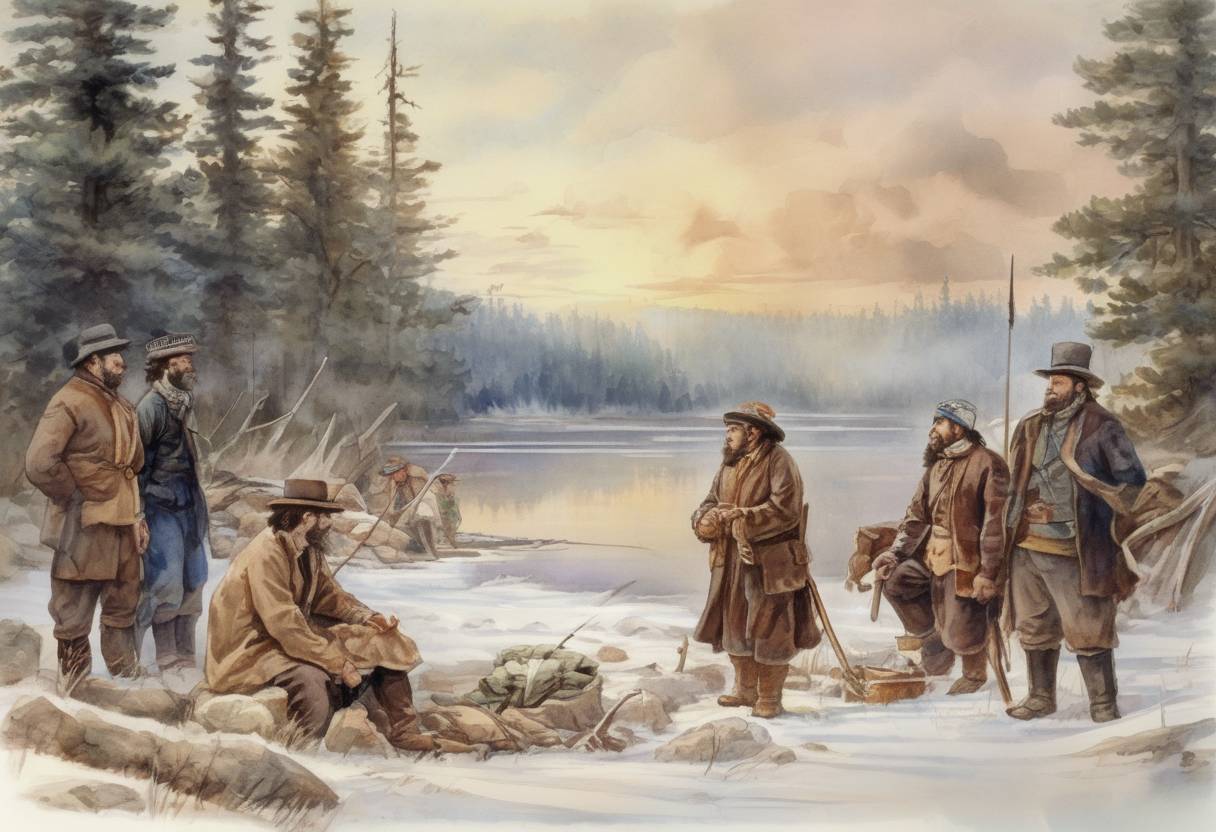
The North-West Rebellion: March 26, 1885
On March 26, 1885, the Métis people, under the leadership of Louis Riel, initiated the North-West Rebellion in Canada. This pivotal event was a significant chapter in Canadian history, highlighting the struggles of the Métis and other Indigenous groups against the Canadian government.
Background
The North-West Rebellion, also known as the North-West Resistance, was rooted in the grievances of the Métis and Indigenous peoples in the Canadian prairies. The Métis, a people of mixed Indigenous and European ancestry, were concerned about the encroachment of European settlers on their lands and the lack of recognition of their rights and culture by the Canadian government. The expansion of the Canadian Pacific Railway and the influx of settlers threatened their traditional way of life.
Louis Riel, a charismatic and controversial leader, had previously led the Red River Rebellion in 1869-1870, which resulted in the creation of the province of Manitoba. After a period of exile in the United States, Riel returned to Canada in 1884 at the behest of the Métis in the Saskatchewan region, who sought his leadership to address their grievances.
Key Events
March 19, 1885: Louis Riel established a provisional government at Batoche, Saskatchewan, declaring himself the political and spiritual leader of the Métis. This act was a direct challenge to the authority of the Canadian government.
March 26, 1885: The rebellion officially began with the Battle of Duck Lake. The Métis forces, led by Gabriel Dumont, engaged North-West Mounted Police and local volunteers. The Métis emerged victorious, which emboldened their cause and attracted more support from Indigenous groups.
Consequences
The North-West Rebellion lasted until May 1885 and included several key battles, such as the Battle of Fish Creek and the Battle of Batoche. Despite early successes, the Métis and their allies were ultimately defeated by the Canadian military, which had superior numbers and resources.
Aftermath: Louis Riel was captured, tried, and executed for treason on November 16, 1885. His execution was controversial and deepened divisions between French and English Canadians.
Impact: The rebellion highlighted the need for the Canadian government to address the rights and grievances of the Métis and Indigenous peoples. It also led to increased military presence in the West and accelerated the assimilation policies towards Indigenous peoples.
Legacy: Louis Riel is remembered as a complex figure—a defender of Métis rights and a martyr for his people. The rebellion is seen as a significant moment in the struggle for Indigenous rights in Canada.
The North-West Rebellion remains a critical event in Canadian history, symbolizing the ongoing challenges and negotiations between Indigenous peoples and the Canadian state.