The Battle of Castillon: A Decisive Victory in the Hundred Years' War
1453 · Castillon-la-Bataille, France
The French, led by Joan of Arc, achieved a decisive victory at the Battle of Castillon, effectively ending the Hundred Years' War.
May 23, 1430
Joan of Arc was captured by the Burgundians at the Siege of Compiègne.
Compiègne, France | Burgundian forces
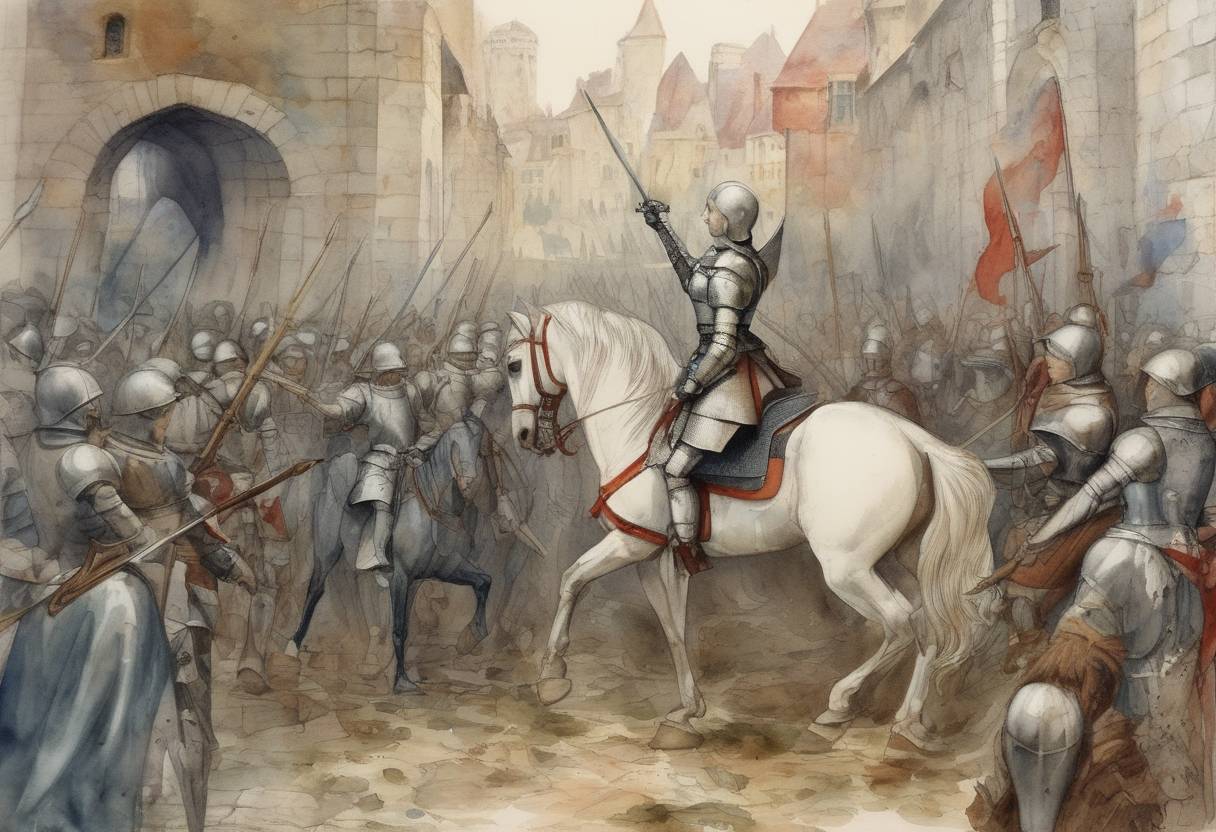
On May 23, 1430, Joan of Arc, the French heroine and military leader, was captured by the Burgundians during the Siege of Compiègne. This event marked a significant turning point in the latter stages of the Hundred Years’ War between England and France.
Joan of Arc, also known as the “Maid of Orléans,” had risen to prominence in 1429 after claiming to have received visions from saints instructing her to support Charles VII and help liberate France from English domination. Her leadership was instrumental in lifting the Siege of Orléans and securing several key victories for the French, which ultimately led to the coronation of Charles VII at Reims.
By 1430, the political landscape of France was complex, with the country divided between supporters of the French crown and those allied with the English, including the powerful Duchy of Burgundy.
Compiègne, a strategic town in northern France, was under threat from Burgundian forces allied with the English. Joan of Arc, determined to defend the town, arrived with a small force to bolster its defenses. Despite her efforts, the Burgundians laid siege to Compiègne.
On May 23, during a sortie against the besieging forces, Joan led an attack to break the Burgundian lines. However, the operation did not go as planned. As the French forces retreated back into the town, Joan was left outside the gates, where she was surrounded and captured by Burgundian soldiers.
Joan’s capture was a significant blow to the French cause. The Burgundians, recognizing her value, sold her to the English, who saw her as a threat to their claims in France. Joan was subsequently put on trial for charges including heresy and cross-dressing, largely due to her wearing of male military attire.
In 1431, after a politically motivated trial, Joan was found guilty and executed by burning at the stake in Rouen. Her death, however, did not diminish her impact. She became a martyr and symbol of French resistance, and her legacy continued to inspire the French in their ongoing struggle against English occupation.
Joan of Arc’s capture and subsequent execution had profound implications. It galvanized French forces and contributed to a resurgence in nationalistic fervor. By 1453, the French had effectively ended English territorial ambitions in France, concluding the Hundred Years’ War.
In 1920, Joan of Arc was canonized as a saint by the Roman Catholic Church, cementing her status as a national and religious icon.
Her life and legacy remain subjects of fascination and reverence, symbolizing courage, faith, and the fight for justice against overwhelming odds.
Source: en.wikipedia.org