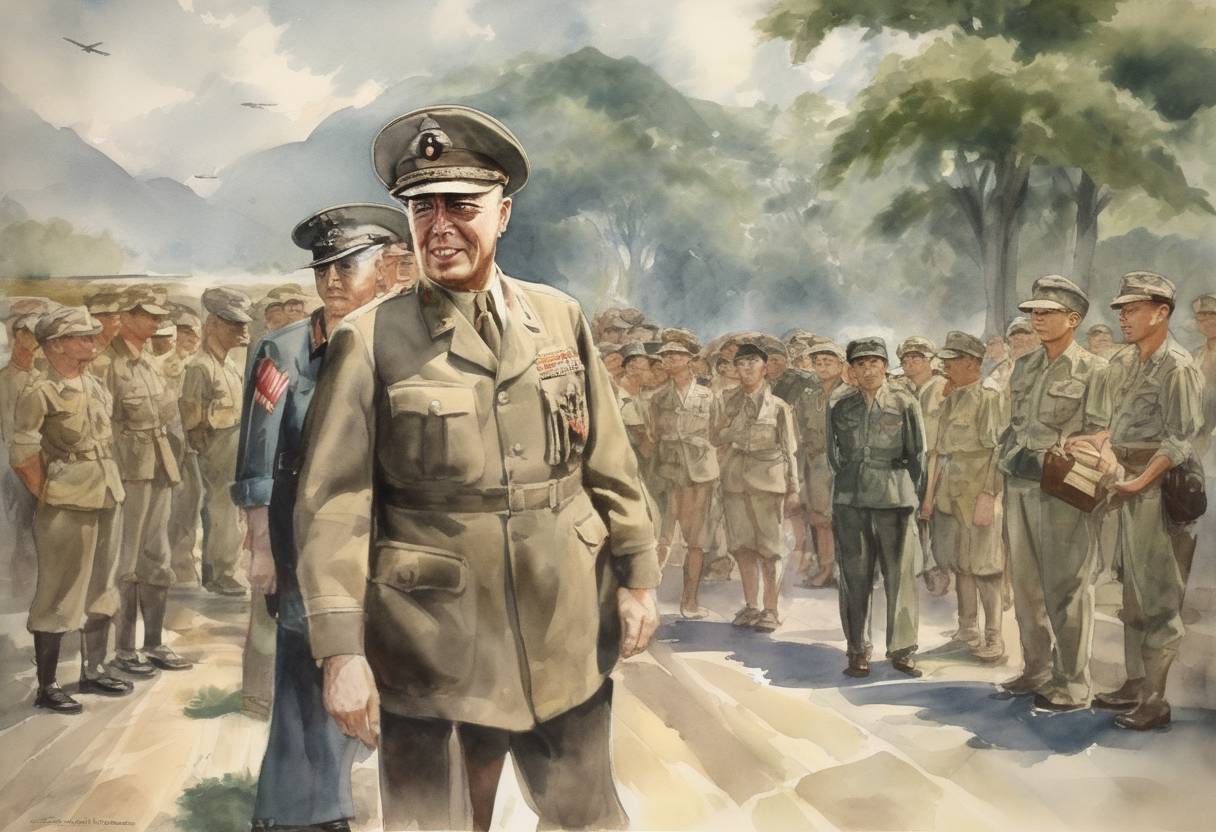
February 22, 1942: FDR Orders General MacArthur to Leave the Philippines
On February 22, 1942, during the early months of the United States’ involvement in World War II, President Franklin D. Roosevelt made the strategic decision to order General Douglas MacArthur to leave the Philippines. This directive came as Japanese forces were advancing rapidly through the Pacific, threatening the American and Filipino troops stationed there.
Context and Background
Japanese Expansion: Following the attack on Pearl Harbor on December 7, 1941, Japan launched a series of offensives across the Pacific. The Philippines, a crucial American territory, was a primary target due to its strategic location and resources.
Defense of the Philippines: General Douglas MacArthur, a prominent military leader, was in command of the United States Army Forces in the Far East. Despite initial resistance, the combined American and Filipino forces were overwhelmed by the superior numbers and tactics of the Japanese military.
Bataan and Corregidor: By early 1942, American and Filipino troops were forced to retreat to the Bataan Peninsula and the island fortress of Corregidor. The situation became increasingly dire as supplies dwindled and reinforcements were unavailable.
The Order to Evacuate
Strategic Withdrawal: Recognizing the critical situation and the importance of preserving leadership for future operations, President Roosevelt ordered MacArthur to evacuate to Australia. The decision was part of a broader strategy to regroup and eventually launch a counteroffensive in the Pacific.
MacArthur’s Reluctance: Initially resistant to leaving his troops, MacArthur famously vowed, “I shall return,” promising to come back and liberate the Philippines from Japanese occupation.
Aftermath and Significance
MacArthur’s Escape: On March 11, 1942, MacArthur, his family, and key staff members made a daring escape from Corregidor by PT boat to Mindanao, and then by aircraft to Australia.
Symbolic and Strategic Impact: MacArthur’s departure was both a symbolic blow and a strategic necessity. His leadership was crucial in planning the eventual Allied counteroffensive in the Pacific, which culminated in the liberation of the Philippines in 1944-1945.
Legacy: MacArthur’s promise to return became a rallying cry for both American and Filipino forces. His eventual return and the successful campaign to retake the Philippines were pivotal moments in the Pacific Theater of World War II.
This event underscores the complexity of wartime decision-making and the importance of strategic retreats in achieving long-term military objectives.