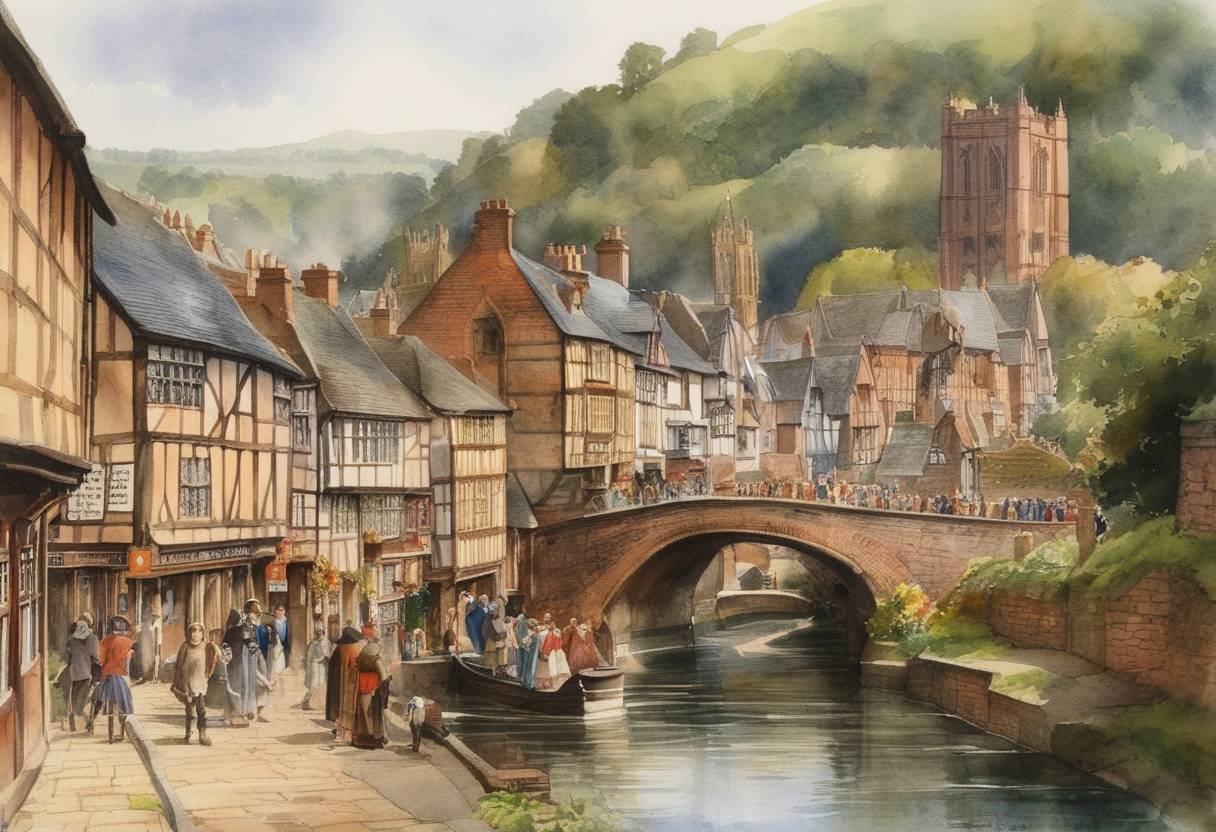
The Granting of the First Royal Charter to Bridgnorth by King John on October 8, 1200
On October 8, 1200, King John of England granted the town of Bridgnorth in Shropshire its first royal charter. This event marked a pivotal point in Bridgnorth’s development during the medieval period, reflecting the broader trend of urbanization and the empowerment of towns in England at the time.
Historical Context
- Feudal England: During King John’s reign, the social and economic structure of England was largely feudal. However, the growth of towns began to challenge this system, as urban centers sought greater autonomy from feudal lords.
- Rise of Charters: Royal charters became a mechanism through which towns could obtain privileges and immunities from the Crown. They often included rights related to self-governance, market holding, and trade, which were crucial for urban prosperity and development.
The Charter’s Significance
- Autonomy and Governance: By receiving a royal charter, Bridgnorth was granted a degree of self-governance, which typically involved the right to elect local officials, hold markets, and administer justice independently from the feudal lord’s direct control.
- Economic Development: The ability to hold markets was significant for the town’s economic growth. It encouraged trade and commerce, attracting merchants and artisans, leading to an increase in population and economic activity.
- Strategic Importance: Located on the River Severn, Bridgnorth was positioned as a strategically important location in the defense and communication networks of medieval England. The charter enhanced its status and importance in regional matters.
Aftermath and Broader Impact
- Urban Expansion: The granting of the charter contributed to Bridgnorth’s expansion and development, fostering an environment where commerce and industry could thrive.
- Precedent for Other Towns: The issuance of charters across England set a precedent for other towns seeking similar privileges, fueling a wave of urban development throughout the medieval period.
- Legacy: The charter marked the beginning of Bridgnorth’s identity as a distinct legal entity, an identity it has retained through centuries of growth, with the original charter reflecting the town’s historic roots.
In summary, the royal charter granted by King John to Bridgnorth on October 8, 1200, was a notable event that fostered the town’s autonomy and economic capabilities, setting a stage for its long-term development and reflecting the transformative urban trends in England during the medieval era.