Topping Out of the Sears Tower - May 3, 1973
1973 · Chicago, United States
The 108-story Sears Tower (now known as the Willis Tower) in Chicago is topped out as the world's tallest building.
October 10, 1971
The London Bridge, which was dismantled and sold to an American entrepreneur, is officially re-opened in Lake Havasu City, Arizona. This event is emblematic of the quirky transfer of historical artifacts between continents.
Lake Havasu City, United States | McCulloch Oil Corporation
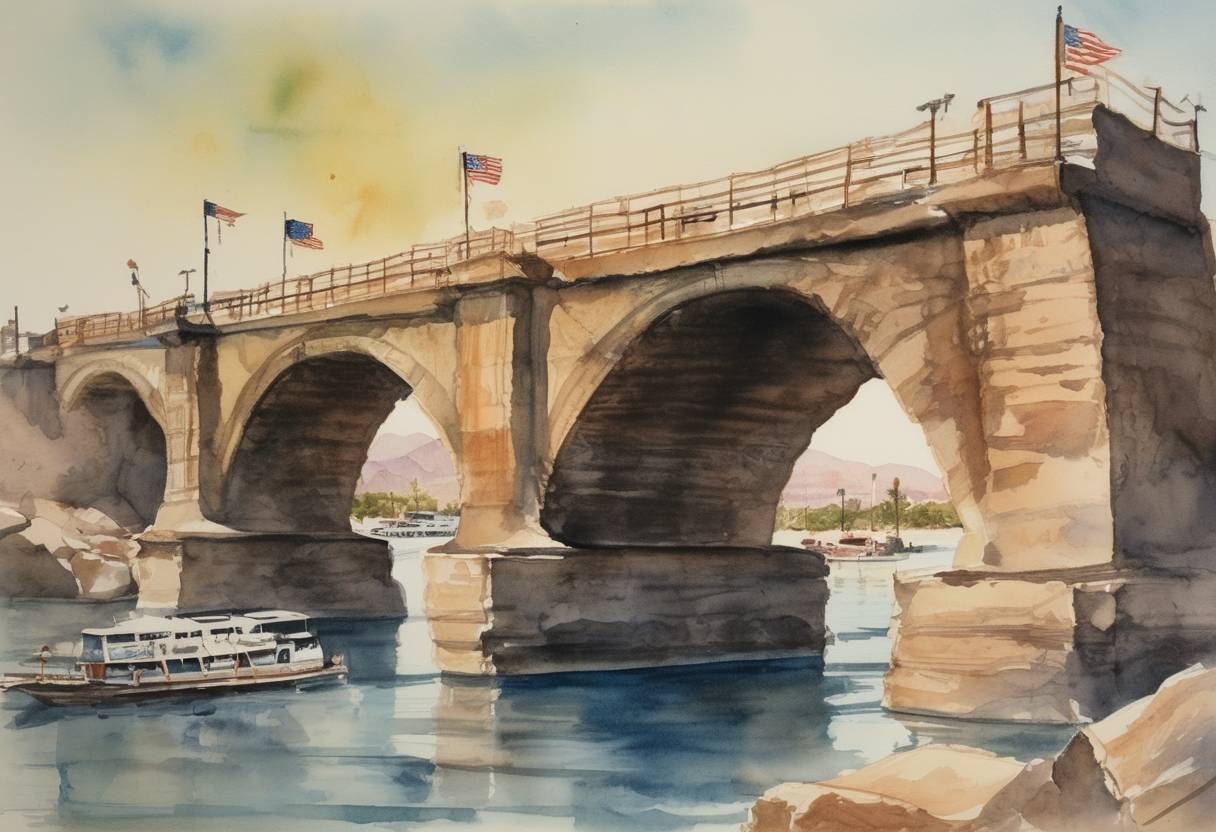
On October 10, 1971, the London Bridge, which had previously spanned the River Thames in London, was officially re-opened in Lake Havasu City, Arizona. This event marked a unique moment in the history of architectural heritage transfer and adaptation.
The original London Bridge was built in 1831 by John Rennie and served as a vital crossing over the Thames until the mid-20th century. By the 1960s, the bridge could no longer handle the increasing traffic demands of modern London. Consequently, the City of London decided to dismantle it and replace it with a newer structure.
American entrepreneur Robert P. McCulloch saw an opportunity in the historic bridge to promote his planned community in Lake Havasu City. In 1968, he purchased the bridge for $2.46 million. The bridge was dismantled, each stone meticulously numbered, and shipped across the Atlantic Ocean, eventually making its way to Arizona.
Upon reaching the United States, the bridge was reassembled over a newly dredged channel of the Colorado River, which created an artificial island. The reconstruction was completed using the original granite façade, covering a modern steel-reinforced concrete structure.
The re-opening ceremony on October 10, 1971, attracted significant attention from the public and media, symbolizing a quirky and ambitious feat of engineering and cultural import. The bridge now serves as a key attraction of Lake Havasu City, drawing tourists and history enthusiasts, effectively enhancing the city’s profile.
The transfer of London Bridge from the UK to the US stands as a testimony to the eclectic and often unexpected paths historical artifacts can take. It highlights both the cultural interconnectedness between continents and the novel interpretations and uses of historical structures in new contexts.
Source: lakehavasumuseum.org