1531 · Lisbon, Portugal
The Lisbon earthquake strikes Portugal with a magnitude estimated to be around 6.8-7.5, causing significant destruction and fatalities in the city of Lisbon.
August 31, 1688
A violent tornado struck the city of Augsburg, causing significant destruction and loss of life.
Augsburg, Holy Roman Empire (now Germany) | None
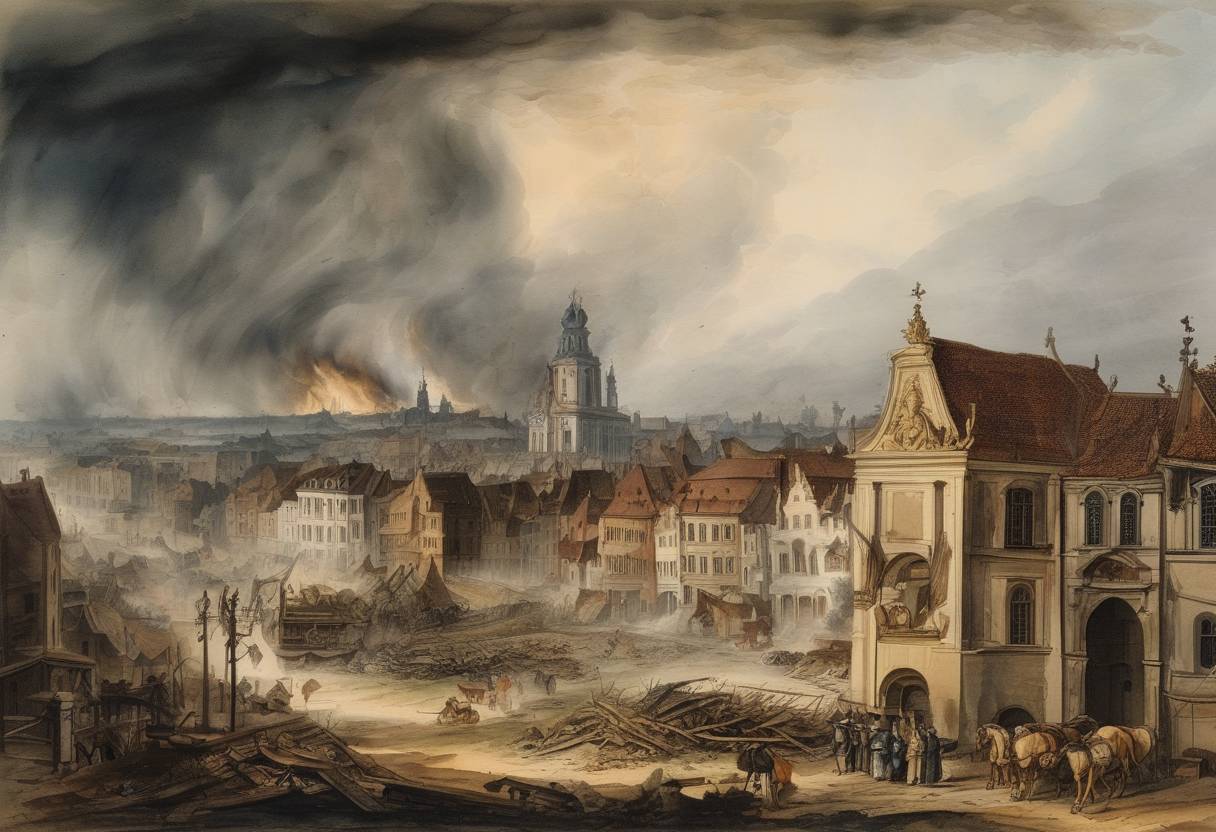
On August 31, 1688, the city of Augsburg, located in present-day Bavaria, Germany, experienced a devastating tornado. This rare and violent meteorological event resulted in considerable destruction and significant loss of life, marking one of the most catastrophic natural disasters in the region during that period.
Augsburg, a prominent city in the Holy Roman Empire, had been a major center of commerce and industry during the 17th century. It was renowned for its prosperous trade networks and cultural advancements. However, the late 1600s were also a time of recovery from the tumult brought about by the Thirty Years’ War, which had caused widespread devastation across large parts of Europe, including Bavaria.
On that fateful day, weather conditions in Augsburg rapidly deteriorated, culminating in an intense tornado that struck the city with little warning. Eyewitness accounts described the immense funnel sweeping through the area with ferocious winds, uprooting trees, demolishing homes, and flattening buildings in its path. The infrastructure of Augsburg suffered extensive damage, disrupting daily life and the local economy significantly.
The immediate impact of the tornado was catastrophic:
Recovery from the tornado was a slow and arduous process for Augsburg. The city had to marshal resources for reconstruction and provide aid to the affected families. Despite these challenges, Augsburg’s resilience was evident as it gradually restored its architectural and cultural heritage.
This tornado is notable not only for its immediate effects but also for its place in broader historical records, illustrating the vulnerability of human settlements to natural disasters even in an era where weather prediction and emergency preparedness were rudimentary at best. It serves as an early example of the severe impact tornadoes can have on populated areas and the enduring need for effective disaster response strategies.
In summary, the Augsburg Tornado of 1688 was a tragic event that left a lasting imprint on the city’s history, symbolizing both the destructive power of nature and the resilience of human communities in the face of adversity.
Source: www.tornadoproject.com