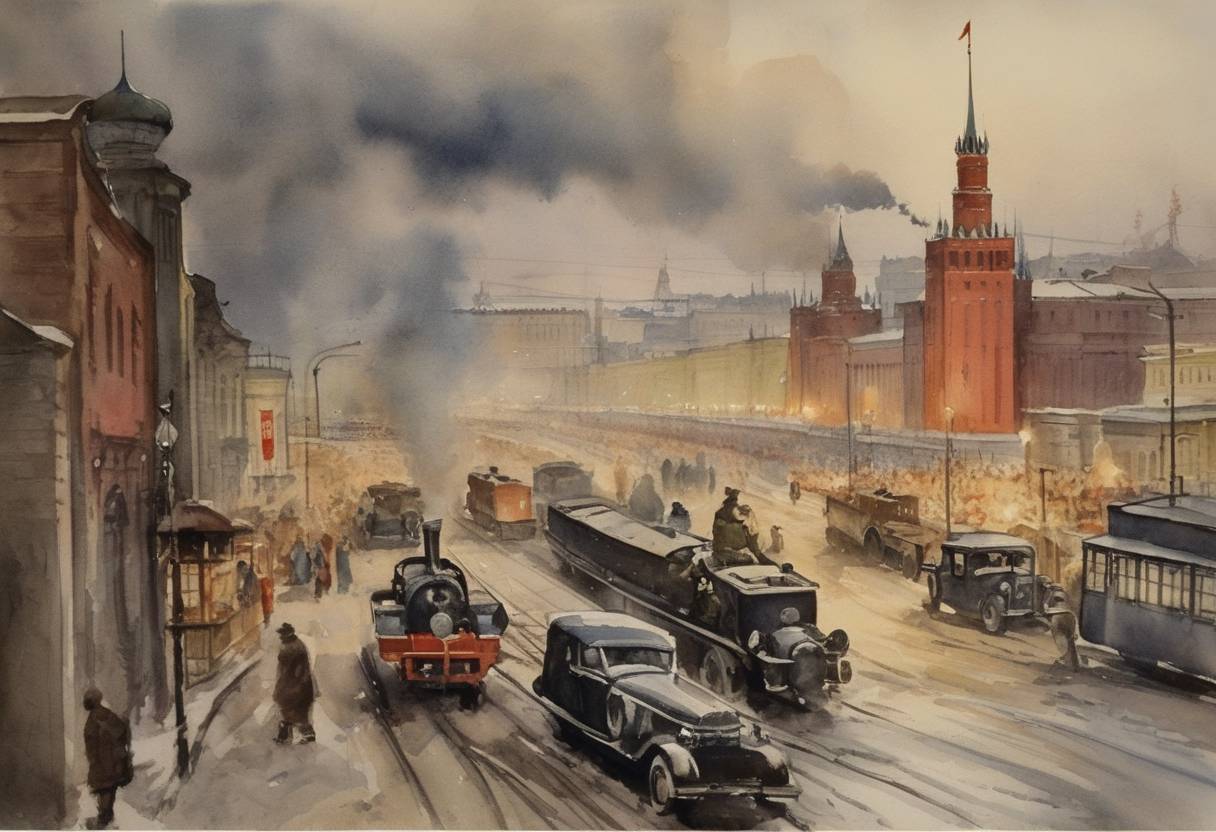
Stalin’s Consolidation of Power: The Five-Year Plan
On December 1, 1934, a significant event marked a turning point in Soviet history, albeit indirectly tied to the broader theme of industrialization and consolidation of power by Joseph Stalin. This was the assassination of Sergei Kirov, a prominent Soviet leader, in Leningrad.
Context of the Soviet Industrialization
The early 1930s in the Soviet Union were defined by rapid industrialization and the implementation of Stalin’s First Five-Year Plan, launched in 1928. This plan marked a massive shift in Soviet economic policy, emphasizing the development of heavy industry and the collectivization of agriculture. By 1934, the Soviet Union was deeply entrenched in this transformative process which aimed to modernize the economy and consolidate Stalin’s power.
Sergei Kirov’s Assassination
Sergei Kirov’s assassination on December 1, 1934, while not directly a component of the industrial plans, played a critical role in the further consolidation of Stalin’s power. Kirov was a rising leader who was considered a potential rival to Stalin within the Communist Party. His death, which many historians suggest was orchestrated by Stalin himself, triggered extensive purges within the party and the government.
Consequences and Aftermath
- Political Repression: Kirov’s assassination gave Stalin the pretext to launch the Great Purge, during which he eliminated a vast number of potential political rivals.
- Industrial Plans’ Intensification: The subsequent purges further centralized decision-making in Stalin’s hands, effectively allowing for more aggressive implementation of policies, including future Five-Year Plans.
- Strengthening Stalin’s Position: By rooting out perceived disloyalty, Stalin reinforced his dominance over the Communist Party, ensuring that industrialization efforts proceeded without opposition.
Significance
The events of December 1, 1934, significantly impacted the Soviet socio-economic landscape. Under Stalin, the focus on rapid industrialization continued, paving the way for the Soviet Union to emerge as a formidable global power by the outbreak of World War II. Simultaneously, Kirov’s assassination underscored Stalin’s willingness to use extreme measures to maintain control and further his vision for the USSR. Historical analysis confirms that the convergence of political purges and industrialization were instrumental in cementing Stalin’s authoritarian regime.