Henry Hudson's Exploration of the Hudson River on September 12, 1609
1609 · New York, United States
Henry Hudson began his exploration of the river that would later be named after him, the Hudson River, during his search for a Northwest Passage.
September 4, 1609
Navigator Henry Hudson explored the area associated with Manhattan Island and began the exploration that would eventually lead to the founding of New Amsterdam, which later became New York City.
Manhattan, present-day USA | Dutch East India Company
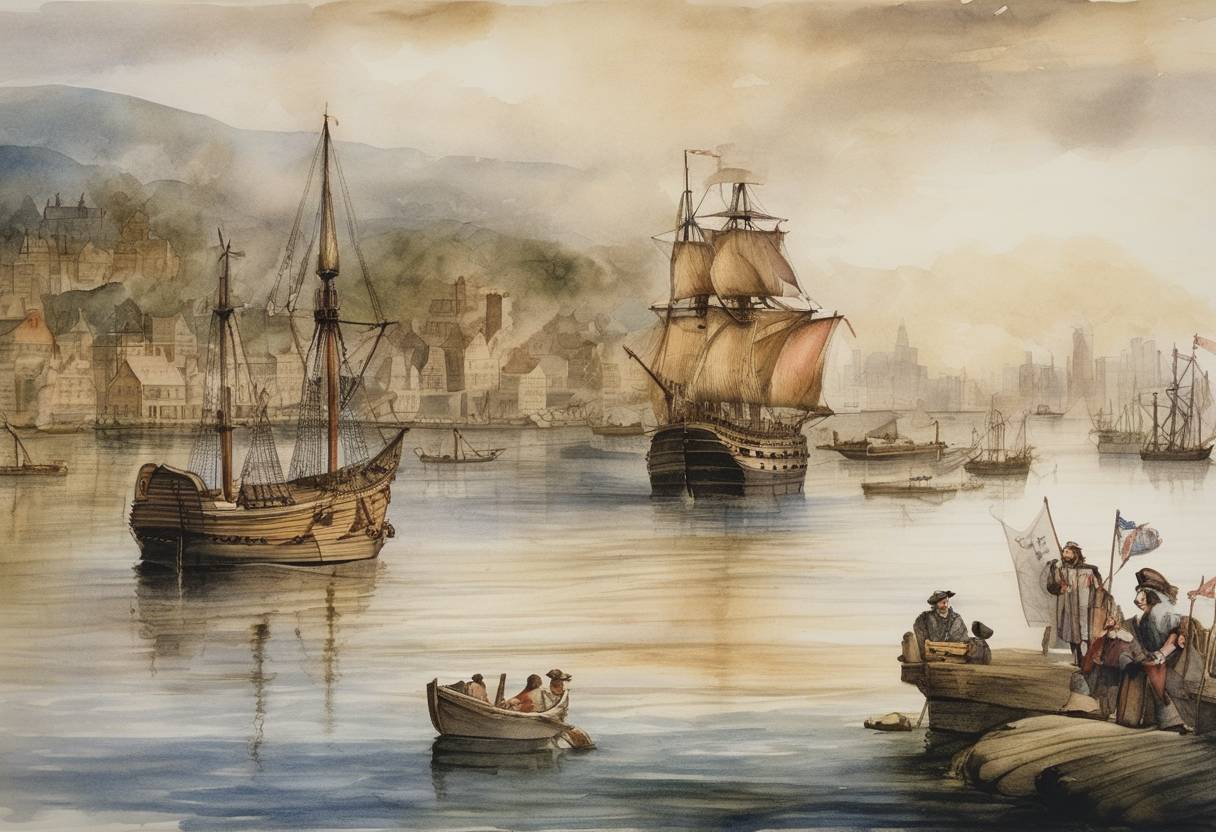
On September 4, 1609, the English navigator Henry Hudson, sailing under the flag of the Dutch East India Company, reached what is today known as Manhattan Island. This expedition, aboard the ship Halve Maen (Half Moon), marked a significant moment in the exploration of North America and laid the groundwork for the establishment of Dutch claims in the region.
Henry Hudson, originally tasked with finding a northerly passage to Asia, altered his mission due to challenging icy conditions and potential sea blockages. Opting for an alternative route, Hudson turned his attention towards the unexplored areas along the North American coast. By doing so, he unwittingly became instrumental in mapping territories that were previously unknown to Europeans, contributing to the expansion of trade networks.
On the specified date, Hudson’s expedition focused on exploring the vast natural harbor near what is now New York City. As Hudson navigated the waters, he documented the abundant resources, including the lush landscapes and rich natural harbors. This exploration was pivotal as it provided the Dutch with valuable insights into the lucrative potential of the area, particularly in terms of trade and settlement.
Hudson’s exploration of Manhattan would ultimately lead to the Dutch establishment of a fortified trading post and settlement named New Amsterdam in 1625. This settlement flourished as a center of commerce, attracting a diverse population due to its strategic position and the promise of economic opportunities.
In 1664, New Amsterdam was taken over by the English and renamed New York. This city would evolve to become one of the most significant urban centers in the world.
Hudson’s initial exploration on September 4, 1609, thus represents a foundational moment in the history of New York City, illustrating the impact of European exploration in North America and the eventual development of one of the world’s most dynamic and influential cities.
Source: en.wikipedia.org