The Dedication of the Statue of Liberty
1886 · New York City, United States
The Statue of Liberty is dedicated in New York Harbor by President Grover Cleveland.
September 29, 1885
The cornerstone of the Statue of Liberty's pedestal was laid on Bedloe's Island in New York Harbor.
New York City, United States | American Committee for the Statue of Liberty
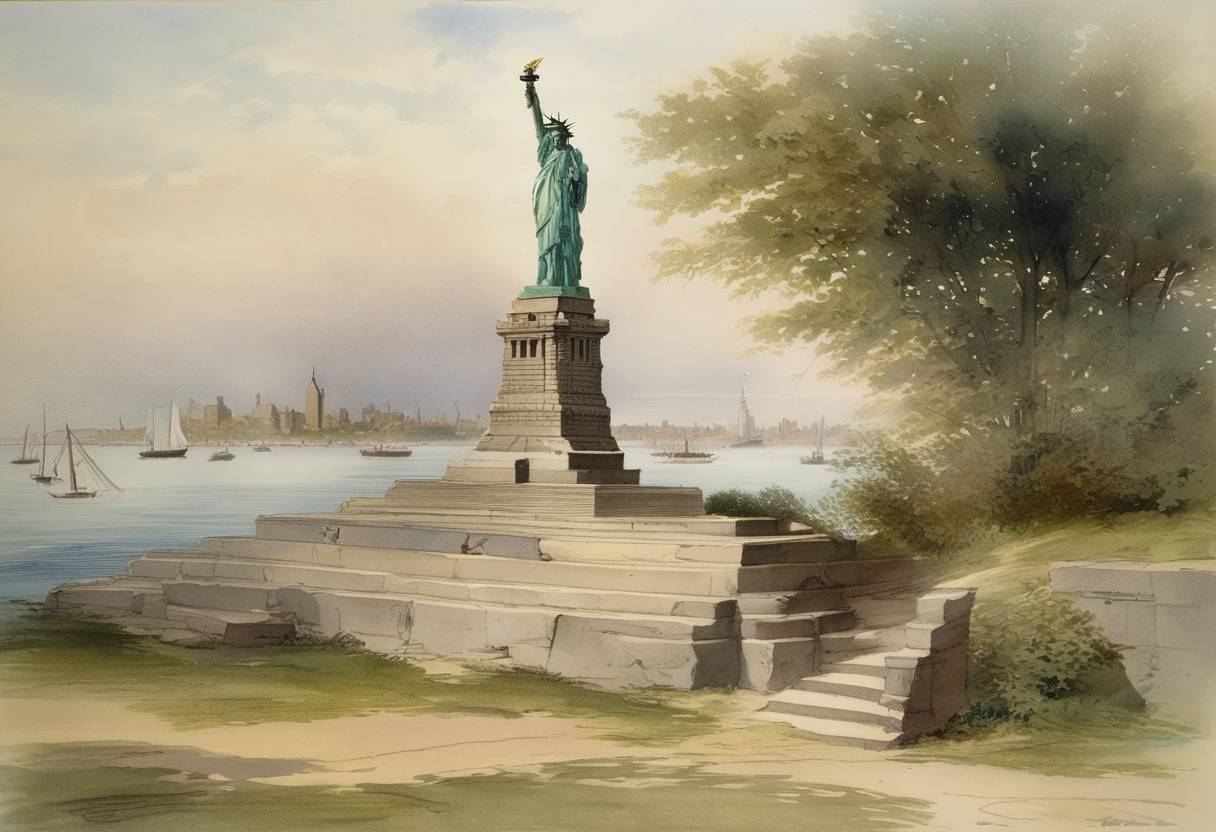
On September 29, 1885, the cornerstone for the pedestal of the Statue of Liberty was laid on Bedloe’s Island, now known as Liberty Island, in New York Harbor. This significant event marked a pivotal point in the construction and assembly of one of the United States’ most iconic monuments, a gift from France designed by the sculptor Frédéric Auguste Bartholdi.
The Statue of Liberty, officially titled “Liberty Enlightening the World,” was conceived by Bartholdi as a symbol of freedom and democracy. France offered the statue to the United States to celebrate the centennial of the American Declaration of Independence and to symbolize the enduring friendship between the two nations.
While the statue itself was being constructed in France, the responsibility for building its pedestal fell to the United States. The American Committee for the Statue of Liberty, led by Joseph Pulitzer, launched fundraising efforts to gather the financial resources necessary to construct the pedestal. These efforts included penny collections from the general public, showcasing the widespread support for the project.
The cornerstone laying ceremony was a momentous occasion, attended by a large gathering that included dignitaries, members of the press, and local citizens. The event was led by William A. Brodie, the Grand Master of Masons in New York, who placed the cornerstone using traditional Masonic practices. The ceremony underscored the cooperative effort between France and the United States in bringing the statue to completion.
Following the laying of the cornerstone, work on the pedestal continued, involving the assembly of the statue’s copper and iron framework once it arrived from France. The pedestal was designed by the American architect Richard Morris Hunt, and its completion was crucial to supporting the statue, which was assembled and dedicated the following year, on October 28, 1886.
The Statue of Liberty has since become an enduring symbol of freedom and democracy, welcoming millions of immigrants arriving by sea and serving as a beacon of hope and opportunity. The laying of the cornerstone was a critical step in the monument’s journey, reflecting the transatlantic collaboration and shared ideals between the United States and France.
Today, the Statue of Liberty stands not only as a historical landmark but also as a cultural icon. The pedestal, built upon the cornerstone laid on that significant day in 1885, remains integral to the monument’s foundation, symbolizing support and strength, much like the values the statue itself represents.
The events of September 29, 1885, are remembered as a defining chapter in the history of the Statue of Liberty, highlighting the concerted efforts of individuals and nations dedicated to the cause of liberty and democracy.
Source: en.wikipedia.org