The Siege of Metz: October 23, 1870
1870 · Metz, France
Franco-Prussian War: The siege of Metz ended with the capture of the French garrison by Prussian forces, leading to a significant victory for the Prussian-led German states.
September 19, 1870
The Siege of Paris began during the Franco-Prussian War. The Prussian forces surrounded Paris, leading to a prolonged siege that lasted until January 28, 1871, resulting in the French surrender and the proclamation of the German Empire.
Paris, France | Prussian Army
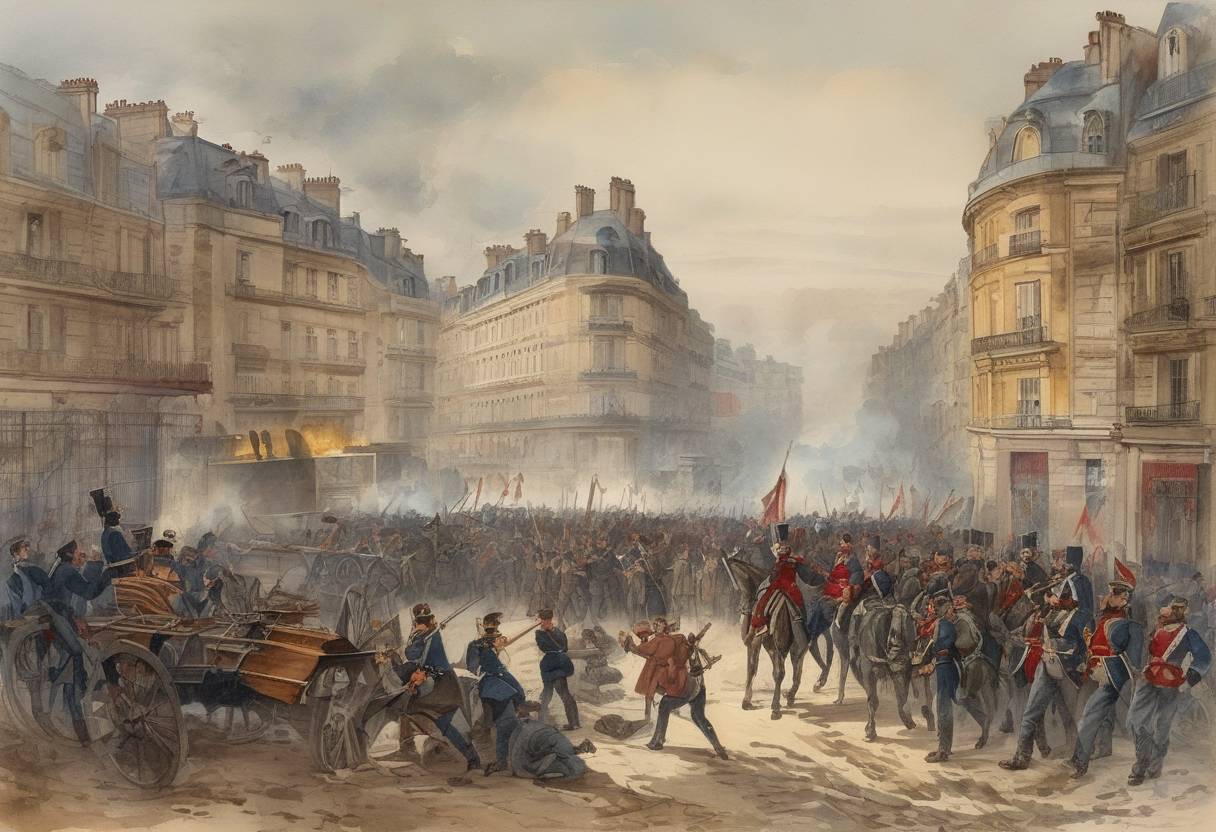
The Siege of Paris, a pivotal event during the Franco-Prussian War, commenced on September 19, 1870. This siege marked a significant turning point in the conflict between the French Empire and the Kingdom of Prussia, alongside its German allies. The siege lasted until January 28, 1871, culminating in the French surrender and the subsequent proclamation of the German Empire.
The Franco-Prussian War began on July 19, 1870, primarily due to rising tensions between the Second French Empire, led by Emperor Napoleon III, and the Kingdom of Prussia, under Chancellor Otto von Bismarck. The war was fueled by nationalistic fervor and Bismarck’s ambition to unify the German states under Prussian leadership.
The French military, despite initial confidence, suffered a series of defeats against the well-organized and technologically advanced Prussian forces. The most notable of these was the Battle of Sedan on September 1, 1870, where Napoleon III was captured, leading to the collapse of the French Second Empire and the establishment of the Third Republic.
Following the victory at Sedan, Prussian forces, commanded by General Helmuth von Moltke, advanced towards Paris. By September 19, they had effectively encircled the city, initiating a siege that would last over four months.
The prolonged siege eventually led to severe food shortages and deteriorating living conditions, forcing the French government to negotiate an armistice. On January 28, 1871, Paris officially surrendered to the Prussian forces.
The Siege of Paris and the subsequent events had profound implications:
The Siege of Paris remains a critical episode in European history, illustrating the complex interplay of military strategy, national identity, and political change.
Source: en.wikipedia.org