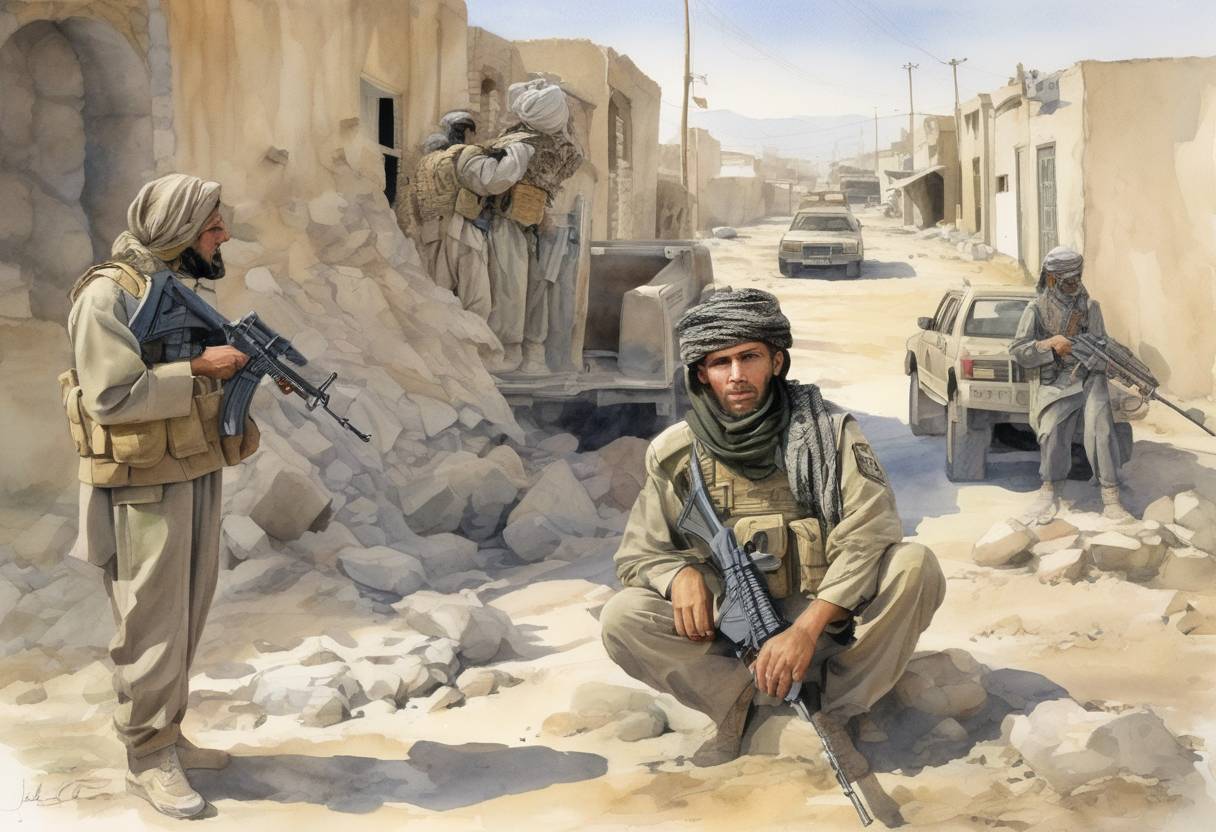
Collapse of the Taliban Regime in Afghanistan - December 7, 2001
On December 7, 2001, a significant turning point occurred in the Afghanistan conflict when the Taliban regime collapsed following the fall of Kandahar, their last major stronghold. This event marked a crucial phase in the U.S.-led military campaign known as Operation Enduring Freedom, which was launched in response to the September 11, 2001, terrorist attacks.
Background
Taliban Regime: The Taliban, an Islamic fundamentalist group, had controlled most of Afghanistan since 1996. Their regime was characterized by strict enforcement of Sharia law and was internationally isolated, recognized only by a few countries.
September 11 Attacks: The attacks on the United States by al-Qaeda, which was harbored by the Taliban in Afghanistan, prompted the U.S. to demand the extradition of al-Qaeda leader Osama bin Laden. The Taliban’s refusal led to military intervention.
Northern Alliance: A coalition of Afghan groups opposed to the Taliban, the Northern Alliance had been fighting the Taliban for years. With U.S. support, they became a key ally in the campaign to dismantle the Taliban regime.
Key Events Leading to the Fall of Kandahar
U.S. Military Intervention: Beginning in October 2001, the U.S. launched airstrikes against Taliban and al-Qaeda targets, providing crucial support to the Northern Alliance on the ground.
Rapid Advances: By November 2001, the Northern Alliance, with U.S. air support, had captured Kabul, the Afghan capital, and other key cities, significantly weakening the Taliban’s hold on the country.
Siege of Kandahar: Kandahar, the spiritual birthplace of the Taliban, became the focus of intense military pressure. U.S. Special Forces and Northern Alliance fighters encircled the city, leading to negotiations for its surrender.
The Fall of Kandahar
Surrender and Withdrawal: On December 7, 2001, Taliban forces in Kandahar agreed to surrender. Mullah Mohammad Omar, the Taliban leader, and other senior figures reportedly fled the city, effectively marking the collapse of the Taliban regime.
U.S. and Northern Alliance Control: The capture of Kandahar signified the end of Taliban control over Afghanistan’s major urban centers, allowing the Northern Alliance and U.S. forces to establish a transitional government.
Aftermath and Consequences
Interim Government: In the wake of the Taliban’s fall, an interim government was established under Hamid Karzai, who later became the President of Afghanistan.
Continued Conflict: Despite the regime’s collapse, Taliban insurgents continued to wage a guerrilla war against the new Afghan government and coalition forces, leading to prolonged conflict in the region.
International Involvement: The international community, led by the United States, remained engaged in Afghanistan, focusing on rebuilding efforts and counterinsurgency operations.
The fall of Kandahar on December 7, 2001, was a pivotal moment in the Afghanistan conflict, reshaping the country’s political landscape and setting the stage for ongoing international efforts to stabilize the region.