Ramsay MacDonald Becomes the First Labour Prime Minister of the United Kingdom
1924 · London, United Kingdom
Ramsay MacDonald becomes the first Labour Prime Minister of the United Kingdom.
February 27, 1900
The British Labour Party is founded at the Memorial Hall in Farringdon, London.
London, United Kingdom | Labour Party
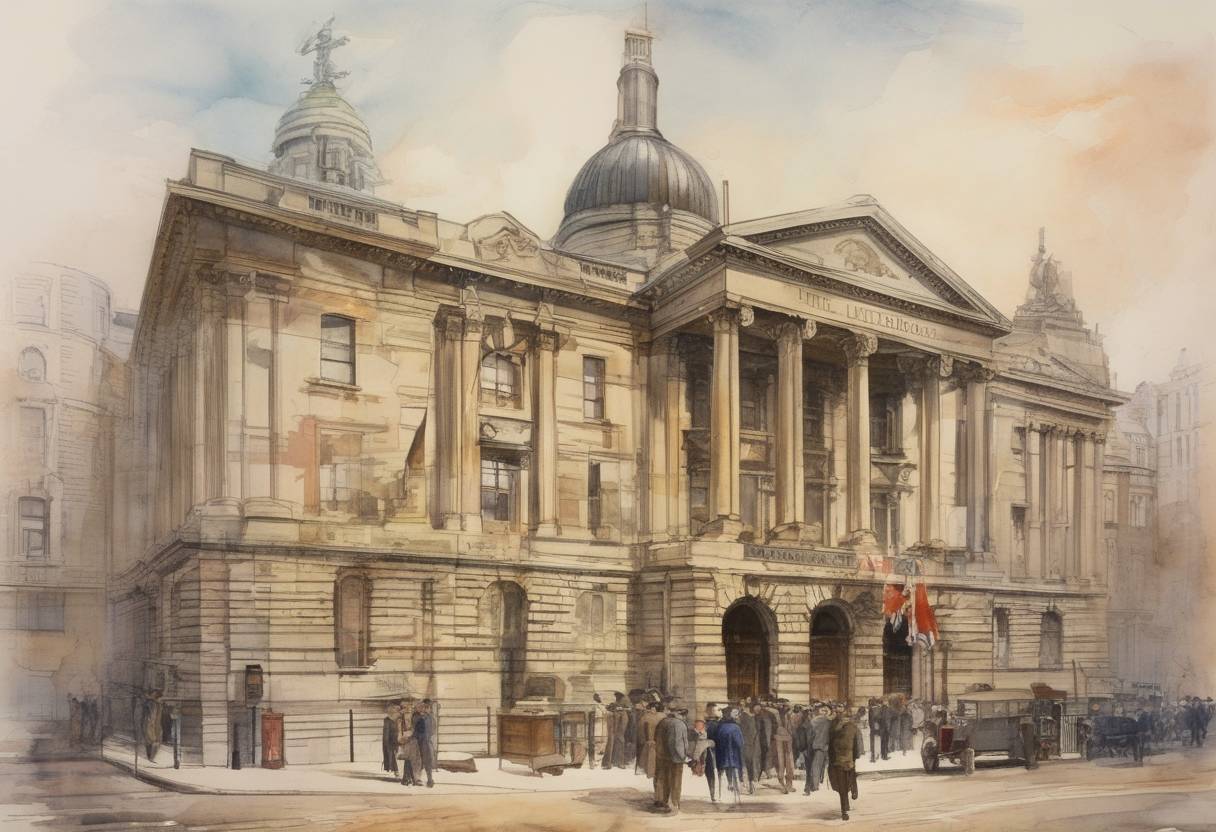
On February 27, 1900, a pivotal moment in British political history occurred with the founding of the Labour Party at the Memorial Hall in Farringdon, London. This event marked the formal establishment of a political party that would go on to become one of the two major political forces in the United Kingdom.
The late 19th century in Britain was characterized by significant social and economic changes. The Industrial Revolution had transformed the landscape, leading to the rise of a working class that was increasingly aware of its collective power and the need for political representation. The existing political parties, primarily the Conservatives and the Liberals, were seen as inadequate in addressing the specific needs and concerns of the working class.
The Labour Representation Committee (LRC) was formed as a response to this gap in representation. It was a coalition of various socialist groups, trade unions, and cooperative societies. The primary aim of the LRC was to increase the representation of labor interests in Parliament.
The founding conference of the Labour Party was attended by over 100 delegates representing trade unions, socialist societies, and cooperative organizations. Key figures at the conference included James Keir Hardie, a prominent socialist and trade unionist, and Ramsay MacDonald, who would later become the first Labour Prime Minister.
The delegates agreed to establish a new political entity that would focus on representing the working class and advocating for social justice, workers’ rights, and democratic socialism. The Labour Representation Committee was thus transformed into the Labour Party.
The Labour Party’s establishment marked the beginning of a new era in British politics. It challenged the traditional two-party system and brought issues such as workers’ rights, social equality, and public welfare to the forefront of political discourse. The party’s influence grew steadily, culminating in its first government in 1924 under Ramsay MacDonald.
Today, the Labour Party remains a central player in British politics, continuing to advocate for policies that aim to reduce inequality and promote social justice. Its founding on February 27, 1900, is remembered as a significant milestone in the pursuit of political representation for the working class in the UK.
Source: en.wikipedia.org