The Opening of the London Underground: January 10, 1863
1863 · London, England
The London Underground, the world's oldest underground railway, opens between Paddington and Farringdon.
July 26, 1803
The Surrey Iron Railway, arguably the world's first public railway, opened in south London, England.
London, England | Surrey Iron Railway
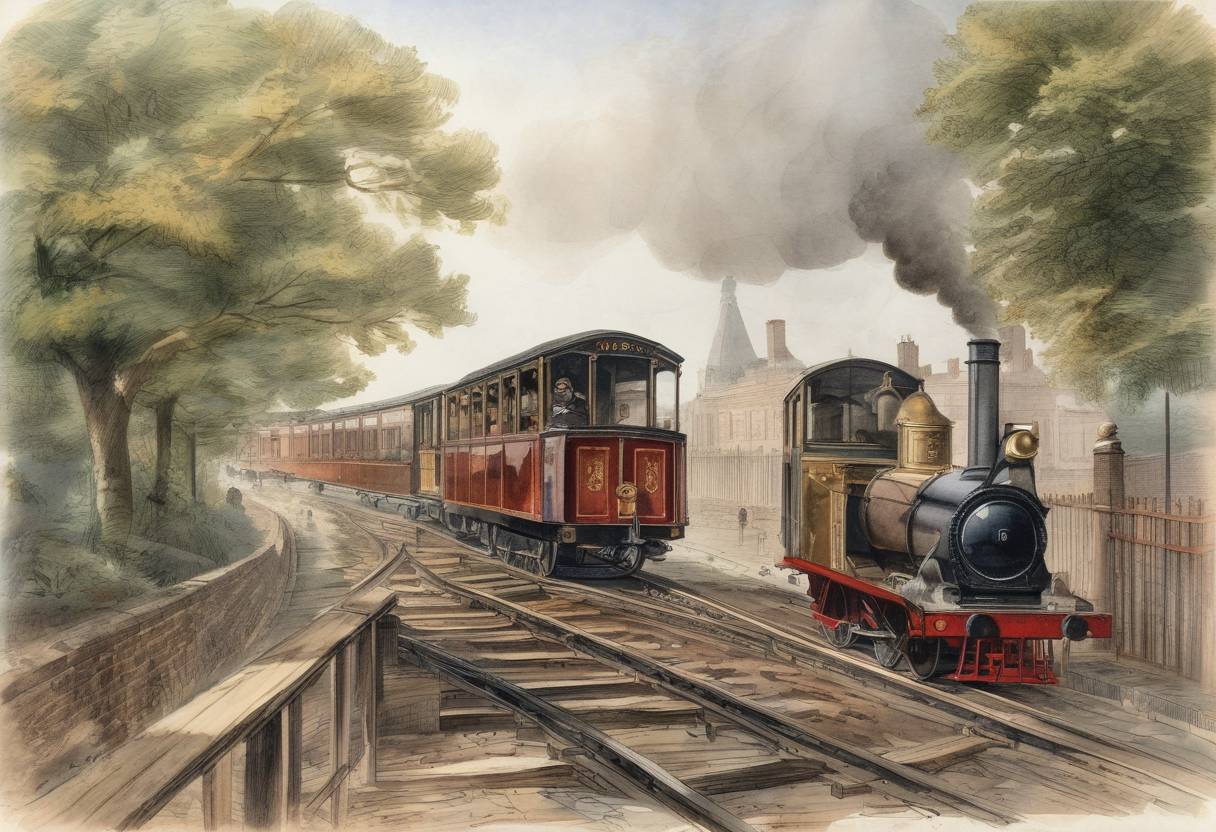
On July 26, 1803, the Surrey Iron Railway, often regarded as the world’s first public railway, officially opened in south London, England. This significant event marked a pivotal moment in the history of transportation and the Industrial Revolution.
The late 18th and early 19th centuries were a period of rapid industrialization in Britain. The need for efficient transportation of goods, particularly coal and raw materials, became increasingly urgent. Traditional roadways were inadequate for the heavy loads required by burgeoning industries, prompting the exploration of alternative transport methods.
Inception and Construction: The Surrey Iron Railway was conceived as a horse-drawn plateway, a type of early railway that used iron rails. It was designed to facilitate the movement of goods between the River Thames at Wandsworth and the town of Croydon, a distance of approximately nine miles. The railway was authorized by an Act of Parliament in 1801, and construction began shortly thereafter.
Engineering and Design: The railway was engineered by William Jessop, a prominent civil engineer of the time. It featured cast iron rails laid on stone sleepers, a design that allowed horse-drawn wagons to transport goods more efficiently than traditional road transport.
Operation: Unlike later railways, the Surrey Iron Railway did not operate its own trains. Instead, it functioned as a toll railway, where independent carriers could use the tracks for a fee. This model made it accessible to a wide range of users, from small traders to larger industrialists.
Economic Impact: The railway significantly reduced the cost and time of transporting goods between Wandsworth and Croydon, stimulating local trade and industry. It played a crucial role in supporting the economic growth of south London during the early 19th century.
Technological Influence: As one of the earliest examples of a railway open to public use, the Surrey Iron Railway set a precedent for future railway developments. It demonstrated the viability of rail transport and paved the way for the expansion of railway networks across Britain and eventually the world.
Legacy: Although the Surrey Iron Railway was eventually superseded by more advanced steam-powered railways, its pioneering role in the history of transportation remains significant. It laid the groundwork for the development of modern railways, which became a cornerstone of the Industrial Revolution and global trade.
The opening of the Surrey Iron Railway on July 26, 1803, represents a landmark in the evolution of transportation infrastructure. Its innovative use of iron rails and public accessibility were instrumental in shaping the future of rail travel, highlighting the transformative power of technological advancements during the Industrial Revolution.
Source: en.wikipedia.org