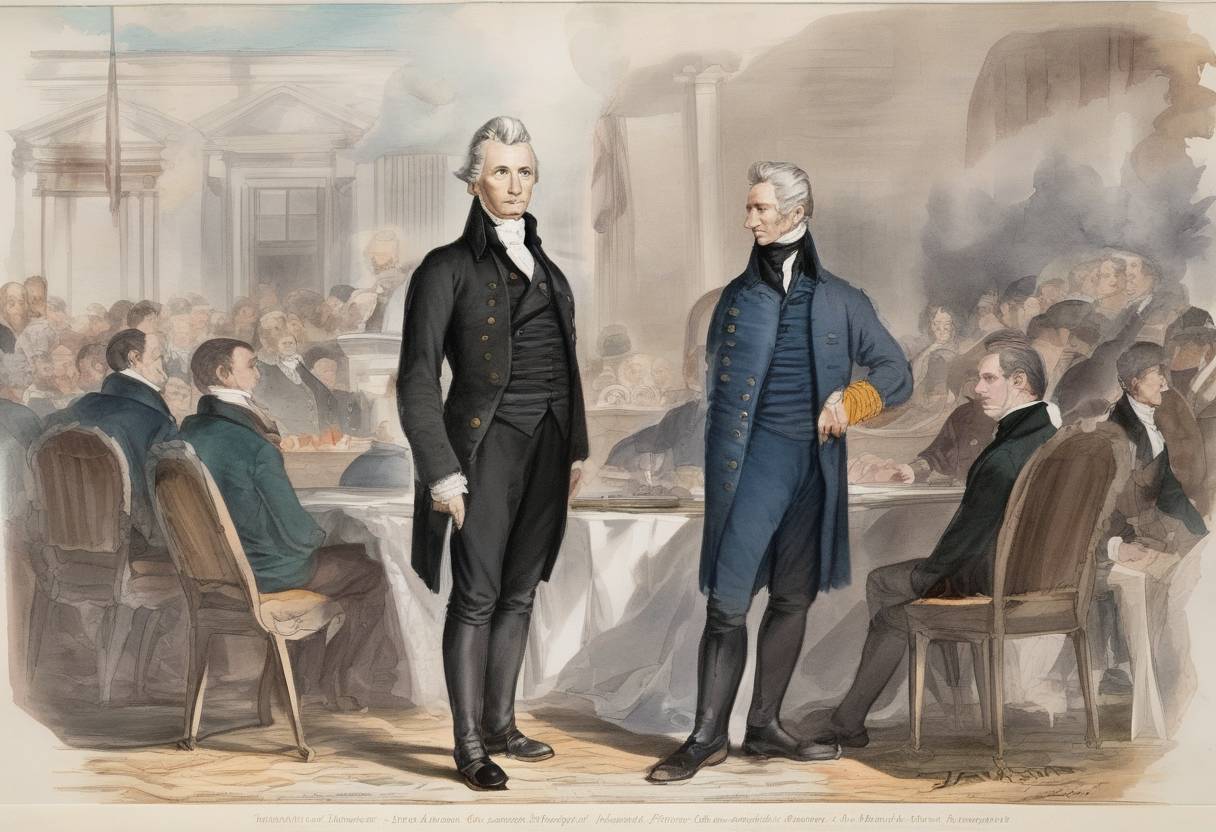
The Monroe Doctrine: December 2, 1823
On December 2, 1823, U.S. President James Monroe delivered a seminal policy statement during his annual message to Congress, which later became known as the Monroe Doctrine. This doctrine was a defining moment in U.S. foreign policy, asserting a clear stance against European colonialism and interference in the Americas.
Context and Background
The early 19th century was a period of significant political change in the Americas. Many Latin American countries had recently gained independence from Spanish and Portuguese rule. Meanwhile, European powers, particularly the Holy Alliance of Russia, Austria, and Prussia, were considering efforts to restore colonial control in the region. The United States, under President Monroe, sought to protect these newly independent nations and assert its influence in the Western Hemisphere.
Key Elements of the Monroe Doctrine
The Monroe Doctrine consisted of several key principles:
Non-Colonization: Monroe declared that the American continents were no longer open to European colonization. This principle was aimed at preventing any new European attempts to establish colonies in the Western Hemisphere.
Non-Interference: The doctrine warned European nations against interfering in the affairs of the Western Hemisphere. Monroe asserted that any attempt to extend European political systems to the Americas would be viewed as a threat to U.S. peace and safety.
U.S. Neutrality: While the doctrine opposed European interference in the Americas, it also stated that the United States would not interfere in the internal affairs of European countries or their existing colonies.
Significance and Impact
The Monroe Doctrine was initially met with skepticism, as the United States lacked the military power to enforce it. However, it became a cornerstone of American foreign policy, symbolizing the country’s growing confidence and influence. Over time, it was invoked by various U.S. presidents to justify American intervention in the hemisphere.
The doctrine also marked a shift towards a more isolationist stance, emphasizing the separation between the New World and the Old World. It laid the groundwork for future U.S. policies, such as the Roosevelt Corollary, which expanded the doctrine’s scope to justify intervention in Latin America.
Aftermath
While the immediate impact of the Monroe Doctrine was limited, its long-term significance was profound. It established the United States as a dominant power in the Western Hemisphere and set the stage for future American diplomatic and military actions in the region. The doctrine also reflected the broader themes of American exceptionalism and manifest destiny that would shape U.S. policy throughout the 19th and 20th centuries.
In conclusion, the Monroe Doctrine was a pivotal declaration that not only defined U.S. foreign policy in the Americas but also signaled the country’s emerging role on the global stage.