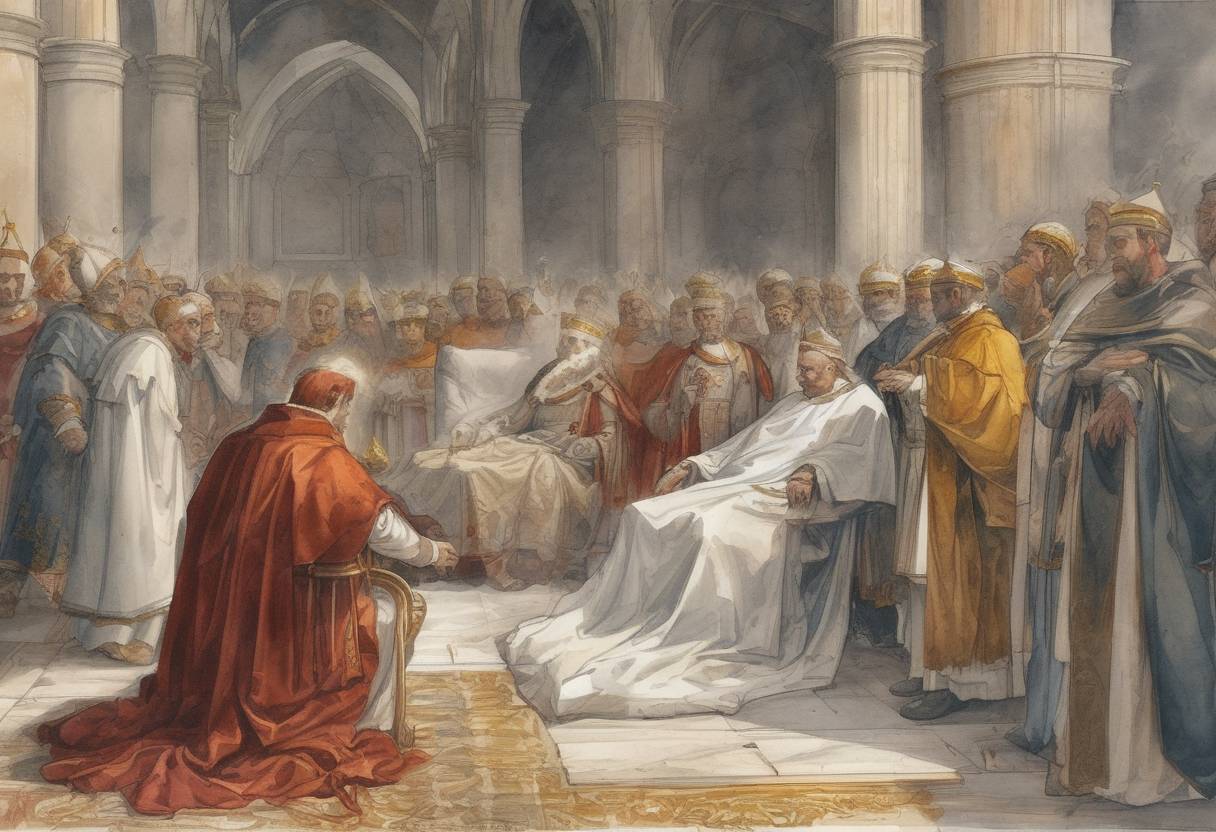
The Death of Pope Nicholas I on November 13, 867
Pope Nicholas I, often referred to as Nicholas the Great, passed away on November 13, 867. His papacy, which lasted from 858 until his death, was marked by significant efforts to assert the authority of the papacy over secular rulers and to strengthen the position of the Church in the medieval world.
Background and Papacy
Nicholas I was born around 800 in Rome, into a noble family. He was elected pope on April 24, 858, succeeding Pope Benedict III. His election came at a time when the papacy was struggling to assert its influence over both the Church and secular rulers.
Key Contributions and Events
Assertion of Papal Authority: Nicholas I is best known for his strong stance on the independence of the Church from secular interference. He believed that the pope had supreme authority over all Christians, including kings and emperors. This belief was a cornerstone of his papacy and led to several significant conflicts.
Conflict with Lothair II: One of the most notable disputes during his papacy was with King Lothair II of Lotharingia. Lothair sought to divorce his wife, Theutberga, and marry his mistress, Waldrada. Nicholas I firmly opposed this, insisting on the sanctity of marriage and the authority of the Church in marital matters. Despite pressure from secular rulers, Nicholas excommunicated the bishops who supported Lothair’s divorce, reinforcing the Church’s moral authority.
Relations with the Eastern Church: Nicholas I also played a crucial role in the complex relations between the Western and Eastern Churches. He was involved in the Photian Schism, a significant conflict with the Patriarch of Constantinople, Photius. Nicholas excommunicated Photius, which contributed to the growing tensions between the Eastern and Western branches of Christianity.
Church Reforms: Nicholas I was a reformer who sought to address issues of clerical discipline and corruption within the Church. He emphasized the importance of moral integrity among the clergy and worked to ensure that church laws were upheld.
Legacy
Pope Nicholas I’s efforts to assert papal authority had a lasting impact on the medieval Church. His actions set precedents for the role of the papacy in European politics and ecclesiastical matters. He is remembered as a pivotal figure in the development of the papal monarchy and the centralization of Church authority.
Nicholas I’s death on November 13, 867, marked the end of a significant era in the history of the papacy. His legacy continued to influence the Church’s relationship with secular powers and its internal governance for centuries to come.