Escape from Auschwitz: Kazimierz Piechowski and the June 20, 1942, Breakout
1942 · Oświęcim, Poland
Kazimierz Piechowski leads an escape from the Auschwitz concentration camp, successfully freeing four prisoners.
May 20, 1940
The first prisoners arrived at the Auschwitz concentration camp in German-occupied Poland, marking the beginning of one of the most infamous sites of the Holocaust.
Auschwitz, Poland | Nazi Germany
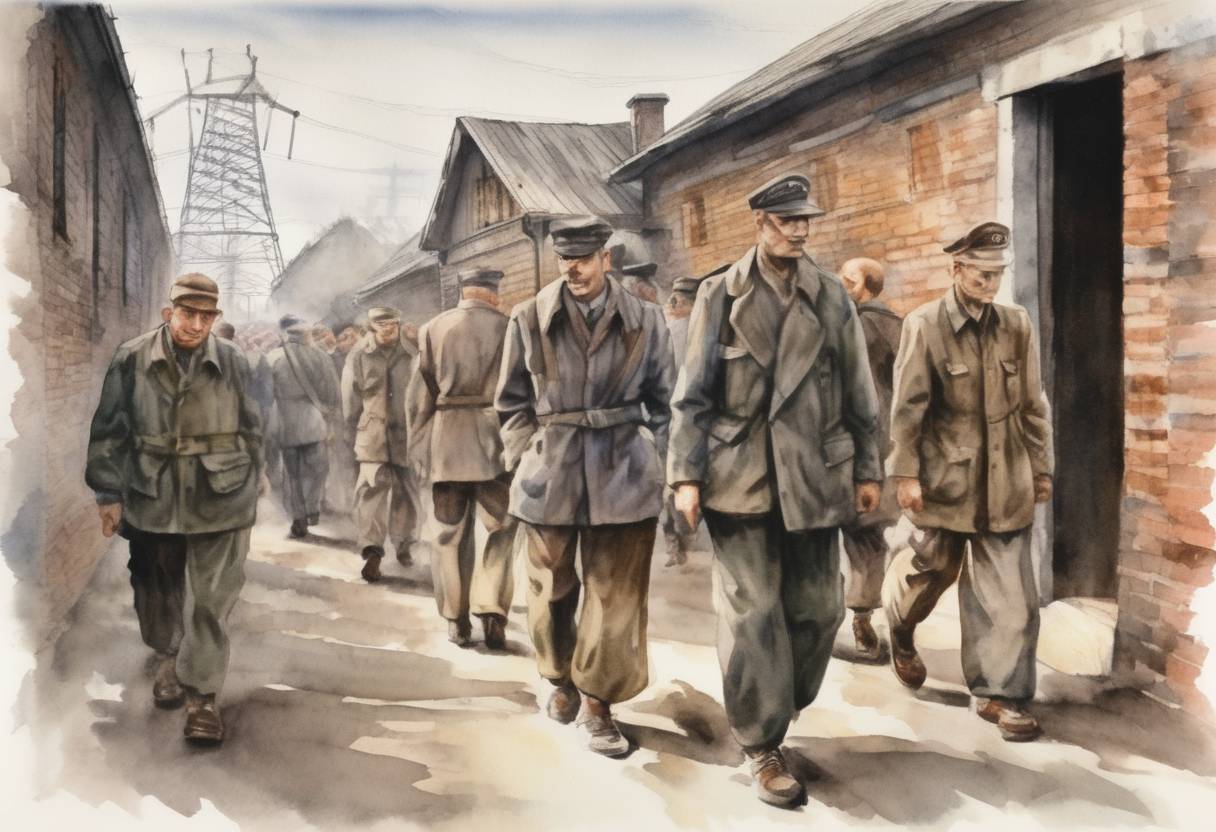
On May 20, 1940, the first group of prisoners arrived at Auschwitz, marking the beginning of what would become one of the most infamous concentration camps of the Holocaust. Located in German-occupied Poland, Auschwitz was initially established by the Nazi regime as a concentration camp for Polish political prisoners. Over time, it expanded into a complex of camps, including Auschwitz II-Birkenau and Auschwitz III-Monowitz, becoming a central site in the Nazis’ genocidal campaign against Jews and other targeted groups.
Nazi Occupation of Poland: Following the invasion of Poland in September 1939, Nazi Germany quickly established control over the region. The occupation was marked by brutal repression, with the Nazis targeting Polish intelligentsia, political leaders, and other perceived threats to their regime.
Establishment of Auschwitz: The decision to establish a concentration camp at Auschwitz was made in April 1940 by Heinrich Himmler, the head of the SS. The location was chosen for its strategic position at a railway junction and its relative isolation, which made it suitable for the Nazis’ purposes.
Arrival: The first transport of prisoners to Auschwitz consisted of 30 German criminal prisoners from the Sachsenhausen concentration camp. These prisoners were brought in to serve as functionaries, overseeing the incoming Polish prisoners and helping to establish the camp’s operations.
Initial Purpose: Initially, Auschwitz was intended to detain Polish political prisoners, resistance members, and intellectuals. However, its role quickly expanded as the Nazi regime implemented the “Final Solution,” the plan to exterminate the Jewish population of Europe.
Auschwitz II-Birkenau: In 1941, construction began on Auschwitz II-Birkenau, which would become the primary site for the mass extermination of Jews. Equipped with gas chambers and crematoria, Birkenau became synonymous with the horrors of the Holocaust.
Auschwitz III-Monowitz: This section of the camp was established to provide forced labor for the nearby IG Farben chemical plant. The exploitation of prisoners for industrial labor was a key aspect of the camp’s operations.
Liberation: Auschwitz was liberated by Soviet forces on January 27, 1945. By that time, an estimated 1.1 million people, the majority of whom were Jews, had been murdered at the camp.
Legacy: Today, Auschwitz stands as a symbol of the Holocaust and a reminder of the atrocities committed during World War II. It serves as a memorial and museum, dedicated to preserving the memory of the victims and educating future generations about the dangers of hatred and intolerance.
The arrival of the first prisoners at Auschwitz on May 20, 1940, marked the beginning of a dark chapter in human history, one that underscores the capacity for cruelty and the importance of remembrance and vigilance against such atrocities.
Source: en.wikipedia.org