John Cabot's Landing in North America - June 24, 1497
1497 · Newfoundland, Canada
John Cabot, an Italian navigator and explorer, landed in North America, likely on the coast of Newfoundland, claiming the land for England.
October 9, 1000
Leif Erikson is believed to have landed in North America, specifically in a region he called Vinland, which is part of modern-day Newfoundland, Canada.
Newfoundland, Canada | Norse Explorers
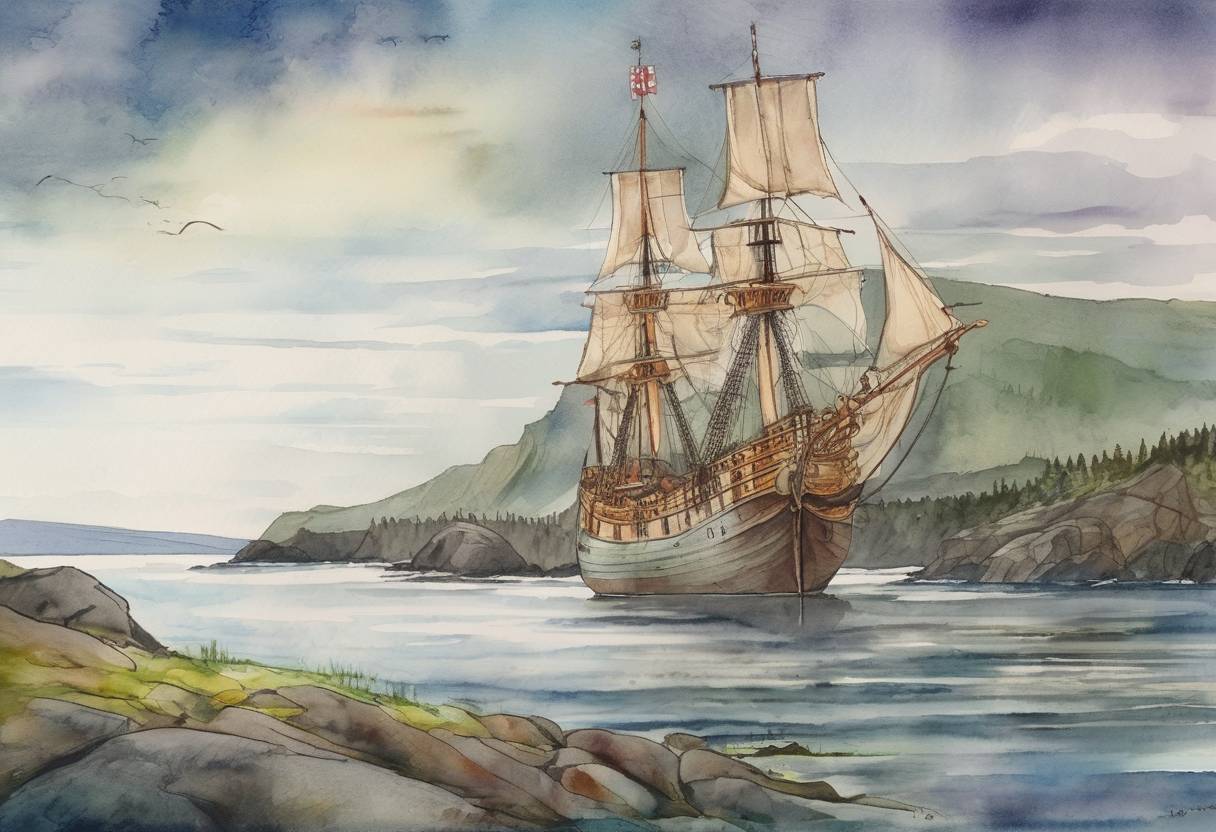
On October 9, 1000, the Norse explorer Leif Erikson is believed to have landed on the shores of North America, in a region he named “Vinland.” This event marks one of the earliest known European explorations of the continent, predating Christopher Columbus by nearly 500 years.
Leif Erikson was the son of Erik the Red, a Norse explorer who founded the first Norse settlements in Greenland. Inspired by tales of lands to the west, Leif set out from Greenland around the year 1000. His journey was likely influenced by stories from other Norse sailors, such as Bjarni Herjólfsson, who had sighted unknown lands to the west after being blown off course.
Leif Erikson’s voyage took him across the North Atlantic, a treacherous journey that required exceptional seafaring skills. He and his crew sailed in a longship, a type of vessel known for its speed and agility, which was well-suited for navigating the icy waters of the North Atlantic.
Upon reaching the North American coast, Leif and his crew explored several areas, naming them based on their characteristics:
Leif Erikson’s landing in Vinland is significant for several reasons:
The Norse settlements in Vinland were not permanent, likely due to conflicts with indigenous peoples and the logistical challenges of maintaining a distant colony. However, the sagas of Leif Erikson’s journey were preserved in Icelandic literature, such as the “Saga of the Greenlanders” and the “Saga of Erik the Red,” ensuring that his legacy endured through the centuries.
In conclusion, Leif Erikson’s exploration of Vinland stands as a testament to the adventurous spirit of the Norse and their role in the early exploration of the Americas.
Source: en.wikipedia.org