Establishment of the Second Federal Republic of Mexico
1846 · Mexico City, Mexico
The Second Federal Republic of Mexico was established after the fall of the First Mexican Republic.
May 22, 1942
Mexico entered World War II on the side of the Allies, following the sinking of two Mexican oil tankers by German U-boats.
Mexico City, Mexico | Mexican government
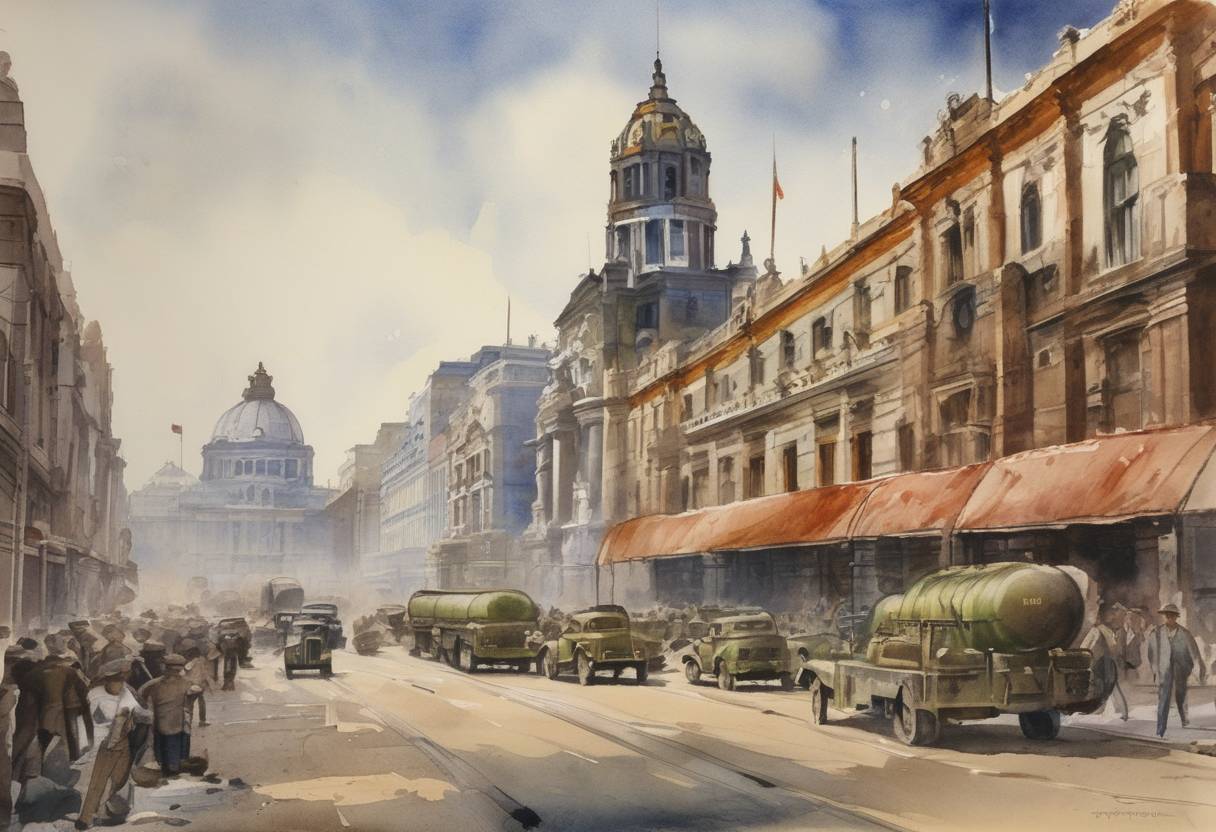
On May 22, 1942, Mexico officially entered World War II on the side of the Allies, marking a significant shift in its foreign policy and military engagement. This decision was primarily catalyzed by the sinking of two Mexican oil tankers by German U-boats, which galvanized public opinion and government resolve against the Axis powers.
Before its entry into the war, Mexico maintained a position of neutrality, focusing on domestic issues and economic recovery from the Great Depression. However, the global conflict increasingly affected Mexico, especially through its economic ties with the United States and the broader Americas.
Potrero del Llano: On May 13, 1942, the Mexican oil tanker Potrero del Llano was torpedoed and sunk by the German submarine U-564 in the Gulf of Mexico. This attack resulted in the loss of 13 crew members and was a direct affront to Mexico’s sovereignty and neutrality.
Faja de Oro: Just days later, on May 20, 1942, another Mexican tanker, Faja de Oro, was sunk by U-106, further inflaming Mexican public opinion and prompting calls for action against the Axis powers.
In response to these provocations, President Manuel Ávila Camacho addressed the Mexican Congress, emphasizing the need to defend national honor and security. On May 22, 1942, Mexico declared war on Germany, Italy, and Japan, aligning itself with the Allied powers.
Mexico’s entry into the war had several significant impacts:
Economic and Material Support: Mexico increased its production of raw materials crucial for the war effort, including oil, minerals, and agricultural products, which were supplied to the United States and other Allied nations.
Military Involvement: The most notable military contribution was the Mexican Expeditionary Air Force, known as the “Aztec Eagles” (Escuadrón 201), which participated in combat operations in the Pacific Theater, particularly in the Philippines.
Diplomatic and Strategic Cooperation: Mexico’s alignment with the Allies strengthened hemispheric solidarity and cooperation, particularly through the framework of the Pan-American Union.
Mexico’s participation in World War II marked a turning point in its international relations and domestic policies. The war effort accelerated industrialization and economic modernization, laying the groundwork for post-war development. Additionally, it fostered closer ties with the United States, leading to initiatives like the Bracero Program, which addressed labor shortages in the U.S. during the war.
In summary, Mexico’s entry into World War II was a decisive moment that underscored its commitment to defending national sovereignty and contributing to the global struggle against fascism and tyranny.
Source: en.wikipedia.org