Establishment of The Zionist Organization
1897 · Basel, Switzerland
The Zionist Organization (later the World Zionist Organization) is established in Basel, Switzerland, to promote the development of a Jewish homeland in Palestine.
November 16, 1938
Swiss chemist Albert Hofmann first synthesizes LSD at Sandoz Laboratories in Basel, Switzerland, though its psychoactive properties are not discovered until 1943.
Basel, Switzerland | Sandoz Laboratories
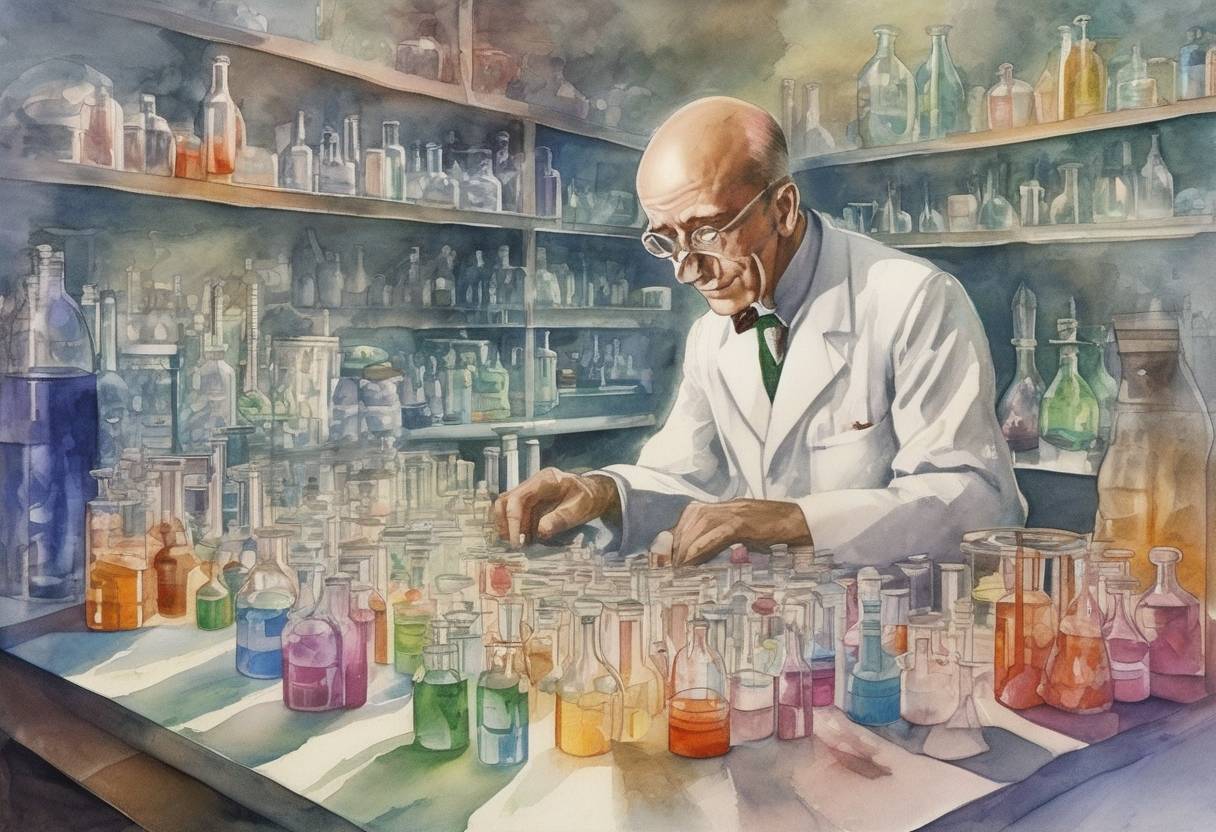
On November 16, 1938, Swiss chemist Albert Hofmann first synthesized lysergic acid diethylamide (LSD) at Sandoz Laboratories in Basel, Switzerland. This event marked the beginning of what would become a significant chapter in the history of psychopharmacology and psychedelic research.
Albert Hofmann was a researcher at Sandoz Laboratories, where he was investigating ergot alkaloids for their potential medicinal properties. Ergot is a fungus that grows on rye and other grains, and its derivatives had been used historically in medicine, particularly for their vasoconstrictive and uterotonic properties.
Hofmann’s work focused on synthesizing various compounds derived from lysergic acid, a core component of ergot alkaloids. On this particular day, he successfully synthesized LSD-25 (the 25th compound in his series of lysergic acid derivatives). However, at the time, the compound did not attract much attention, as its psychoactive properties were not yet known.
It wasn’t until April 1943 that Hofmann accidentally discovered the psychoactive effects of LSD. While re-synthesizing the compound, he inadvertently absorbed a small amount through his skin, leading to the first recorded LSD trip. This prompted further investigation, and on April 19, 1943, Hofmann intentionally ingested 250 micrograms of LSD, experiencing a profound and intense psychedelic experience. This day is famously known as “Bicycle Day,” named after Hofmann’s bicycle ride home during the experience.
The discovery of LSD’s psychoactive properties had a profound impact on both scientific research and popular culture. In the 1950s and 1960s, LSD became a subject of extensive research in psychiatry and psychology, exploring its potential therapeutic uses. It also played a pivotal role in the counterculture movements of the 1960s, influencing music, art, and social attitudes.
Albert Hofmann’s synthesis of LSD on November 16, 1938, laid the groundwork for future explorations into the mind and consciousness. While initially overlooked, LSD would later become one of the most studied and controversial substances in modern history, sparking debates about its potential benefits and risks.
Hofmann’s work remains a testament to the unpredictable nature of scientific discovery and its capacity to transform our understanding of the human experience.
Source: en.wikipedia.org