The End of the Cassini Mission: September 15, 2017
2017 · Saturn, N/A
The Cassini spacecraft, a collaboration between NASA, ESA, and the Italian Space Agency, ended its mission by plunging into Saturn's atmosphere after 13 years of exploration.
September 13, 2017
The Cassini spacecraft, a joint mission by NASA, ESA, and ASI, ended its 20-year mission by plunging into Saturn's atmosphere, providing valuable data until the very end.
Saturn, N/A | NASA
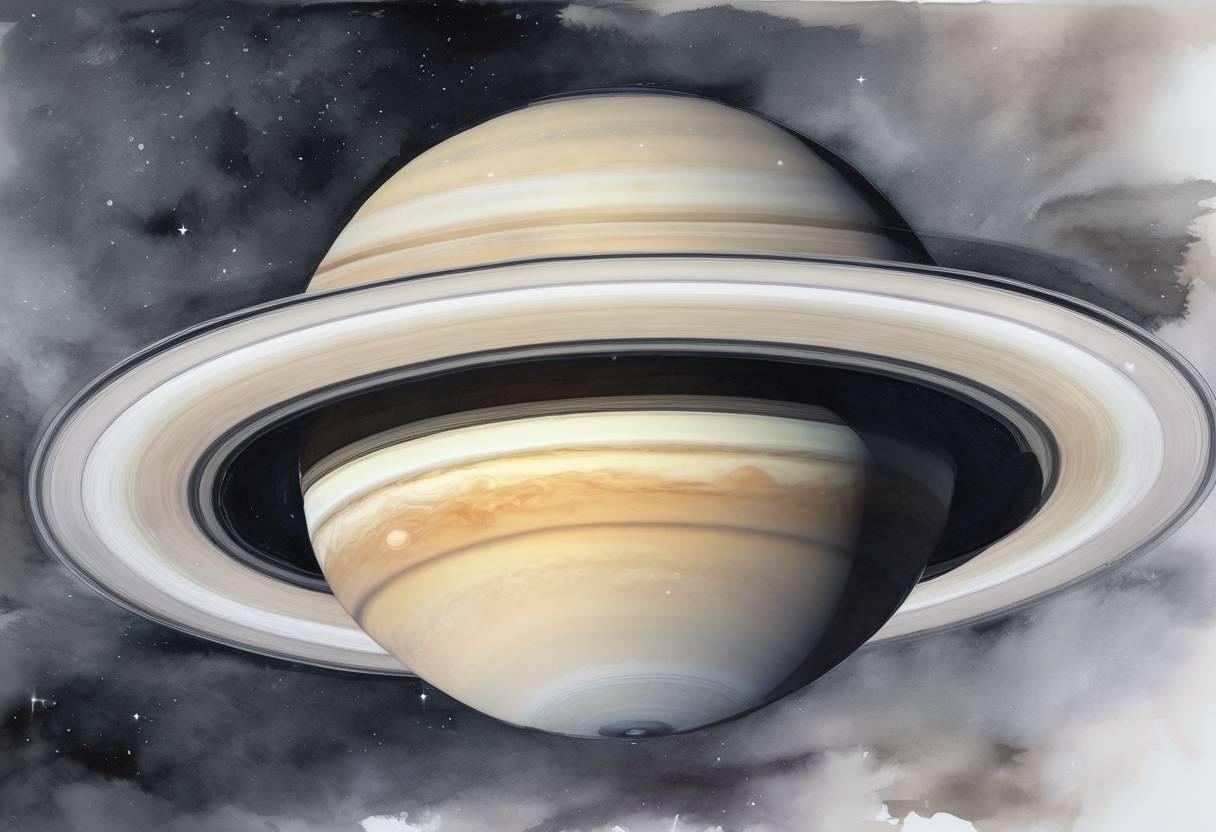
On September 13, 2017, the Cassini spacecraft, a collaborative mission between NASA, the European Space Agency (ESA), and the Italian Space Agency (ASI), concluded its remarkable 20-year journey by plunging into Saturn’s atmosphere. This event marked the end of a mission that significantly advanced our understanding of the Saturnian system.
Launched on October 15, 1997, Cassini was designed to study Saturn, its rings, and its moons. The spacecraft was equipped with a suite of scientific instruments aimed at exploring the planet’s atmosphere, magnetic field, and complex ring system. One of its key objectives was to deliver the Huygens probe, developed by ESA, to Titan, Saturn’s largest moon.
During its mission, Cassini made numerous groundbreaking discoveries:
Titan Exploration: Cassini’s Huygens probe successfully landed on Titan in January 2005, providing the first direct observations of its surface and revealing lakes and rivers of liquid methane and ethane.
Enceladus Discoveries: Cassini discovered geysers erupting from Enceladus, one of Saturn’s moons, suggesting the presence of a subsurface ocean and the potential for microbial life.
Saturn’s Rings and Atmosphere: The spacecraft provided detailed images and data on Saturn’s rings, uncovering their dynamic nature and complex structure. It also studied the planet’s atmosphere, revealing the presence of a giant hexagonal storm at the north pole.
As Cassini’s fuel supply dwindled, mission planners devised a dramatic end-of-mission strategy known as the “Grand Finale.” This involved a series of daring orbits between Saturn and its innermost rings, allowing the spacecraft to gather unprecedented data on the planet’s gravity and magnetic fields.
On September 13, 2017, Cassini made its final descent into Saturn’s atmosphere. During this plunge, it continued to transmit valuable data back to Earth until it lost contact, ensuring that every last bit of its scientific potential was realized.
Cassini’s mission has left a lasting legacy in planetary science. The data collected has deepened our understanding of the Saturnian system and has provided insights into the processes that shape planetary systems. The mission’s success is a testament to international collaboration and the pursuit of knowledge beyond our planet.
Cassini’s end marked not just the conclusion of a mission but the beginning of a new era of exploration, inspiring future missions to the outer planets and their moons.
Source: www.nasa.gov