Excommunication of King Henry VIII by Pope Paul III on December 17, 1538
1538 · Rome, Papal States
Pope Paul III excommunicated King Henry VIII of England.
June 15, 1520
Pope Leo X issued the papal bull Exsurge Domine, threatening Martin Luther with excommunication unless he recanted his 95 Theses.
Rome, Papal States | Catholic Church
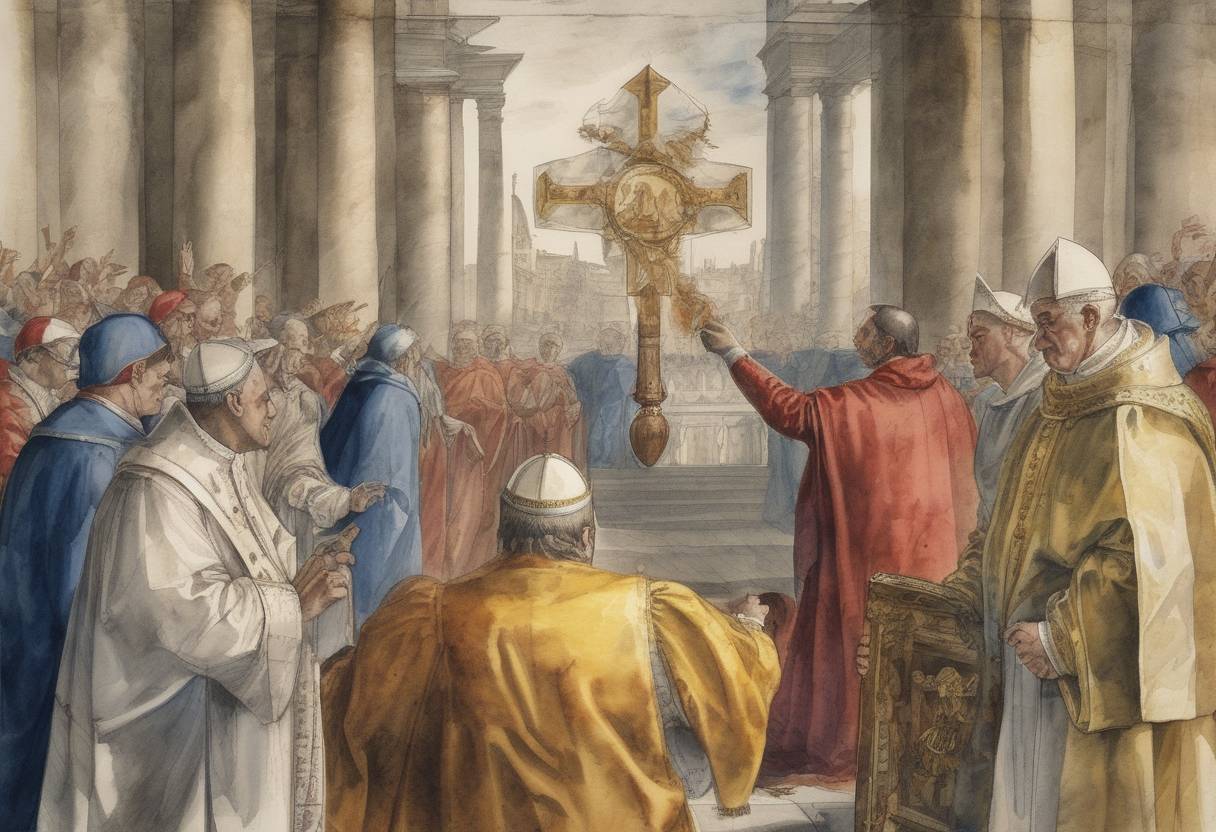
On June 15, 1520, Pope Leo X issued the papal bull Exsurge Domine, a critical document in the history of the Protestant Reformation. This papal bull was directed at Martin Luther, a German monk and theologian, who had become a central figure in the burgeoning reform movement within the Catholic Church.
The issuance of Exsurge Domine was a direct response to Martin Luther’s actions and writings, most notably his 95 Theses. In 1517, Luther had nailed these theses to the door of the Wittenberg Castle Church, challenging the Church’s practice of selling indulgences and calling for a return to what he viewed as a more authentic Christian faith based on the Scriptures.
Luther’s theses quickly spread throughout Europe, thanks in part to the printing press, igniting widespread debate and criticism of the Catholic Church’s practices and doctrines. His ideas resonated with many who were disillusioned with the Church’s corruption and the perceived moral decay of its leaders.
The papal bull Exsurge Domine condemned 41 propositions extracted from Luther’s writings as heretical, scandalous, or false. It called upon Luther to recant these errors within 60 days of receiving the bull. The document was a formal warning that failure to comply would result in excommunication, a severe ecclesiastical censure that would cut Luther off from the Church and its sacraments.
The bull begins with an invocation to God, lamenting the spread of heresy and comparing Luther’s teachings to a wild boar ravaging the Lord’s vineyard. It emphasizes the Pope’s duty to protect the Church from such threats and outlines the specific errors attributed to Luther.
Luther’s response to Exsurge Domine was defiant. Instead of recanting, he publicly burned the papal bull in December 1520, symbolizing his rejection of papal authority. This act of defiance further solidified his break with the Catholic Church and marked a pivotal moment in the Protestant Reformation.
In January 1521, Pope Leo X formally excommunicated Luther with the bull Decet Romanum Pontificem. Luther’s excommunication did not quell the reform movement; instead, it galvanized his supporters and led to the establishment of Protestant churches across Europe.
The issuance of Exsurge Domine and the subsequent excommunication of Martin Luther were significant events that underscored the deepening rift within Christianity. This schism would have profound religious, political, and cultural consequences, reshaping the landscape of Europe and influencing the course of Western history.
In summary, Exsurge Domine was a critical moment in the Reformation, highlighting the tensions between reformers and the Catholic Church and setting the stage for the enduring impact of Protestantism.
Source: en.wikipedia.org