The Relief of Leiden: October 3, 1574
1574 · Leiden, Netherlands
The Spanish siege of Leiden was lifted during the Eighty Years' War, marking the event with the Relief of Leiden.
April 1, 1572
The Watergeuzen (Sea Beggars), a group of Dutch rebels, captured the city of Brielle from the Spanish, marking a significant event in the Eighty Years' War.
Brielle, Netherlands | Watergeuzen
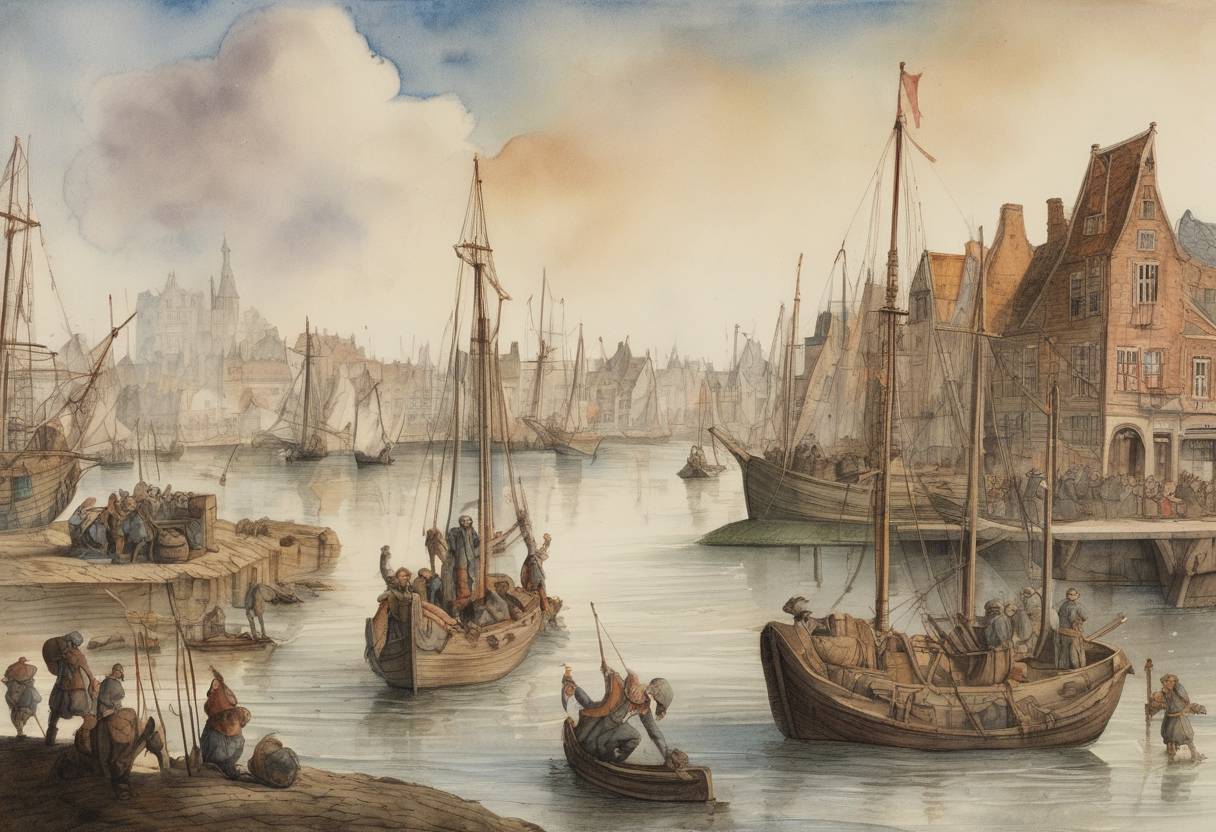
On April 1, 1572, a pivotal event in the Eighty Years’ War occurred when the Watergeuzen, or Sea Beggars, captured the city of Brielle from Spanish control. This event marked a significant turning point in the Dutch struggle for independence from Spanish rule.
The Eighty Years’ War (1568–1648) was a protracted conflict between the Spanish Empire and the Dutch provinces, which sought independence from Spanish rule. The war was fueled by religious tensions, as the predominantly Protestant Dutch opposed the Catholic Spanish monarchy’s attempts to enforce religious uniformity.
The Watergeuzen were a group of Dutch privateers and rebels who operated at sea. They were initially composed of exiled nobles and Calvinist zealots who opposed Spanish rule. Their activities were crucial in disrupting Spanish supply lines and supporting the broader rebellion on land.
The capture of Brielle was largely accidental. The Watergeuzen, led by William II de la Marck, were seeking refuge from a storm when they arrived at the port of Brielle. Discovering that the city was lightly defended, they seized the opportunity to attack. On April 1, 1572, they successfully captured the city, taking advantage of the element of surprise and the absence of a significant Spanish garrison.
Symbolic Victory: The capture of Brielle was the first major success for the Dutch rebels and served as a symbolic victory. It demonstrated that the Spanish forces were not invincible and provided a morale boost to the Dutch resistance.
Catalyst for Rebellion: The fall of Brielle inspired other towns in the region to rise against Spanish rule. Many cities in the provinces of Holland and Zeeland declared their support for the rebellion, significantly expanding the scope of the conflict.
Strategic Advantage: Brielle’s location was strategically important as it controlled access to the Maas River, a vital waterway. Its capture allowed the rebels to disrupt Spanish supply lines and communications further.
Increased Support for William of Orange: The success at Brielle bolstered the position of William of Orange, the leader of the Dutch revolt. It helped him gain more support from both domestic and foreign allies, crucial for sustaining the rebellion.
The capture of Brielle marked the beginning of a more organized and widespread revolt against Spanish rule in the Netherlands. It set off a chain reaction, leading to the capture of other key cities and the eventual establishment of the Dutch Republic. The event is commemorated annually in the Netherlands on April 1st, known as “Brielle Day.”
In summary, the capture of Brielle by the Watergeuzen was a significant event in the Eighty Years’ War, symbolizing the resilience and determination of the Dutch in their quest for independence. It played a crucial role in the broader context of the war, influencing the course of European history.
Source: en.wikipedia.org