Execution of Nicolae and Elena Ceaușescu
1989 · Târgoviște, Romania
Romanian dictator Nicolae Ceaușescu and his wife Elena were executed after a summary trial, marking the end of Communist rule in Romania.
December 16, 1989
The Romanian Revolution began in Timișoara, marking the start of the end of Nicolae Ceaușescu's communist regime in Romania.
Timișoara, Romania | Romanian protesters
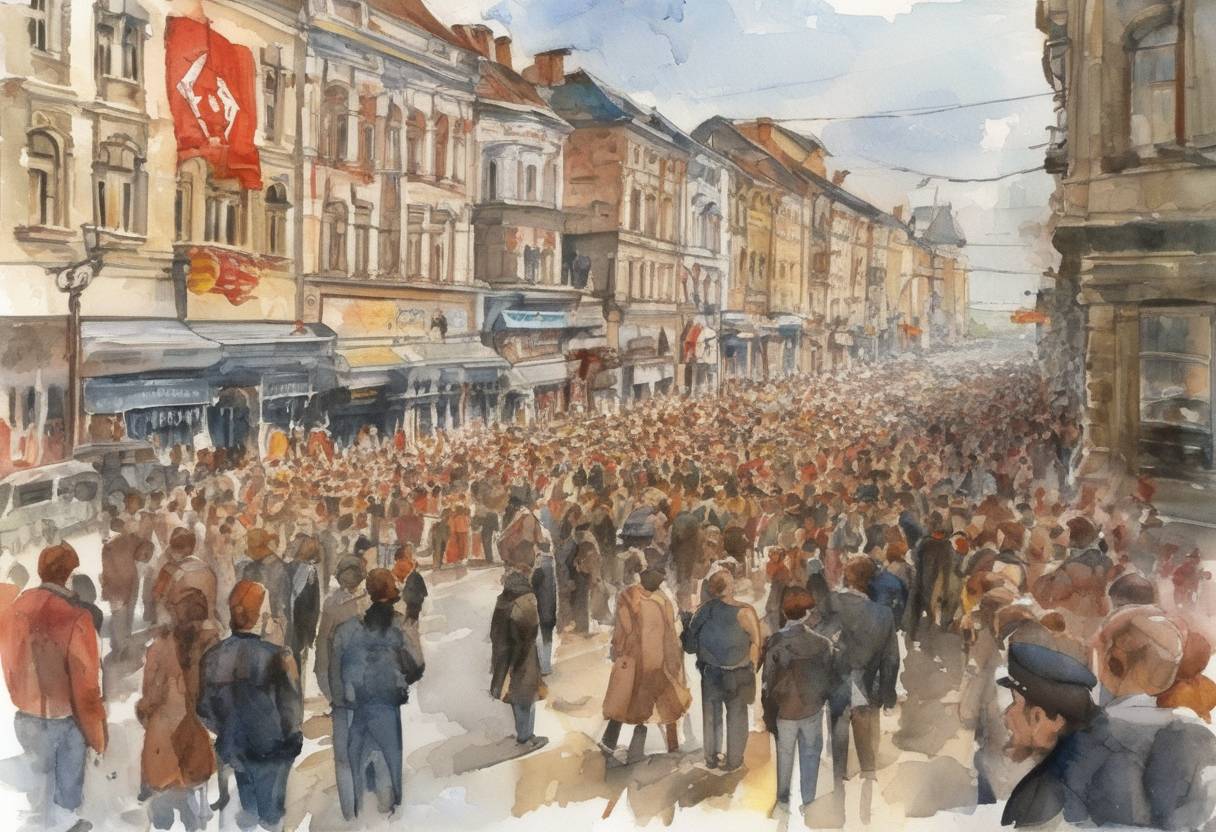
On December 16, 1989, the Romanian Revolution began in the city of Timișoara, marking the beginning of the end for Nicolae Ceaușescu’s oppressive communist regime. This pivotal event was a crucial moment in the broader wave of anti-communist uprisings sweeping across Eastern Europe at the time.
Nicolae Ceaușescu had been in power since 1965, and his regime was characterized by severe economic mismanagement, widespread poverty, and brutal political repression. By the late 1980s, Romania was suffering from severe shortages of basic goods, and Ceaușescu’s policies had led to a significant decline in living standards. The secret police, known as the Securitate, maintained a climate of fear, suppressing dissent and controlling the population through intimidation and surveillance.
Protests Erupt: The immediate catalyst for the uprising in Timișoara was the government’s attempt to evict László Tőkés, a Hungarian Reformed Church pastor and outspoken critic of the regime. His congregation and supporters gathered to prevent his eviction, and the protest quickly grew as more citizens joined in solidarity.
Escalation: The protest in Timișoara rapidly escalated as demonstrators voiced broader grievances against the regime. The initial peaceful gathering turned into a large-scale demonstration, with chants demanding freedom and the end of Ceaușescu’s rule.
Government Response: The Romanian authorities responded with force, deploying military units and the Securitate to suppress the uprising. Despite the violent crackdown, which included the use of live ammunition, the protests continued to grow.
Spread of the Revolution: The events in Timișoara ignited a nationwide movement. By December 21, protests had spread to the capital, Bucharest, and other cities. The regime’s attempts to quell the unrest only fueled further resistance.
Ceaușescu’s Downfall: On December 22, 1989, Nicolae Ceaușescu and his wife, Elena, fled Bucharest as the revolution reached its peak. They were captured, tried, and executed on December 25, 1989.
End of Communist Rule: The Romanian Revolution resulted in the collapse of the communist regime, leading to the establishment of a democratic government. It was one of the most violent uprisings in Eastern Europe during the fall of communism, highlighting the deep-seated discontent and the desire for change among the Romanian people.
The Romanian Revolution of 1989 was a significant turning point in the country’s history, marking the end of decades of authoritarian rule and the beginning of a transition towards democracy and integration with the broader European community.
Source: en.wikipedia.org