The Burning of Washington: August 24, 1814
1814 · Washington, D.C., United States
During the War of 1812, British forces capture Washington, D.C., and set fire to many public buildings, including the White House and the Capitol.
August 25, 1814
British forces destroy the Library of Congress during the Burning of Washington in the War of 1812.
Washington, D.C., United States | British Army
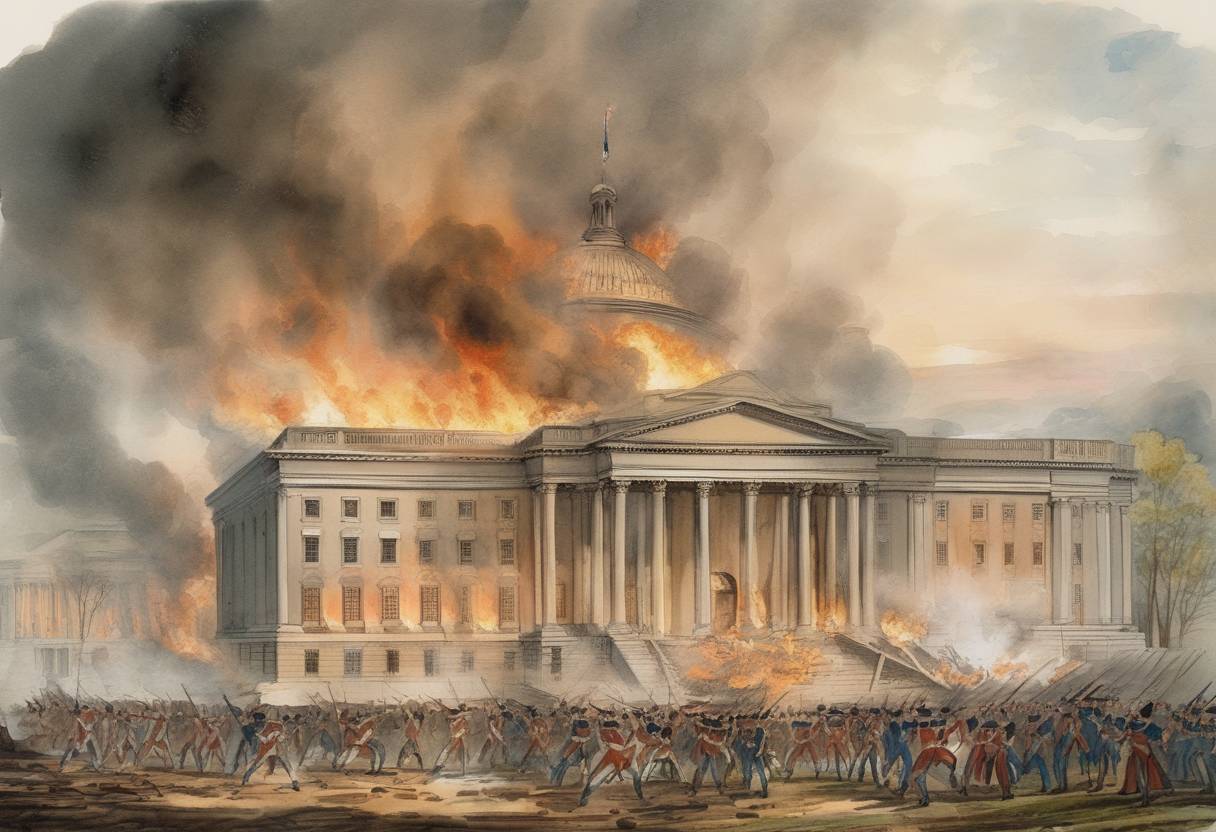
On August 24, 1814, during the War of 1812, British forces launched a significant attack on Washington, D.C., an event that culminated in the burning of several key buildings, including the Library of Congress. This event is part of what is known as the Burning of Washington, a pivotal moment in the war between the United States and the British Empire.
The War of 1812, which began in June 1812, was primarily fueled by maritime disputes and territorial expansion tensions between the United States and Great Britain. By 1814, the conflict had reached a critical point, with British forces aiming to strike a decisive blow against the United States by targeting its capital.
On August 24, 1814, British troops, led by Major General Robert Ross, advanced on Washington, D.C., after defeating American forces at the Battle of Bladensburg. The British encountered little resistance as they entered the city, which was largely evacuated by government officials and residents.
On the night of August 24 and into the early hours of August 25, British forces set fire to multiple public buildings in Washington, including the Capitol building, which housed the Library of Congress at the time. The library, established in 1800, contained approximately 3,000 volumes, all of which were destroyed in the blaze. The fire was part of a broader strategy to demoralize the American government and demonstrate British military superiority.
The burning of Washington, including the destruction of the Library of Congress, had significant repercussions:
The Burning of Washington, including the destruction of the Library of Congress, remains a significant event in American history, illustrating the vulnerabilities of the young nation and its capacity for recovery and growth.
Source: en.wikipedia.org