Christopher Columbus Departs on His Fourth and Final Voyage
1502 · Cadiz, Spain
Christopher Columbus departs on his fourth and final voyage to the Americas.
November 3, 1493
Christopher Columbus first sights the island of Dominica during his second voyage to the Americas.
Dominica, Dominica | Spanish Crown
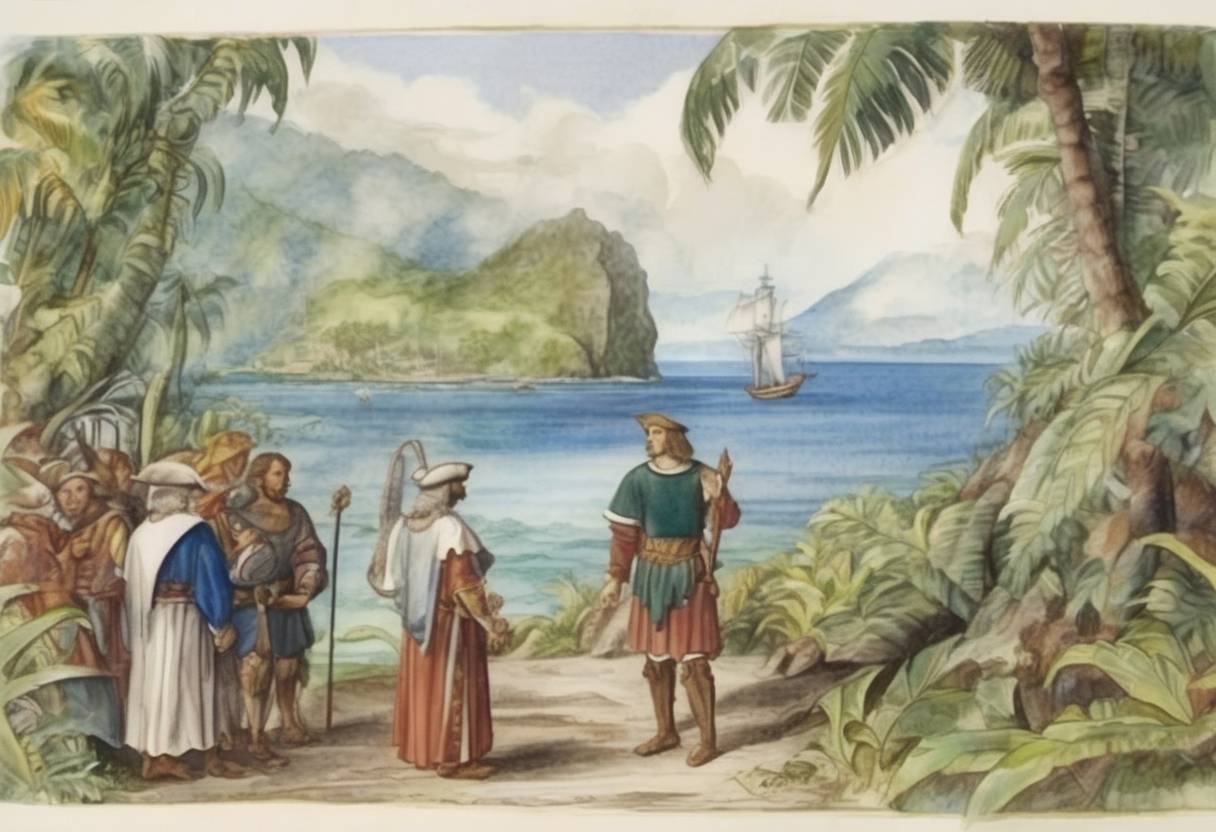
On November 3, 1493, during his second voyage to the Americas, Christopher Columbus first sighted the island of Dominica. This event marked a significant moment in the Age of Exploration, as Columbus continued to explore the Caribbean region following his initial voyage in 1492.
Second Voyage: Columbus’s second voyage was far more extensive than his first. Departing from Cádiz, Spain, on September 25, 1493, Columbus commanded a fleet of 17 ships with approximately 1,200 men. The expedition aimed to establish Spanish colonies in the New World and further explore the territories Columbus had encountered on his first voyage.
Objectives: The primary goals of this voyage included establishing a permanent Spanish presence in the Caribbean, converting indigenous peoples to Christianity, and finding new resources and trade routes.
Route: After leaving the Canary Islands, Columbus’s fleet sailed across the Atlantic Ocean. Unlike his first voyage, which took him to the Bahamas and Cuba, this journey aimed to explore further south.
Island Sightings: Before reaching Dominica, Columbus and his crew sighted several other islands, including the Lesser Antilles. These islands were part of what would later be known as the Caribbean archipelago.
Discovery: On November 3, 1493, Columbus and his fleet sighted an island that he named “Dominica,” derived from the Latin word for Sunday, as it was the day of the week when he first saw the island.
Geography: Dominica is characterized by its rugged terrain, dense rainforests, and volcanic mountains. It is part of the Windward Islands in the Lesser Antilles.
Continued Exploration: After sighting Dominica, Columbus continued his voyage, exploring other islands in the Caribbean, including Guadeloupe, Antigua, and Puerto Rico. His journey contributed to the European understanding of the geography of the New World.
Colonial Impact: The sighting of Dominica and subsequent exploration by Columbus and other European explorers led to increased European interest in the Caribbean. This interest eventually resulted in the colonization and exploitation of the region’s resources and indigenous peoples.
Indigenous Peoples: The island was originally inhabited by the Kalinago people, who, like other indigenous groups in the Caribbean, faced significant disruption and decline due to European colonization and the introduction of diseases.
Columbus’s sighting of Dominica is a notable event in the broader narrative of European exploration and colonization of the Americas. It highlights the early stages of European expansion into the Caribbean and the profound changes that would follow for the indigenous populations and the environment of the region. This event is a reminder of the complex legacy of exploration, marked by both discovery and the beginning of significant cultural and demographic shifts.
Source: en.wikipedia.org