Founding of General Motors Corporation
1908 · Flint, United States
General Motors Corporation was founded by William C. Durant.
June 30, 1953
The first Chevrolet Corvette was manufactured and rolled off the assembly line in Flint, Michigan.
Flint, USA | General Motors
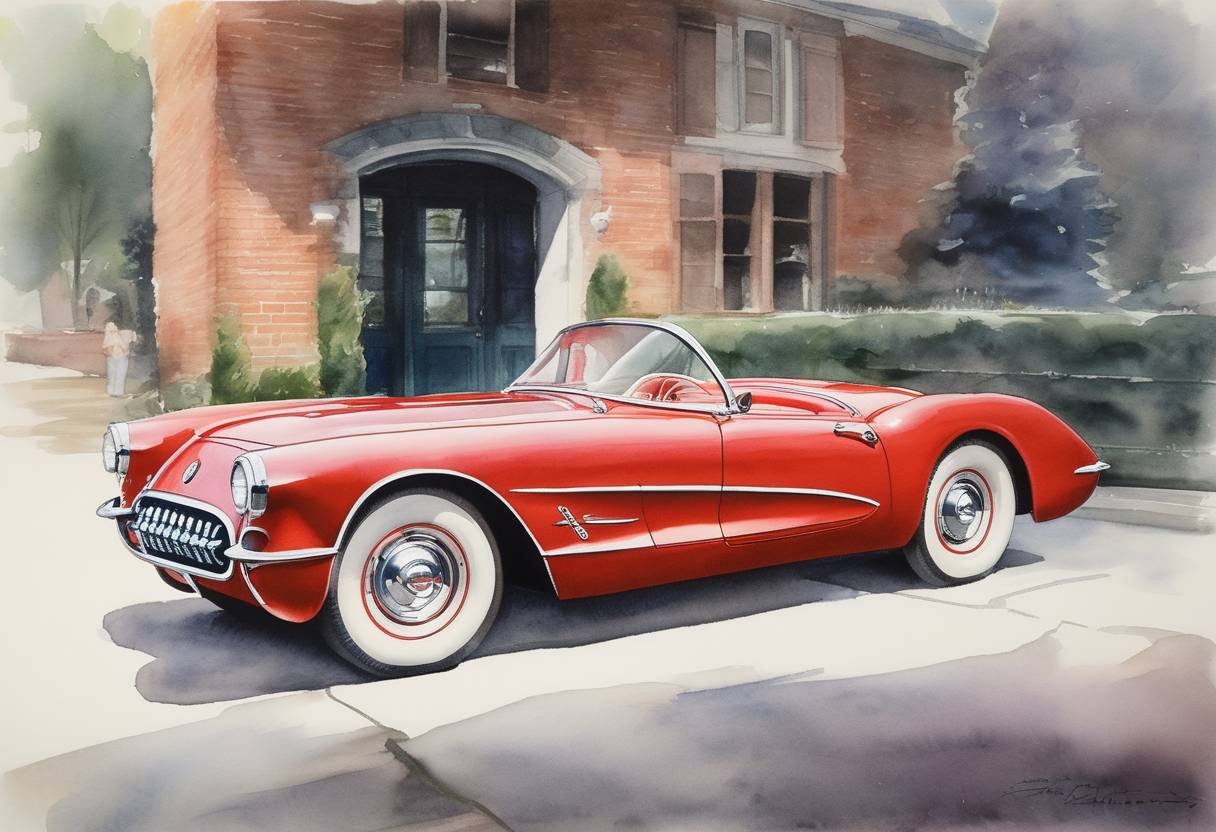
On June 30, 1953, a pivotal moment in automotive history occurred when the first Chevrolet Corvette was manufactured and rolled off the assembly line in Flint, Michigan. This day marked the birth of what would become a legendary American sports car icon, renowned for its performance, style, and innovation.
The development of the Corvette was the brainchild of Harley Earl, General Motors’ (GM) chief designer at the time. Earl envisioned creating an affordable American sports car that could rival European imports. The project for this sports car, initially called “Project Opel,” culminated in the creation of the prototype, which was unveiled at the GM Motorama at the Waldorf-Astoria Hotel in New York City in January 1953. The positive reception the prototype received paved the way for its transition from concept to production.
The first Corvettes were distinct for their fiberglass body, a novel material choice that enabled significant weight reduction compared to steel and facilitated complex design curves. The 1953 Corvette featured a 150 horsepower, inline-6 engine known as the “Blue Flame,” paired with a two-speed Powerglide automatic transmission. The initial model was available only in Polo White with a red interior and had removable windows and a canvas top.
Production was limited, with only 300 units produced in 1953, each handcrafted at GM’s Flint, Michigan facility. This exclusivity, combined with the innovative use of materials and design, set the Corvette apart from other vehicles of its time.
The launch of the Corvette on June 30, 1953, signaled the beginning of a groundbreaking era for American sports cars. It established a foundation for numerous subsequent models and became a cornerstone of Chevrolet’s brand identity. Over the decades, the Corvette has evolved through multiple generations, incorporating advanced technologies and appealing to a wide range of enthusiasts, all while maintaining its status as an emblem of performance and American engineering prowess.
The Chevrolet Corvette’s successful launch encouraged GM to relocate its production to a larger facility in St. Louis, Missouri, to accommodate growing demand. Subsequent models saw numerous enhancements in design and performance, solidifying the Corvette’s position in automotive history. Today, the Corvette remains an enduring symbol of American innovation and automotive excellence.
Source: www.history.com