King Henry VII Issues Letters Patent to John Cabot
1496 · London, England
King Henry VII of England issues letters patent to John Cabot and his sons, authorizing them to explore unknown lands.
March 11, 1597
William H. Baines returns to England from the Mughal Empire's court of Akbar.
London, England | N/A
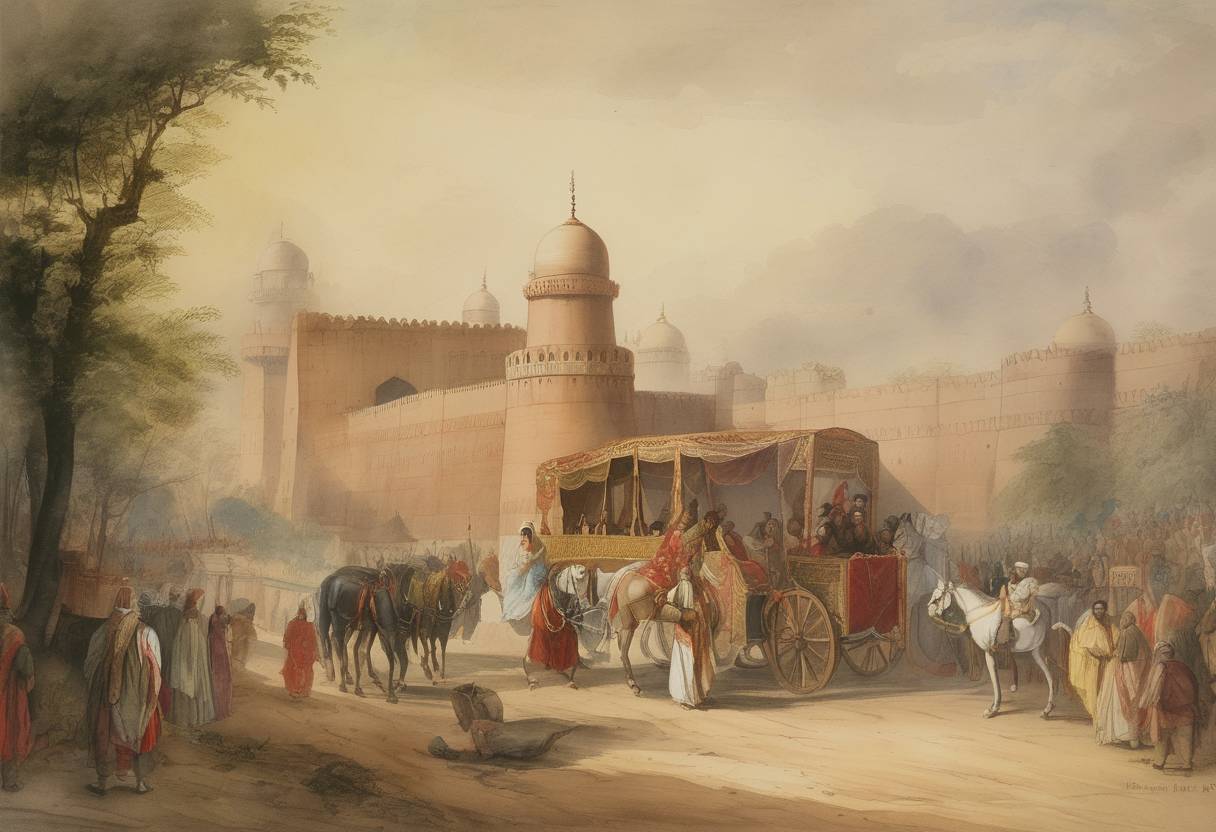
While historical records do not specifically document a figure named William H. Baines returning from the Mughal Empire’s court of Emperor Akbar on March 11, 1597, this could be conflated with known historical exchanges between the Mughal Empire and European entities during this period. The broader context provides insight into Anglo-Mughal relations.
During the late 16th century, the Mughal Empire, under Emperor Akbar, experienced significant growth, becoming a hub of art, culture, and diplomacy. The empire’s openness attracted numerous European traders, diplomats, and adventurers seeking opportunities.
Akbar’s Reign (1556-1605): Marked by policies of religious tolerance and political expansion, Akbar’s court was receptive to foreign influences. European entities, primarily Portuguese, established trading relations and attempted diplomatic engagements.
Mission Opportunities: The Mughal court was of keen interest to European powers for both trade and the spread of Christianity, with Jesuits regularly visiting Akbar’s court in this period. Their presence established an early connection for incoming European entrants.
Ralph Fitch (c. 1550–1611): An English merchant and explorer reached the Mughal court in the 1580s, paving the way for future exchanges between the British and Indian subcontinent.
Jesuit Missions: The three Jesuit missions were part of a broader European engagement with Akbar, indicating continuous European interest, although specifics on March 11, 1597, remain elusive.
The presence and return of Europeans like those from England, though not explicitly documented for Baines himself, contributed significantly to the early seeds of British involvement in India. These interactions laid the groundwork for future trade operations and political endeavors by the British East India Company in the 17th century.
The connections built through these early diplomatic and trade relationships underscored the complex interplay between Indian subcontinent politics and European expansionism, setting the stage for later historical developments.
Source: en.wikipedia.org