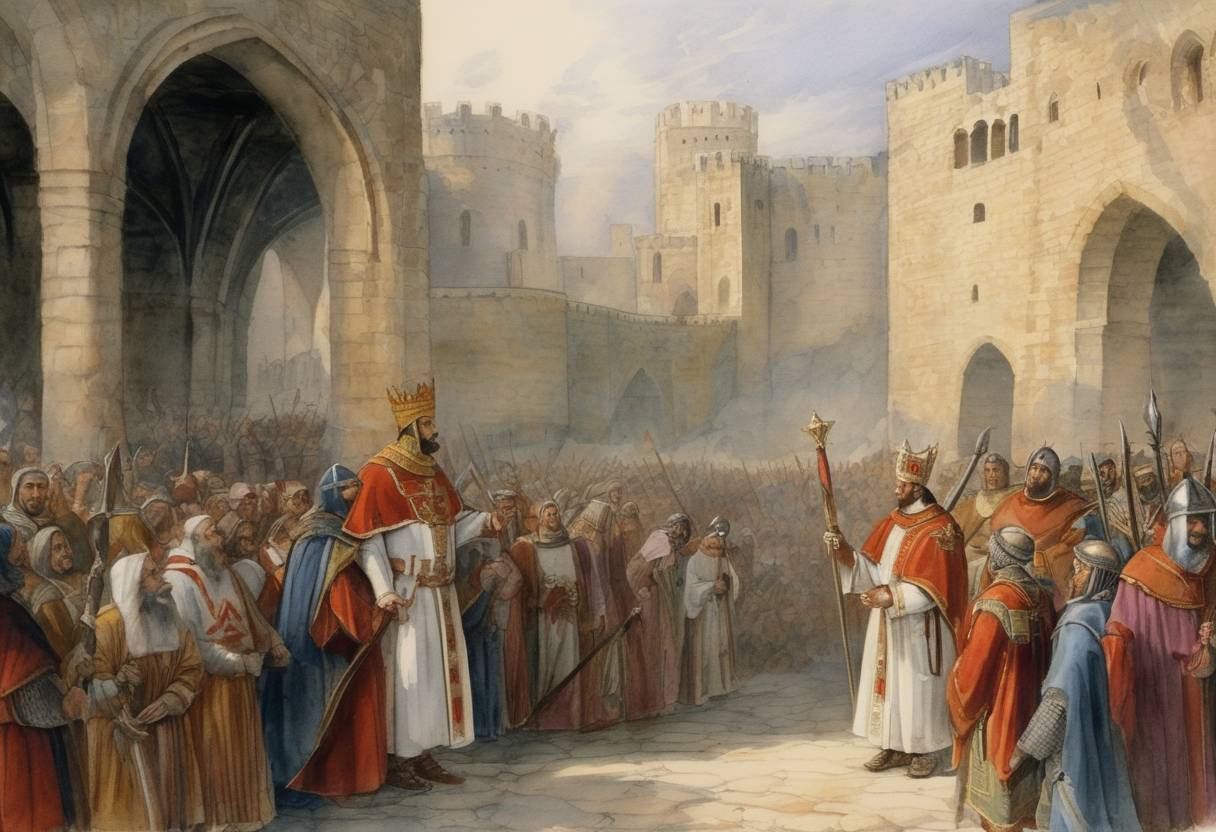
Council of Clermont and the Call for the First Crusade
On November 27, 1095, Pope Urban II delivered his pivotal speech at the Council of Clermont in France, marking the official call for the First Crusade. The Council convened from November 18 to November 28, 1095, but it was on this specific day that Urban made his monumental appeal to the European nobility and clergy, urging them to take up arms to aid the Byzantine Empire and to reclaim Jerusalem and the Holy Land from Muslim control.
Context Leading to the Call
The origins of the First Crusade are tied to several political and religious circumstances of the late 11th century:
- Byzantine Request for Aid: The Byzantine Emperor Alexios I Komnenos had requested assistance from the West to repel the advances of the Seljuk Turks, who had seized much of Anatolia after the Battle of Manzikert in 1071.
- Religious Zeal and Pilgrimage: Jerusalem and the Holy Land were of profound spiritual significance to Christians, and reports of difficulties faced by Christian pilgrims increased Western interest in the region.
- Church Reform and Papal Authority: Pope Urban II, a reforming pope, sought to harness the military energies of European knights toward a cause that would also reinforce papal leadership and perhaps heal the ecclesiastical rift between Eastern and Western Christianity, exacerbated by the Great Schism of 1054.
Urban II’s Speech at Clermont
Pope Urban’s address at Clermont was crafted to inspire and mobilize:
- Apocalyptic Rhetoric: Urban framed the conflict as a righteous battle for Christendom, promising spiritual rewards and emphasizing the suffering of Eastern Christians.
- Promise of Indulgence: He offered a plenary indulgence to all who participated, assuring the remission of sins, which was an extremely powerful inducement to a deeply religious society.
- Liberation and Unity: Urban called for the liberation of Jerusalem and the broader Holy Land, appealing to notions of Christian charity and unity.
Consequences and Historical Significance
- Immediate Response: Urban’s call was met with enthusiasm, leading to widespread recruitment. Knights and commoners alike responded, marking the beginning of the First Crusade.
- Broader Impact: This initiated nearly two centuries of Crusades, a series of religious and military campaigns that had profound implications for Christian-Muslim relations and the geopolitical landscape of the Eastern Mediterranean.
- Cultural and Social Changes: The crusades had lasting effects, including the transfer of knowledge, cultures, and ideas between the Islamic world and the West, and were foundational in shaping medieval European identity and church authority.
Pope Urban II’s call at Clermont was a defining moment, blending religious fervor, political strategy, and social transformation, setting the stage for one of the most significant periods of the Middle Ages.