Birth of Elizabeth Cady Stanton
On November 12, 1815, Elizabeth Cady Stanton was born in Johnstown, New York. She emerged as a monumental figure in the American women’s rights movement, playing a crucial role in advocating for women’s suffrage and equality.
Early Life
Elizabeth Cady Stanton was born into a prominent and affluent family. Her father, Daniel Cady, was a well-respected lawyer and judge, while her mother, Margaret Livingston Cady, came from a lineage of substantial political influence. The environment in which Stanton was raised placed high value on education and legal principles, laying a strong foundation for her later endeavors.
Contributions to Women’s Rights
Stanton is best known for her tireless work toward achieving gender equality, particularly her efforts to secure voting rights for women. One of her most significant contributions was her role in organizing the Seneca Falls Convention in 1848. The convention marked the first women’s rights convention in the United States, at which Stanton presented her seminal “Declaration of Sentiments.” This document was modeled after the Declaration of Independence and enumerated grievances and demands for women’s rights, highlighting issues such as property rights, educational opportunities, and legal inequalities.
Collaboration with Susan B. Anthony
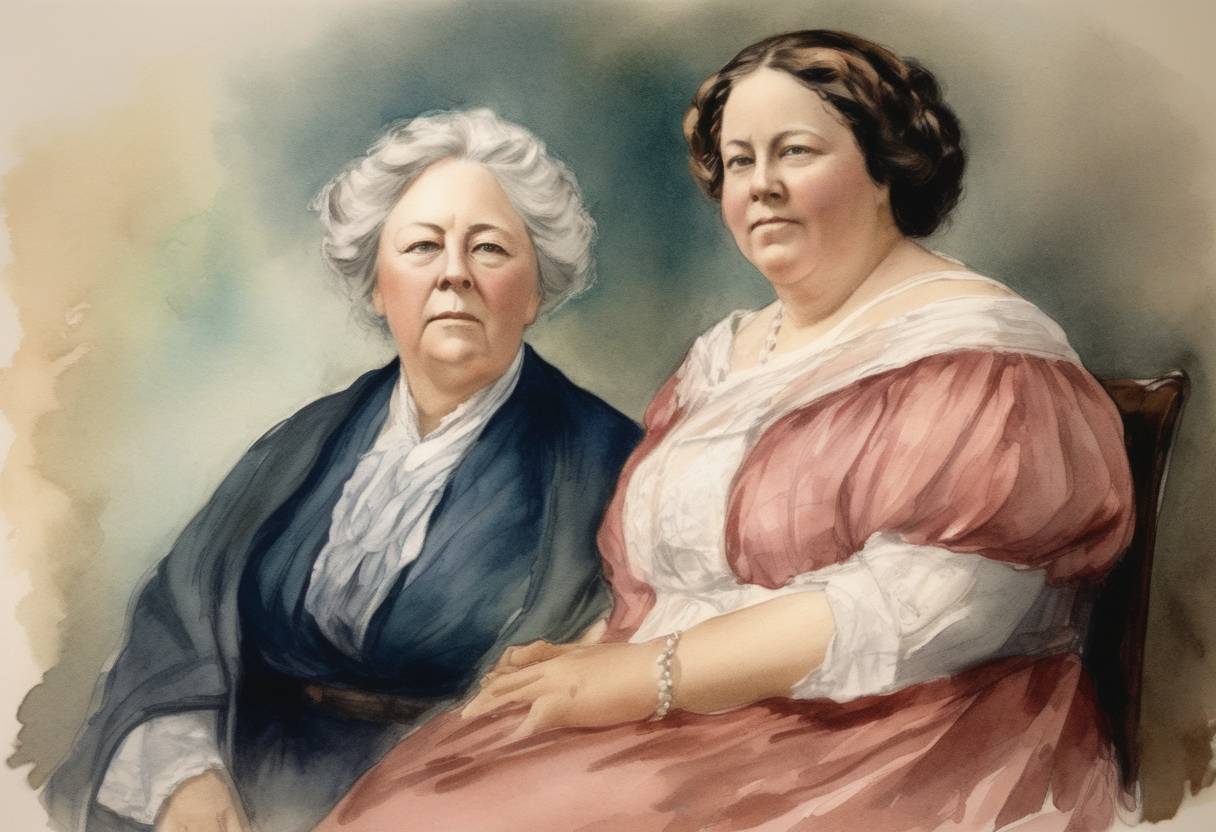
Elizabeth Cady Stanton is perhaps most famously remembered for her collaboration with Susan B. Anthony. Together, they formed a formidable partnership in the fight for women’s suffrage. The duo spearheaded various initiatives, campaigns, and organizations, including the National Woman Suffrage Association, which they founded in 1869. Stanton’s eloquent writing and Anthony’s organizational skills and activism created a synergistic force that propelled the suffrage movement forward.
Legacy
Stanton’s legacy extends beyond her lifetime achievements. Her writings, including “The Woman’s Bible” and volumes of speeches and addresses, continue to inspire and mobilize future generations in the pursuit of equality and justice. Although she did not live to see the ratification of the 19th Amendment in 1920, which granted women the right to vote in the United States, her efforts undeniably laid the groundwork for this monumental victory.
Elizabeth Cady Stanton’s birth on November 12, 1815, marked the beginning of a life dedicated to transforming the societal landscape and establishing a foundation for gender equality that would resonate through subsequent generations.