1972 · Moon, N/A
Eugene Cernan and Harrison Schmitt, astronauts of Apollo 17, became the last humans to walk on the Moon. Apollo 17 was the final mission of NASA's Apollo program.
July 31, 1971
Apollo 15 astronauts David Scott and James Irwin became the first to ride in a lunar rover on the Moon.
Moon, | NASA
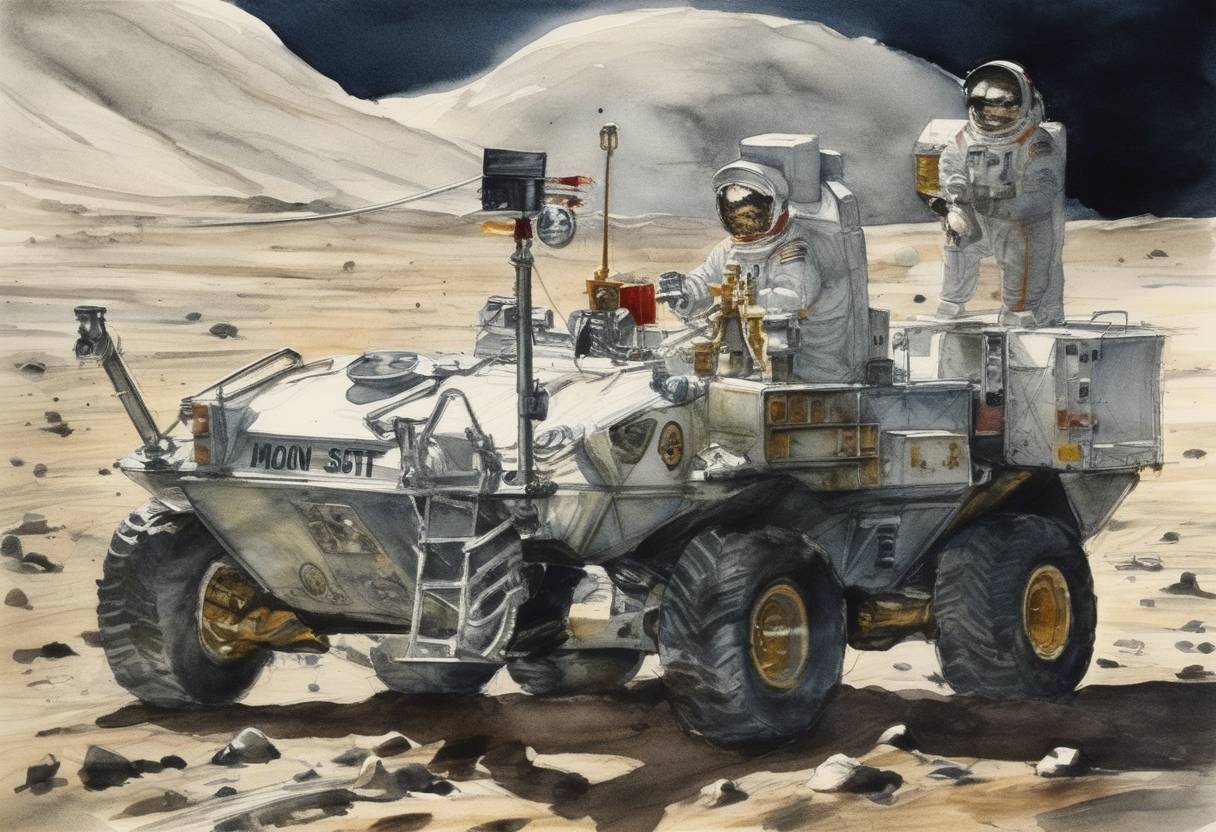
On July 31, 1971, during the Apollo 15 mission, astronauts David Scott and James Irwin became the first humans to drive a vehicle on the lunar surface. This event marked a significant advancement in lunar exploration, as for the first time, astronauts had increased mobility on the Moon.
Apollo 15 was the ninth crewed mission in the United States Apollo space program and the fourth to land on the Moon. Launched on July 26, 1971, it was the first of the “J missions,” which were capable of extended stays on the lunar surface and carried a greater array of scientific instruments.
The vehicle used by Scott and Irwin was known as the Lunar Roving Vehicle (LRV). It was an electric rover designed to operate in the low-gravity environment of the Moon. The LRV expanded the range of exploration from the landing site and was crucial in collecting a variety of lunar samples and deploying scientific instruments. The rover was lightweight, weighing only 460 pounds (210 kg) on Earth, and could travel at a maximum speed of about 8 mph (13 km/h).
Upon landing at the Hadley–Apennine site, Scott and Irwin unloaded the Lunar Rover on July 31. This first drive covered approximately 6.5 kilometers (about 4 miles) around the lunar surface. Their journey included stops to deploy scientific experiments and collect soil and rock samples. The operation of the Lunar Rover allowed the astronauts to traverse challenging terrain, reaching areas they could not have accessed on foot, and greatly increased the scientific return from the mission.
The successful deployment and use of the Lunar Roving Vehicle during Apollo 15 paved the way for more extensive explorations during subsequent missions, Apollo 16 and Apollo 17. The LRV enabled further geological surveys and scientific exploration on the Moon, contributing to a greater understanding of lunar geology and history.
The first use of the Lunar Rover demonstrated the potential for modern technology to expand the scope and scale of space exploration, laying the groundwork for future missions and eventually, concepts for manned missions beyond the Moon.
Source: www.nasa.gov