1981 · Boca Raton, United States
The introduction of the IBM Personal Computer was announced, setting a new standard in the personal computing industry.
April 7, 1964
IBM announces the System/360, a new family of computers that revolutionized the computer industry.
New York City, United States | IBM
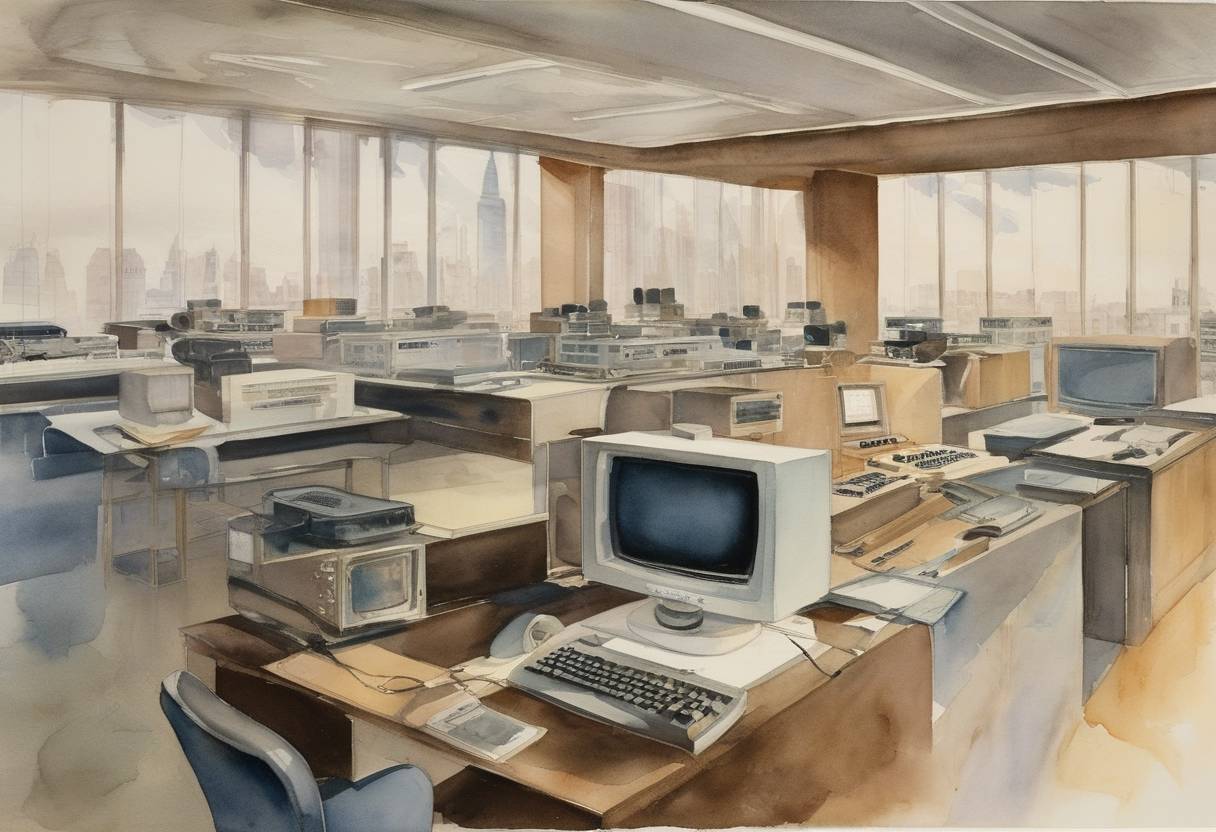
On April 7, 1964, IBM made a landmark announcement with the introduction of the System/360, a revolutionary family of computers that fundamentally transformed the computer industry. This announcement marked a significant departure from the company’s previous product lines, representing a bold strategy that set new standards in the design and manufacturing of computers.
Before the System/360, IBM had primarily focused on building isolated computer models, each designed for specific applications with different architectures and software. This approach often led to compatibility issues, requiring businesses to rewrite software when upgrading to new systems. The competitive landscape of the 1960s and the rapid technological advances necessitated a more versatile approach.
The System/360 was designed to be a comprehensive, integrated family of computers that could run the same set of instructions and use the same software across all models. This series ranged from small-scale business machines to large scientific computing systems, making it accessible to a wide array of industries. Key innovations included:
Compatibility and Scalability: The System/360 family introduced a standardized architecture that allowed for upward compatibility. This flexibility meant businesses could easily upgrade their systems without the need to overhaul their software.
Use of Microcode: For the first time, IBM utilized microcode to allow each model of the System/360 to execute more complex instructions by breaking them down into simpler operations, hence providing improved performance scalability across different machines.
Stringent Reliability Standards: IBM prioritized reliability by incorporating advanced error-checking capabilities and building the machines to undergo extensive testing, significantly reducing downtime and maintenance costs.
The introduction of the System/360 fundamentally redefined the computing landscape:
Industry Standardization: It led to the establishment of the 8-bit byte architecture as a standard, influencing future computer designs across the industry.
Financial Risk and Reward: IBM invested around $5 billion—a colossal risk at the time—into the development of the System/360. This endeavor paid off, securing IBM’s dominance in the computer industry for decades.
Catalyst for Software Development: The System/360 fostered the growth of a vast software ecosystem. Its compatibility features encouraged the development of more complex and powerfully integrated applications, which became a major selling point.
Broader Economic Influence: Beyond technology, the System/360’s introduction invigorated the data processing capabilities of businesses worldwide, enabling unprecedented efficiencies and innovations in various sectors, from banking to aerospace.
In summary, IBM’s announcement of the System/360 on April 7, 1964, heralded a new era of computing that emphasized compatibility, scalability, and reliability, setting a benchmark that profoundly influenced subsequent technological advancements and the evolution of the global computer industry.
Source: www.ibm.com