Copenhagen Captured by Søren Norby - June 10, 1523
1523 · Copenhagen, Denmark
Copenhagen is taken by 3,000 Danish and Hanseatic soldiers led by Søren Norby, marking a critical moment in the Count's Feud.
June 4, 1520
During the reign of Christian II, the last legal execution for heresy in Denmark took place, marking the end of the struggle between the Old and the New Faith.
Copenhagen, Denmark | Kingdom of Denmark
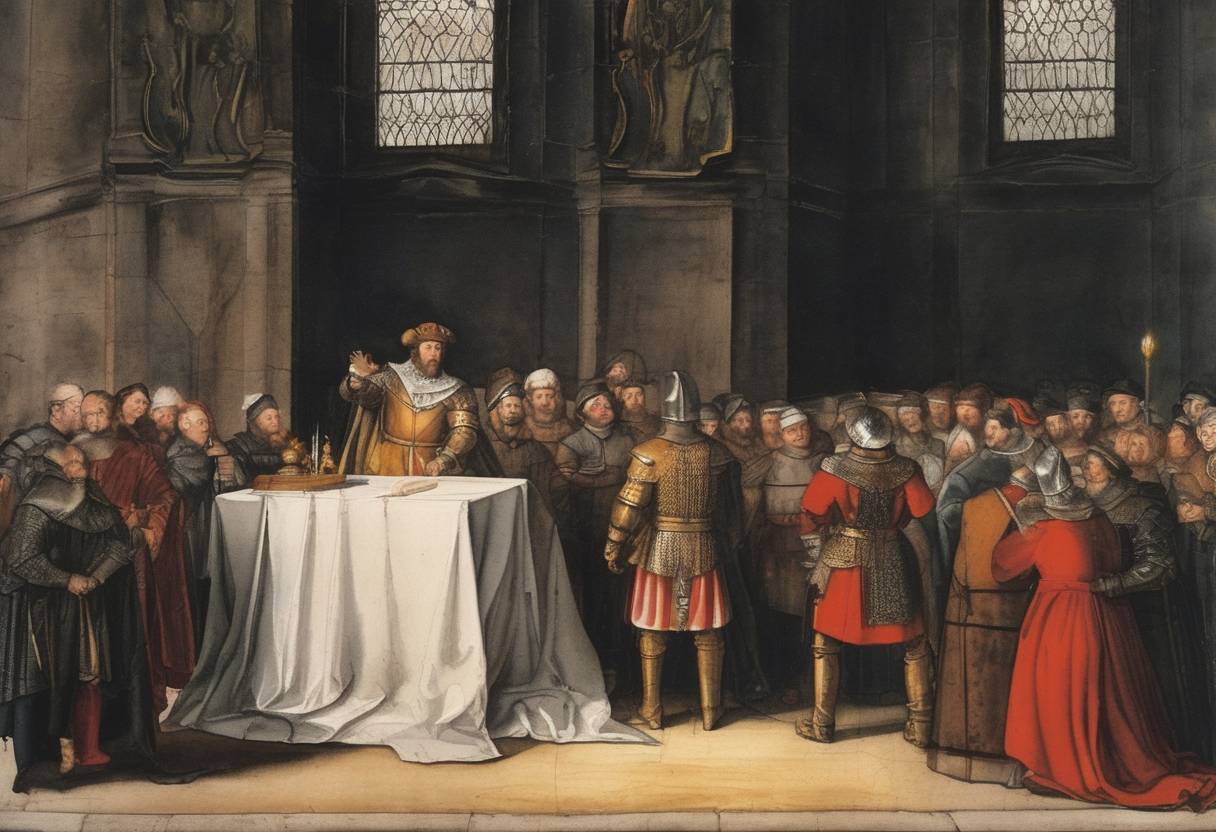
On June 4, 1520, during the reign of King Christian II, Denmark witnessed its last legal execution for heresy. This event marked a significant moment in the nation’s religious history, symbolizing the waning influence of the Old Catholic Faith and the emerging dominance of the Reformation’s New Protestant Faith.
King Christian II ascended to the Danish throne in 1513. His reign was characterized by significant internal strife and religious turbulence as Europe was rapidly approaching the period known as the Protestant Reformation, initiated by Martin Luther in 1517. The growing discontent with the Catholic Church’s practices and the call for reform were gaining substantial grounds, igniting tensions between the longstanding Catholic structure and the burgeoning Protestant ideologies.
The execution that took place on June 4, 1520, was emblematic of the era’s religious conflicts. While specific details of the individuals involved may be sparse, the act represented the era’s severe measures to uphold Catholic orthodoxy amidst increasing defiance. Such acts of execution for heresy were not uncommon throughout medieval Europe, as the Catholic Church endeavored to maintain doctrinal purity and authority.
This particular execution is noted for being the last of its kind legally sanctioned in Denmark. It marked a pivotal shift in the country’s approach to religious dissent, signaling a decline in the ecclesiastical power to enforce such punishment. Following this period, debates and struggles between Catholicism and Protestant beliefs continued, but the momentum increasingly favored the Reformation.
By the late 1520s and into the 1530s, the Lutheran Reformation gained significant traction in Denmark. Eventually, under the reign of Christian III, Denmark officially adopted Lutheranism, leading to the establishment of the Danish National Church. The execution on June 4, 1520, thus represents the dying efforts of the old religious guard to suppress reformist ideas, which would soon become the dominant religious force in Denmark.
The historical significance of this execution lies in its representation of the larger shift towards Protestantism that swept across Scandinavia and much of Europe. It highlights the changing attitudes towards religious authority and individual faith interpretation, setting the stage for the more tolerant and diversified religious landscape in Northern Europe.
The incident also contributes to our understanding of Christian II’s reign, illustrating the complex dynamics of religious power and politics during a critical turning point in European history.
Source: en.wikipedia.org