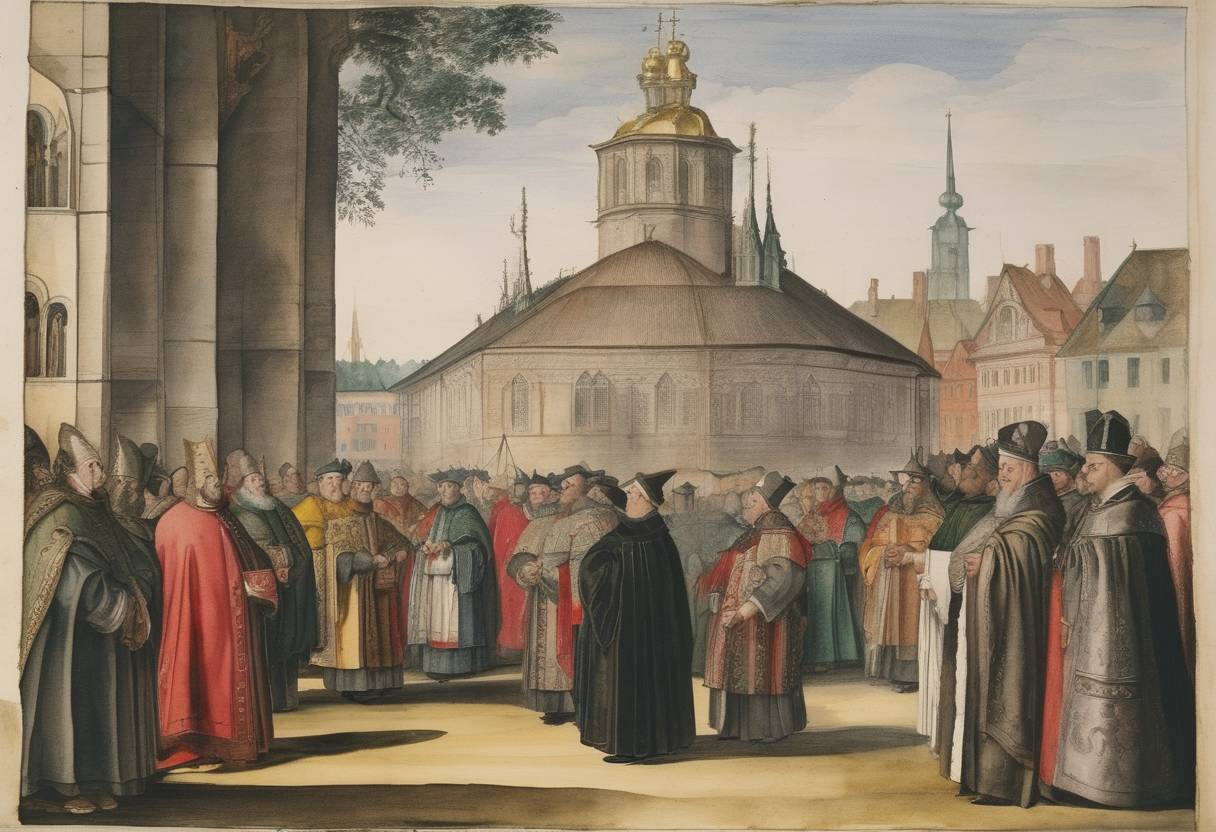
Laurentius Petri Nigidius Becomes Archbishop of Uppsala
On February 1, 1555, Laurentius Petri Nigidius was consecrated as the Archbishop of Uppsala and the Primate of Sweden. He succeeded Laurentius Petri, commonly referred to as Laurentius Petri Nericius, who had played a significant role in establishing Lutheranism in Sweden following the Protestant Reformation.
Background
- Laurentius Petri Nericius, his predecessor, had been the first Lutheran archbishop in Sweden, holding the office from 1531 until his death in 1552. His tenure was marked by efforts to strengthen the Lutheran Church’s foundations in the country and to foster the spread of Protestant reforms, aligning with King Gustav I Vasa’s religious policies.
- In the three years following Nericius’s death, Laurentius Petri Nigidius was appointed to the position. His consecration was delayed until February 1555, as the ecclesiastical and political implements of the Reformation were still taking significant shape in Sweden.
Importance of the Appointment
- Laurentius Petri Nigidius’s elevation to the role of archbishop was a crucial step in continuing the establishment of Lutheran ecclesiastical structures in Sweden. He assumed leadership at a time when Lutheran teachings were becoming institutionalized across much of Sweden and influencing the kingdom’s culture and governance.
- His leadership period contributed to stabilizing the Swedish Church during a significant transformation period, staying aligned with the monarchy’s objectives.
Consequences
- Under Nigidius’s leadership, the Lutheran Church in Sweden continued to mature, shaping additional religious and administrative frameworks that supported Sweden’s Protestant identity.
- The continuity from Nericius to Nigidius helped to ensure that the reforms initiated under the Swedish Reformation were bolstered, aiding in their entrenchment for future generations.
- His period as archbishop solidified the role that the Church of Sweden played in both religious life and political affairs, a dynamic that would evolve further in subsequent centuries.
Laurentius Petri Nigidius’s consecration is marked as a significant event due to its formative impact on the ecclesiastical and socio-political transformations within Sweden during the Reformation period.