The Russo-Turkish War of 1828–1829: Russia Declares War
1828 · Saint Petersburg, Russia
Russia declares war on the Ottoman Empire, marking the start of the Russo-Turkish War of 1828–1829.
January 17, 1826
The Treaty of Accession is formally signed, with Russia joining the Greek War of Independence against the Ottoman Empire.
St. Petersburg, Russia | Russian Empire
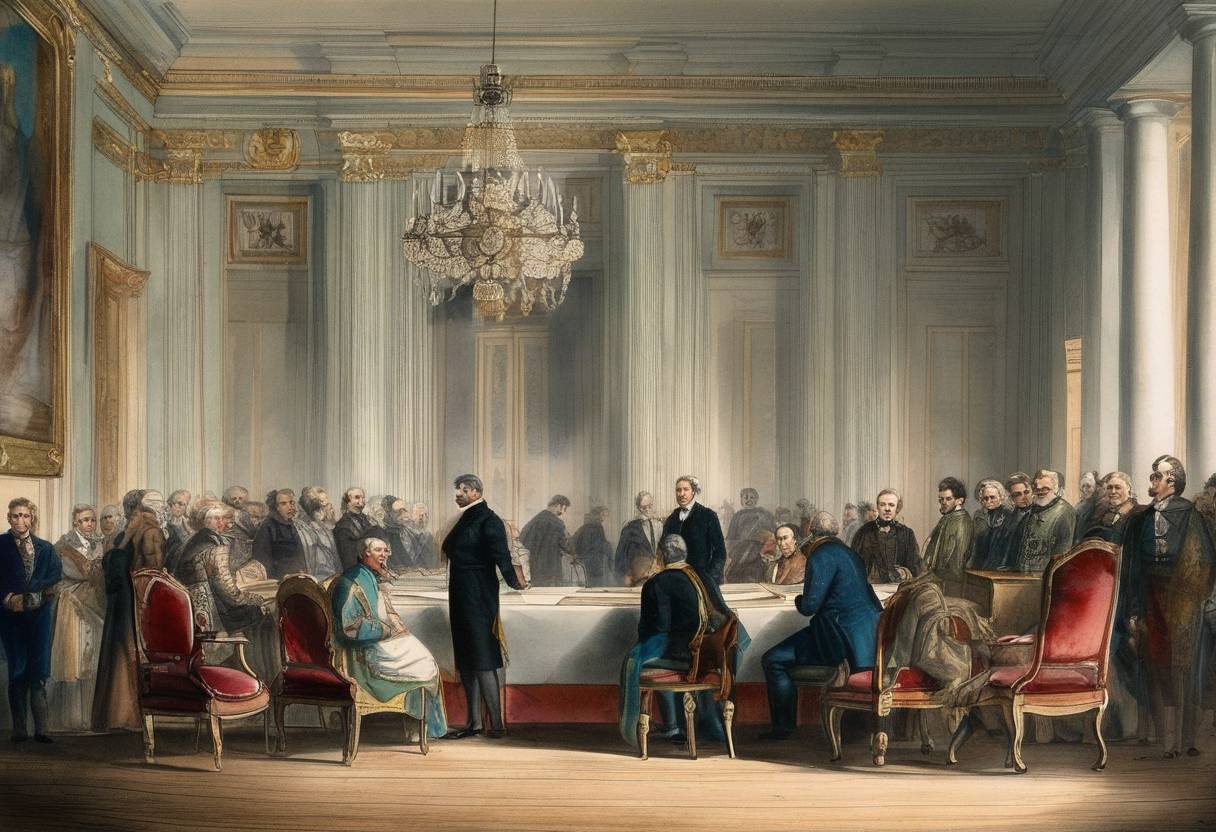
On January 17, 1826, the Treaty of Accession was formally signed, which marked a significant diplomatic development during the Greek War of Independence. This treaty involved Russia’s official entry as a supporting state for the Greek cause against the Ottoman Empire, highlighting the broader geopolitical interests and alliances of the time.
The Greek War of Independence, commencing in 1821, was a revolutionary struggle by Greek revolutionaries to liberate Greece from Ottoman rule. The conflict was complex, involving various Greek factions with differing aims and external powers with their own geopolitical agendas.
European Interest: The war attracted significant attention in Europe, with nations such as Britain, France, and Russia showing varying degrees of support due to strategic interests in the weakening of Ottoman control.
Cultural Sympathy: The Filhellenism movement, marked by support for the Greek cause in Western Europe and America, was spurred by cultural and historical sympathies.
Russia’s Strategic Interests: Russia had geopolitical interests in expanding its influence in the Balkans and weakening the Ottoman Empire’s stranglehold in Eastern Europe, making its support for Greek independence strategically advantageous.
Military Support: Russia’s inclusion on the side of the Greek rebels was a turning point, providing increased military pressure on the Ottoman Empire.
Diplomatic Pressure: The treaty intensified diplomatic negotiations and pressure on the Ottomans, eventually leading to increased international intervention in the conflict.
Outcome Influence: The treaty contributed to a shift in the conflict dynamics, with the eventual independence of Greece formally recognized by the Treaty of Constantinople in 1832.
Russia’s formal involvement through the Treaty of Accession helped internationalize the Greek War of Independence further, laying groundwork for future collaboration among the great powers in resolving European conflicts. This shift in alliances and the humanitarian sentiment connected to the Greek cause also foreshadowed diplomatic trends in 19th-century European international relations.
Source: en.wikipedia.org