Pope John Paul II's Visit to Ireland on September 29, 1979
1979 · Dublin, Ireland
Pope John Paul II became the first pope to visit Ireland, addressing a crowd of over a million people in Phoenix Park, Dublin.
July 20, 1761
On July 20, 1761, Bishop Richard Challoner consecrated the Cathedral of the Assumption in Raheny, Dublin. This marked a significant moment for the Irish Catholic community as it represented a period of religious growth and fortification under the penal laws that restricted Catholic rights in Ireland.
Dublin, Ireland | Catholic Church in Ireland
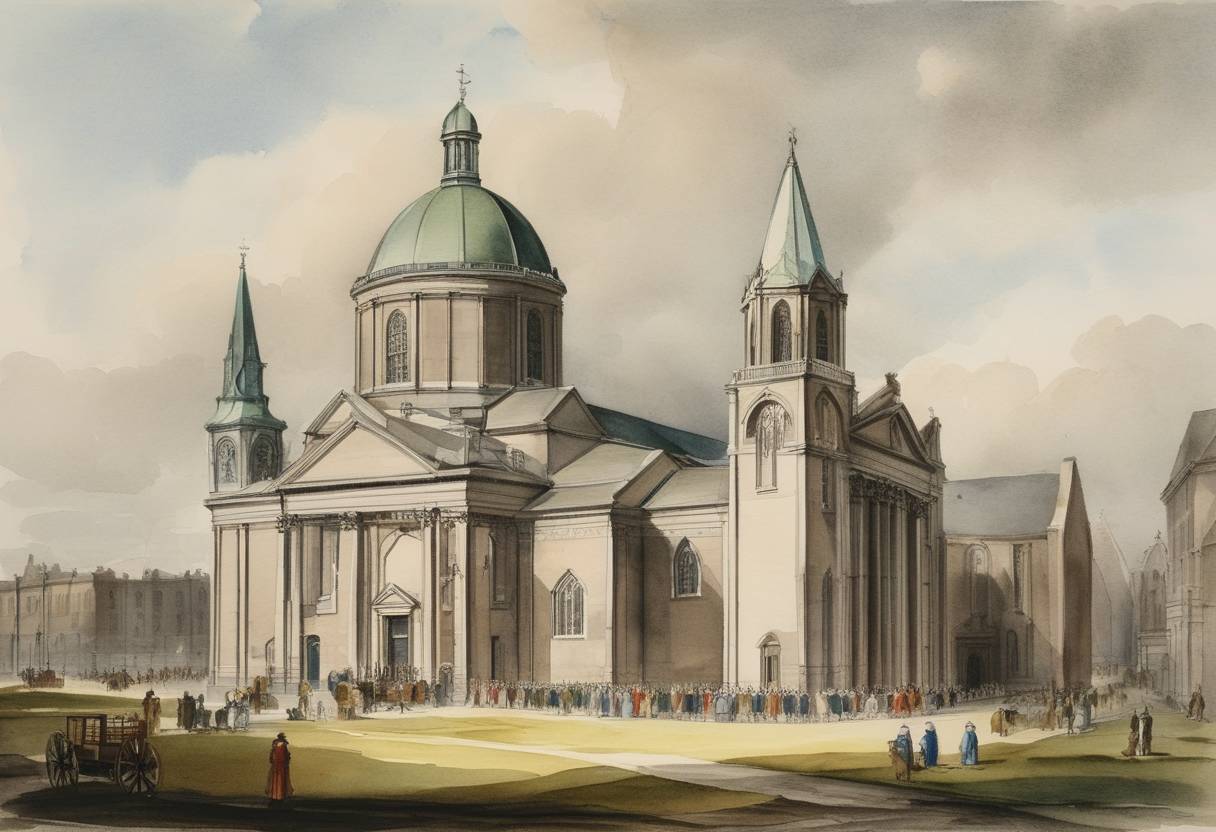
On July 20, 1761, Bishop Richard Challoner undertook the consecration of the Cathedral of the Assumption in Raheny, Dublin. This event was a notable milestone for the Irish Catholic community, occurring during a time when Catholics in Ireland faced significant persecution and legal limitations under the penal laws.
The penal laws, imposed during the late 17th and 18th centuries, were a series of oppressive measures aimed at disenfranchising and limiting the influence of Catholics in Ireland. These laws restricted Catholic worship, education, and property ownership, effectively marginalizing the majority Catholic population in favor of the Protestant minority.
Amidst these harsh conditions, the consecration of the Cathedral of the Assumption was symbolically potent. It signified not only the enduring faith and resilience of Irish Catholics but also their ongoing efforts to preserve and cultivate their religious and cultural identity. The act of consecration underlined the community’s commitment to maintaining their traditions despite external pressures and discrimination.
Bishop Challoner, an auxiliary bishop in the Archdiocese of Westminster and a prominent Catholic figure, played a vital role in supporting the Irish Catholic cause. Known for his theological writings and pastoral work, Challoner’s involvement in the consecration underscored the solidarity among Catholics across the British Isles.
While the penal laws continued to restrict Catholic rights for several decades following the consecration, such events contributed to the gradual strengthening of the Catholic Church in Ireland. The persistence of religious activities helped to lay the groundwork for the eventual relaxation of the penal laws and the gradual resurgence of Catholic civil rights in the 19th century.
The reform and resilience demonstrated in events like the consecration in Raheny played a part in the broader narrative of Irish resistance to cultural and religious oppression. They echoed the growing determination among Irish Catholics to reclaim their rights and identity, setting the stage for future social and political changes, including Catholic emancipation and the transformative shifts in Ireland’s religious landscape.
Source: en.wikipedia.org