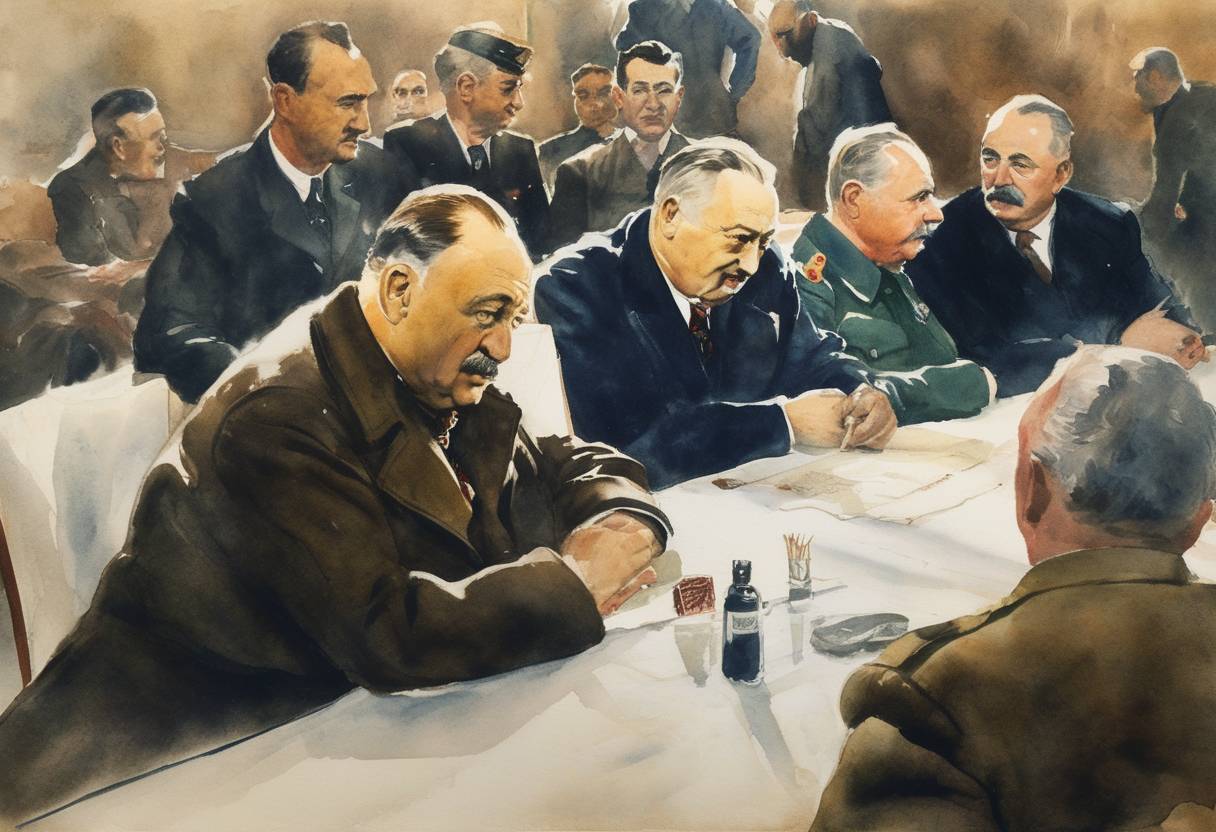
The Yalta Conference Concludes: February 11, 1945
The Yalta Conference, a pivotal meeting between the leaders of the Allied powers during World War II, concluded on February 11, 1945. This week-long summit, held in the Livadia Palace near Yalta in the Crimea, brought together British Prime Minister Winston Churchill, U.S. President Franklin D. Roosevelt, and Soviet Premier Joseph Stalin. The conference aimed to address the reorganization of post-war Europe and lay the groundwork for a stable post-war order.
Context and Background
As World War II was drawing closer to its end, the pressing need to establish peace and structure in a war-torn Europe became imperative. The Allied leaders recognized that a collaborative approach would be crucial to prevent future conflicts and stabilize the continent. The conference followed previous meetings, such as the Tehran Conference in 1943, where preliminary discussions about the post-war world began.
Key Agreements and Discussions
Division of Germany: The Allied leaders agreed on the occupation and division of Germany into four zones, each controlled by the United States, the Soviet Union, the United Kingdom, and France. This division aimed to ensure Germany’s demilitarization and denazification.
Post-War Borders and Territories: They discussed the reestablishment of national borders in Europe, including the future of Poland. It was decided that Poland would gain significant territory in the west from Germany but would lose land to the Soviet Union in the east.
United Nations: The conference laid crucial foundations for the creation of the United Nations. One notable decision was to grant veto power to permanent members of the Security Council, reflecting the geopolitical realities represented by the power of each nation.
Soviet Participation in the Pacific War: Stalin agreed that the Soviet Union would enter the war against Japan within three months following the defeat of Germany, contributing to the Allies’ efforts in the Pacific.
Aftermath and Historical Significance
The agreements reached during the Yalta Conference significantly influenced the post-war geopolitical landscape. However, the ambiguities and differing interpretations led to tensions in the emerging Cold War period. The discussions on Poland and Eastern Europe sowed seeds of discord, as the Western Allies and the Soviet Union had diverging visions for these regions’ political futures.
While the Yalta Conference served its immediate purpose, setting the stage for the end of World War II and the reconstruction of Europe, it also highlighted the underlying ideological rifts between the attending nations. These rifts would define international relations for decades, marking the beginning of the Cold War era.