Renaming of the Democratic Republic of the Congo to Zaire
1971 · Kinshasa, Democratic Republic of the Congo
The Democratic Republic of the Congo was renamed Zaire by President Mobutu Sese Seko.
May 17, 1997
Mobutu Sese Seko, the longtime dictator of Zaire, fled the country, effectively bringing an end to his 32-year rule as the country faced political upheaval.
Kinshasa, Zaire (now Democratic Republic of the Congo) | Government of Zaire
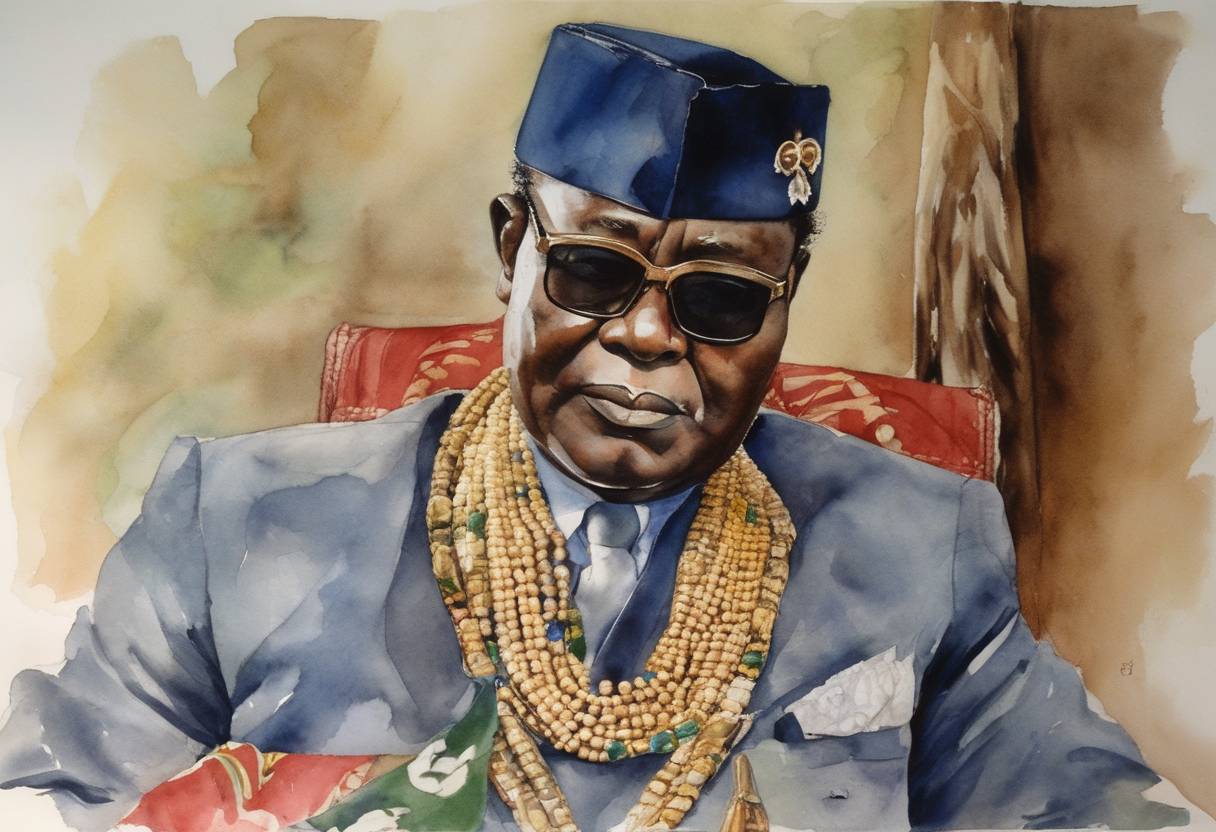
Mobutu Sese Seko, the long-reigning dictator of Zaire, fled the country on May 17, 1997, marking the end of his 32-year rule. This departure was the culmination of years of political and economic turmoil in Zaire, now known as the Democratic Republic of the Congo.
Mobutu came to power in 1965 through a coup and subsequently established an authoritarian regime marked by the nationalization of key industries, widespread corruption, and personal enrichment. Under his leadership, the country was renamed Zaire, and his rule was characterized by a cult of personality and military dominance. Despite initial Western support during the Cold War due to his anti-communist stance, Mobutu’s regime increasingly faced internal dissent and economic decline.
By the mid-1990s, opposition to Mobutu had strengthened, fueled by economic hardship, human rights abuses, and the failure to democratize. The catalyst for his downfall came with the First Congo War, which began in 1996. Led by Laurent-Désiré Kabila and backed by neighboring countries such as Rwanda and Uganda, the rebel Alliance of Democratic Forces for the Liberation of Congo-Zaire (AFDL) mounted a successful campaign against Mobutu.
Amidst the advancing AFDL forces and with international support for his regime waning, Mobutu’s grip on power weakened significantly. His health also deteriorated due to cancer, further diminishing his ability to manage the political situation. On May 17, 1997, Kabila’s rebel forces entered the capital, Kinshasa, unopposed, while Mobutu fled to Togo and later sought refuge in Morocco.
Laurent-Désiré Kabila declared himself president of the newly renamed Democratic Republic of the Congo. Mobutu’s departure signaled a pivotal moment in Congolese history, ending decades of authoritarian rule but also ushering in a period of continued instability and conflict. Mobutu lived in Morocco until his death on September 7, 1997.
The fall of Mobutu exemplified the decline of Cold War-era dictatorships that were once supported by global powers. It underscored the shifting geopolitical interests in the post-Cold War era and highlighted the complex challenges facing African nations in transitioning from entrenched autocratic rule to more democratic governance structures.
Source: www.britannica.com