Execution of Nicolae and Elena Ceaușescu
1989 · Târgoviște, Romania
Romanian dictator Nicolae Ceaușescu and his wife Elena were executed after a summary trial, marking the end of Communist rule in Romania.
December 15, 1989
The Romanian Revolution begins in Timișoara with protests against the communist regime of Nicolae Ceaușescu.
Timișoara, Romania | Romanian Government
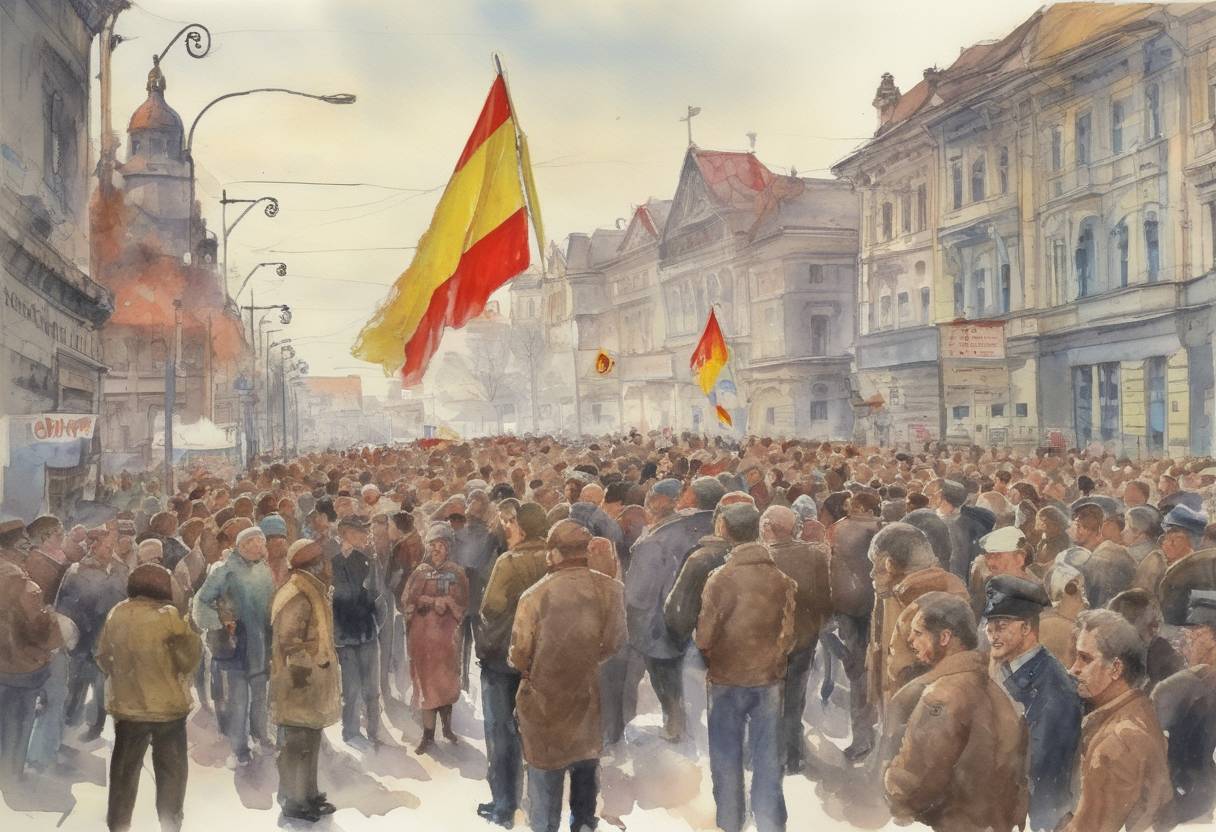
On December 15, 1989, a pivotal moment in Eastern European history unfolded as the Romanian Revolution began in the city of Timișoara. This marked the start of a series of events that would lead to the fall of Nicolae Ceaușescu’s communist regime, one of the most repressive in the Eastern Bloc.
Communist Rule in Romania: Nicolae Ceaușescu had been in power since 1965, leading a regime characterized by severe economic mismanagement, widespread poverty, and an oppressive secret police force, the Securitate. His policies, including extensive austerity measures to repay foreign debts, led to significant public discontent.
Eastern European Upheaval: By 1989, many Eastern European countries were experiencing political transformations. The fall of the Berlin Wall in November 1989 symbolized the weakening grip of communist regimes across the region, inspiring movements for change.
Religious and Ethnic Tensions: Timișoara, a city with a diverse ethnic composition, was a hotbed for dissent. The spark for the protests was the government’s attempt to evict László Tőkés, a Hungarian Reformed Church pastor known for his outspoken criticism of the regime.
Public Outcry: On December 15, parishioners and local residents gathered outside Tőkés’s house to prevent his eviction. The crowd quickly grew, with people from various backgrounds joining in solidarity, chanting slogans against Ceaușescu and the government.
Escalation: The peaceful demonstration soon escalated as the crowd swelled. The authorities’ attempts to disperse the protesters with force only fueled the unrest. Over the next few days, the protests intensified, with demonstrators calling for freedom and the end of Ceaușescu’s rule.
Government Response: The regime responded with brutal force, deploying the military and the Securitate to suppress the uprising. Despite the crackdown, the protests continued, spreading to other parts of the country.
Nationwide Revolution: The events in Timișoara ignited a nationwide revolution. By December 21, protests had reached the capital, Bucharest. Ceaușescu’s infamous final speech on December 21 was met with jeers and defiance from the crowd, signaling the regime’s loss of control.
Ceaușescu’s Downfall: On December 22, Ceaușescu and his wife, Elena, fled Bucharest but were captured by the military. Following a swift trial, they were executed on December 25, 1989.
End of Communist Rule: The Romanian Revolution resulted in the collapse of the communist government. It paved the way for democratic reforms and Romania’s eventual integration into European political and economic structures.
The Romanian Revolution was one of the most violent and rapid transitions from communism in Eastern Europe. It highlighted the power of popular movements in dismantling authoritarian regimes and underscored the broader wave of democratization sweeping across the region at the end of the Cold War. The events in Timișoara remain a symbol of resistance and the struggle for freedom and human rights.
Source: en.wikipedia.org