Stardust Spacecraft's Flyby of Comet Wild 2
2004 · Comet Wild 2, Space
NASA's Stardust spacecraft successfully flies by Comet Wild 2, collecting samples of the comet's dust and returning them to Earth in 2006.
January 12, 2007
Comet McNaught, also known as the Great Comet of 2007, reaches its peak brightness becoming the brightest comet in over 40 years.
Not Applicable, Space | International Astronomical Union
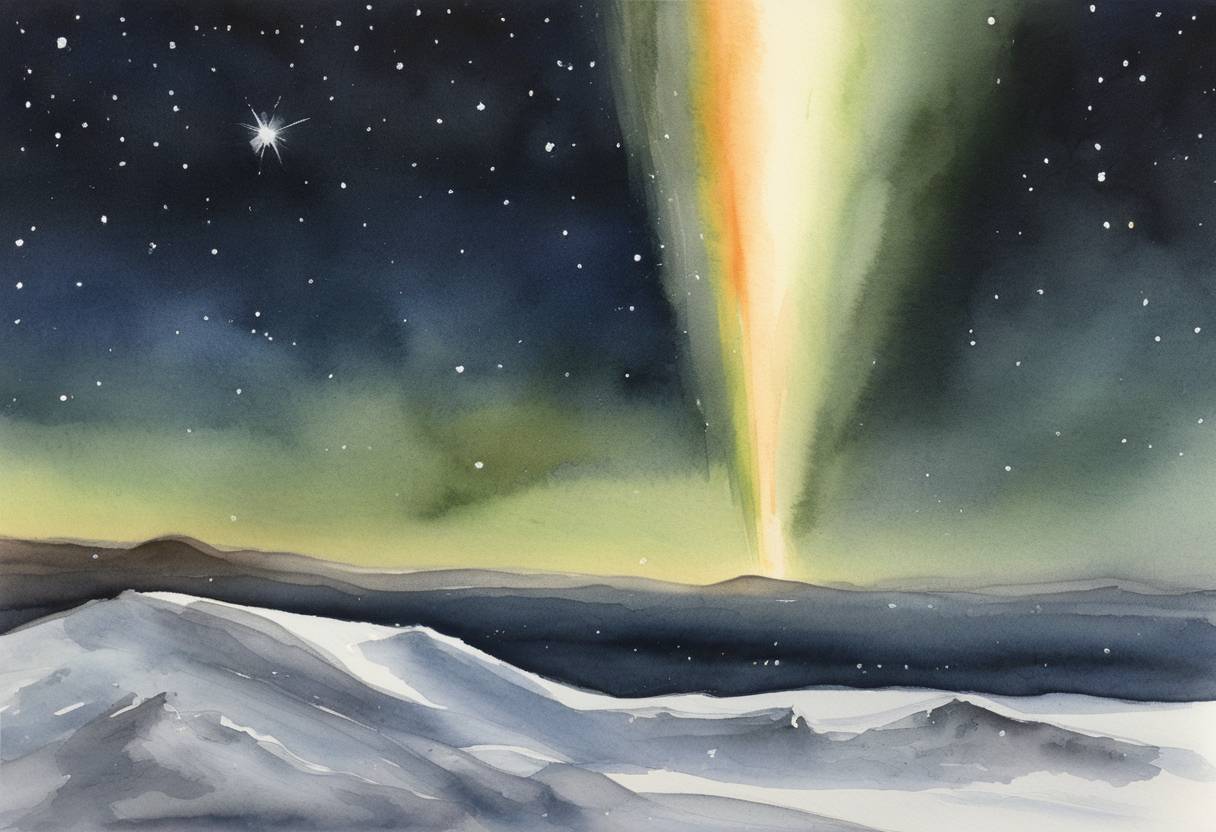
On January 12, 2007, Comet C/2006 P1, commonly known as Comet McNaught, reached its peak brightness, becoming the brightest comet to be observed from Earth in over four decades. This celestial spectacle captured the attention of both astronomers and the general public due to its remarkable visibility and stunning appearance.
Comet McNaught was discovered on August 7, 2006, by the British-Australian astronomer Robert H. McNaught at Siding Spring Observatory in Australia. As it approached the inner solar system, predictions about its brightness began to draw interest. By early January 2007, while the comet was moving closer to the Sun, it became increasingly visible to the naked eye in the Southern Hemisphere.
On January 12, Comet McNaught was at its perihelion, the point in its orbit closest to the Sun. At this time, it shone with an apparent magnitude of -5.5, making it easily visible during daylight—an extraordinary occurrence for a comet justifying its label as the “Great Comet of 2007.” Its tail, composed of dust and ionized gases illuminated by sunlight, extended visibly into the sky.
Comet McNaught’s brilliance earned it comparisons with historical great comets like Comet Ikeya-Seki of 1965. In the decades prior to Comet McNaught, no comet had matched its brightness, making it a particularly significant astronomical event. It was observable from mid-latitudes in the Northern Hemisphere, albeit less dramatically than from the Southern Hemisphere, where its full magnificence was apparent.
The visibility of Comet McNaught in both hemispheres facilitated numerous scientific studies and amateur observations. It provided insights into the behavior of comet tails, solar wind interactions, and the composition of cometary materials. Its stunning display served as a reminder of the dynamic nature of our solar system and inspired renewed public interest in astronomy.
In conclusion, the peak visibility of Comet McNaught on January 12, 2007, represents a remarkable moment in recent astronomical history. It not only captivated a global audience but also contributed significantly to scientific understanding of comets.
Source: www.nasa.gov