The Tiananmen Square Massacre - June 4, 1989
1989 · Beijing, China
The Tiananmen Square Massacre occurs as Chinese troops and security police storm through Tiananmen Square in Beijing, killing and arresting thousands of pro-democracy protesters.
July 20, 1999
Falun Gong, a spiritual practice, was banned by the Chinese government, leading to widespread persecution of its practitioners.
Beijing, China | Chinese Government
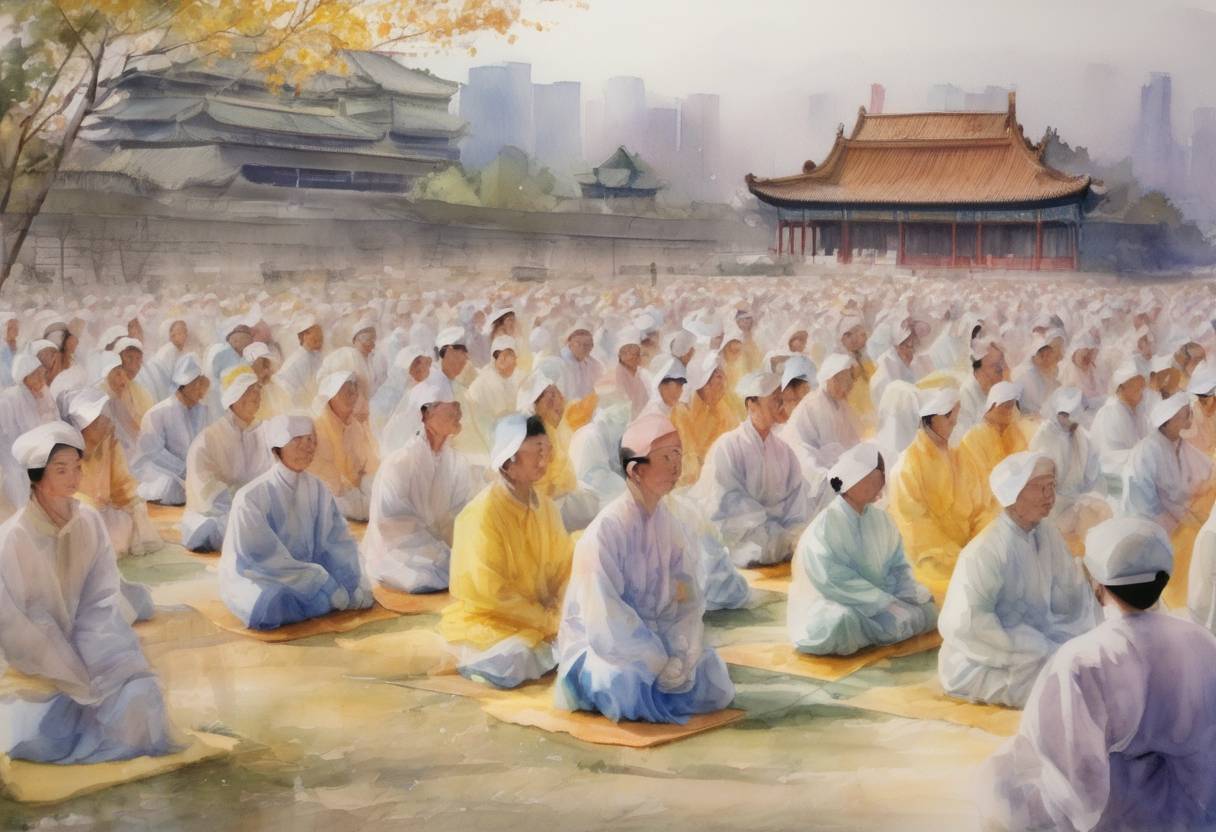
On July 20, 1999, the Chinese government officially banned Falun Gong, a spiritual practice that had gained significant popularity throughout China in the 1990s. This decision marked the beginning of a widespread and ongoing campaign of persecution against its practitioners.
Falun Gong, also known as Falun Dafa, is a spiritual discipline introduced to the public by Li Hongzhi in 1992. It combines meditation and qigong exercises with a moral philosophy centered on the principles of truthfulness, compassion, and forbearance. By the late 1990s, Falun Gong had attracted millions of followers in China, with estimates ranging from 2 to 70 million practitioners.
The rapid growth of Falun Gong and its organizational capacity, demonstrated by a large-scale peaceful protest in April 1999 near the Zhongnanhai government compound in Beijing, alarmed the Chinese Communist Party (CCP). The protest was in response to an article in a state-run magazine that criticized the practice. The gathering, which involved over 10,000 practitioners, was notable for its size and the discipline of its participants.
On July 20, 1999, the Chinese government declared Falun Gong an illegal organization, labeling it a “heretical cult” that threatened social stability. The government launched a comprehensive campaign to eradicate the practice, involving:
The crackdown on Falun Gong has led to widespread reports of human rights abuses, including torture, forced labor, and deaths in custody. Human rights organizations and international bodies have condemned the persecution, calling for the release of detained practitioners and an end to the abuses.
The Chinese government’s actions against Falun Gong have had significant implications for religious freedom and human rights in China. The campaign is often cited as one of the most severe examples of religious persecution in recent history.
The ban on Falun Gong highlights the Chinese government’s approach to controlling religious and spiritual movements perceived as threats to its authority. It underscores the broader issues of religious freedom, human rights, and the limits of state power in China.
The ongoing persecution of Falun Gong practitioners continues to draw international attention and remains a contentious issue in China’s human rights record.
Source: en.wikipedia.org