The Battle of Lugdunum: February 8, 216
216 · Lugdunum, Roman Empire
The Battle of Lugdunum took place, where Roman Emperor Caracalla defeated his brother Geta's supporters, consolidating his power over the Roman Empire.
February 19, 0197
Emperor Septimius Severus defeats usurper Clodius Albinus at the Battle of Lugdunum, securing his claim to the Roman Empire.
Lugdunum, Roman Empire | Roman Empire
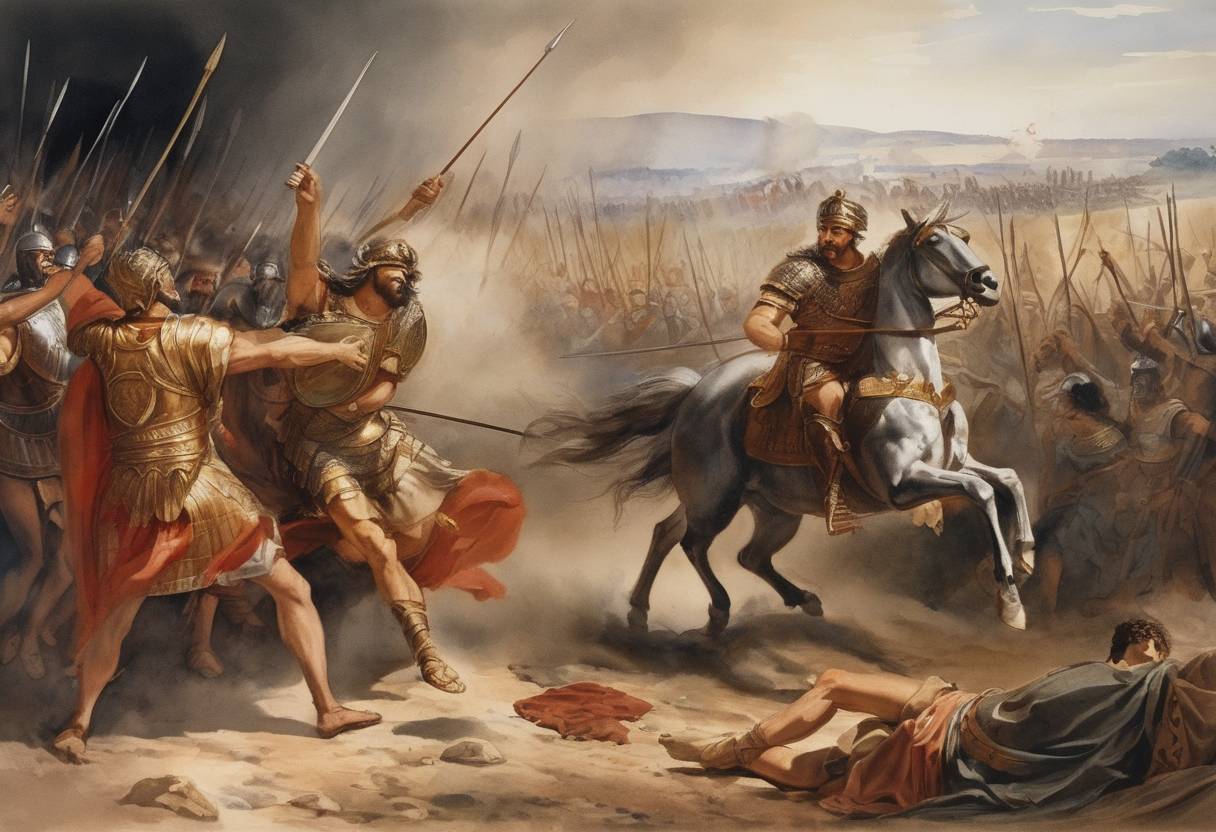
On February 19, 197 AD, the Battle of Lugdunum, one of the most significant military engagements in the history of the Roman Empire, took place. This pivotal battle saw Emperor Septimius Severus decisively defeat the usurper Clodius Albinus, securing his control over the Roman Empire.
After the assassination of Emperor Pertinax in 193 AD, Rome plunged into a year-long civil war known as the Year of the Five Emperors. Septimius Severus, a rising general of the Roman army, quickly advanced his claim to the throne. In early 193, Severus was proclaimed emperor by his troops while commanding a legion in Pannonia. To stabilize his claim, he momentarily allied with Clodius Albinus, the governor of Britannia, bestowing upon him the title of Caesar in 193 AD, which was meant to placate Albinus’s own ambitions.
As Severus consolidated power, tensions escalated between the two leaders. Severus’s defeat of another rival, Pescennius Niger, in the east eliminated a common enemy, leading to inevitable conflict with Albinus. Severus eventually revoked Albinus’s title in 195 AD, prompting Albinus to muster his forces and march from Britain to Gaul to challenge Severus.
The confrontation occurred near Lugdunum (modern Lyon) in Gaul. This battle is noted for involving the largest number of Roman soldiers in a single battle up to that point, with forces estimated at nearly 150,000 men combined.
Severus commanded a well-prepared and strategically adept force, employing his experience and tactical innovations. The battle was fiercely contested, demonstrating the military discipline and prowess of both sides. However, Severus’s forces eventually outmaneuvered and overwhelmed Albinus’s troops.
Clodius Albinus’s defeat and subsequent suicide cemented Severus’s position as the uncontested emperor of Rome. The victory at Lugdunum allowed Severus to focus on further consolidating his rule and initiating reforms that would characterize his administration.
Severus’s success also marked the beginning of the Severan dynasty, which brought about substantial changes in the Roman military structure, including augmenting the importance of the equestrian order and reorganizing provincial governance. His reign is often noted for strengthening the autocratic nature of the imperial office and broadening the reach of Roman law.
The Battle of Lugdunum thus serves as a critical juncture in Roman history, underscoring the fragility of imperial succession and shaping the political landscape of the empire for decades.
Source: en.wikipedia.org