Assassination of King Henry IV of France
1610 · Paris, France
King Henry IV of France was assassinated by François Ravaillac, a fanatical Catholic, in Paris.
November 20, 1407
John the Fearless, Duke of Burgundy, had Louis of Valois, Duke of Orléans, assassinated in Paris, sparking a civil war in France.
Paris, France | Burgundian faction
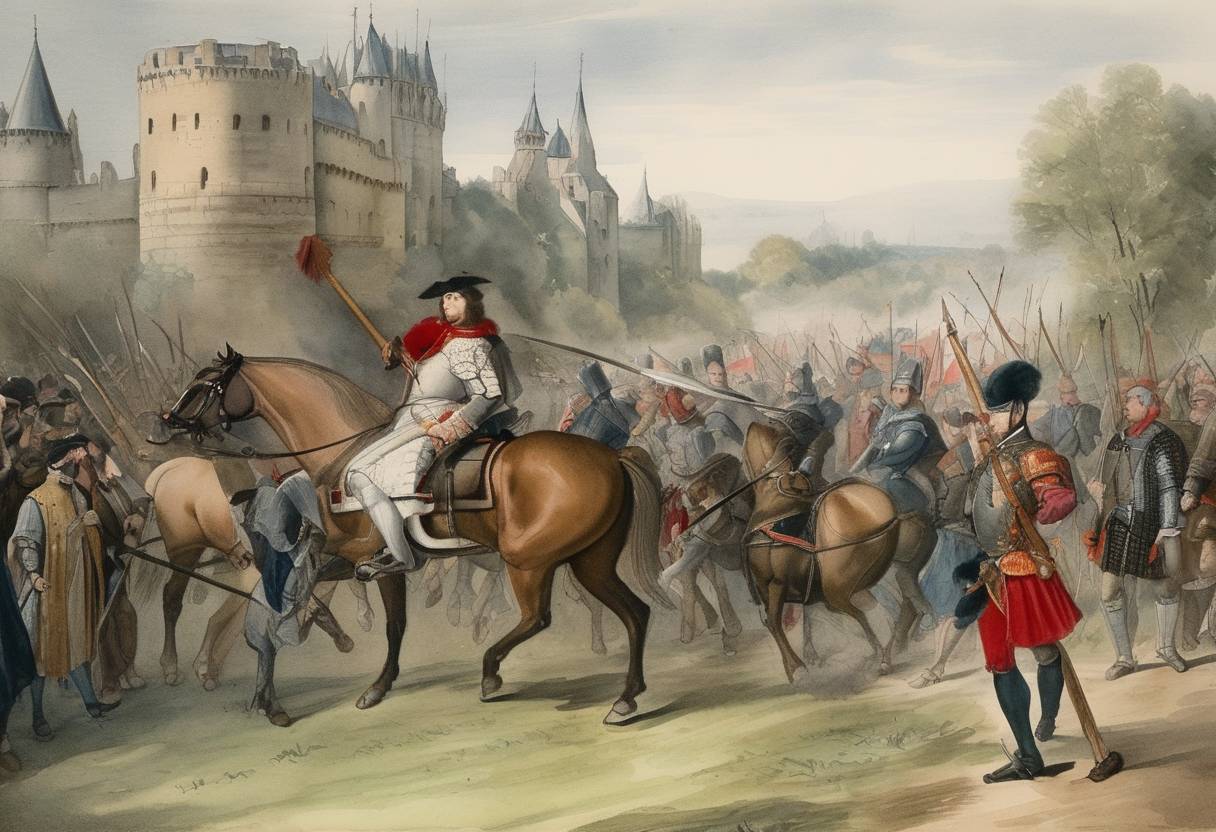
On November 20, 1407, a pivotal event in French history unfolded when Louis of Valois, Duke of Orléans, was assassinated in Paris. This murder significantly influenced the internal political dynamics of France during a volatile period known as the Armagnac-Burgundian Civil War.
By the early 15th century, France was plagued by internal strife, exacerbated by the ongoing Hundred Years’ War with England. King Charles VI’s mental instability led to a power vacuum and intensified rivalries among the French nobility. Louis, as the king’s brother, wielded significant power, which often conflicted with John the Fearless and his Burgundian faction.
The rivalry reached its peak as both parties sought control over the young Prince Charles (later King Charles VII). The tension was not merely political but also deeply personal, as both dukes engaged in mutual animosity and power struggles.
On the night of November 20, 1407, Louis of Valois was ambushed and brutally murdered by hired assassins on the Rue Vieille du Temple in Paris. The attack was ordered by John the Fearless, who had devised the plot to eliminate his rival.
The assassination of Louis of Orléans laid bare the vulnerabilities of the French monarchy during one of Europe’s most tumultuous periods, highlighting the dangerous interplay between personal enmity and political ambition in shaping historical trajectories.
Source: en.wikipedia.org